Category Archives: Objects

For Lovers of New England: A Week on the Road in June

Discover the rich history of the region with Historic New England’s Program in New England Studies, an intensive week-long exploration of New England from Monday, June 18 to Saturday, June 23, 2012.  The Program in New England Studies includes lectures by noted curators and architectural historians, hands-on workshops, behind-the-scenes tours, and special access to historic house museums and museum collections. The program examines New England history and material culture from the seventeenth century through the Colonial Revival. Curators lecture on furniture, textiles, ceramics, art, and wallpaper and cover their history, craftsmanship, and changing methods of production. Architectural historians explore a timeline of regional architecture starting with the Massachusetts Bay styles of the seventeenth century through the Federal and Georgian eras, to Gothic Revival and the Colonial Revival. Participants visit historic sites and museums with curators and enjoy special receptions.

Expert lecturers include:

  • Richard Candee, professor emeritus, Boston University
  • Cary Carson, retired vice president of the research division at Colonial Williamsburg
  • Abbott Lowell Cummings, former director, Historic New England Continue reading

Field Trip: Homestead Museum in California

This slideshow requires JavaScript.

Last week I had a chance to visit with my colleagues at the Workman and Temple Family Homestead Museum in the City of Industry, California.  I was the assistant director there a decade ago and it continues to be a special place to me (if you haven’t visited, it has great architecture and a great story).  After a generous lunch with the staff, director Karen Graham Wade and some of her staff took me to see the Workman House, the earliest house on the site.  It’s undergoing extensive interior rehabilitation to make it more suitable and attractive as an exhibit gallery.  It’s part of a major effort to respond to the changing interests of their visitors by increasing the self-guided experiences.  They are also reducing the number of days per week the Homestead Museum will be open for walk-in public tours and  increasing the number of days they’ll be open for tours by appointment and for other activities.  At La Casa Nueva, the second house on site, they are Continue reading

Pine Point: Interpreting a Vanished Town

Pine Point, an interactive Web documentary by The Goggles.

Last week I had a chance to visit Bill Adair, director of the Heritage Philadelphia Program and one of the co-authors of the new book, Letting Go?:  Sharing Historical Authority in a User-Generated World.  As usual, we had a wide ranging discussion which included his interest in the work of The Goggles, an award-winning Canadian design group headed by Paul Shoebridge and Michael Simons.  He was particularly taken by “Pine Point,” an interactive web documentary about a northern mining town that closed in 1988 and was demolished.  Through oral histories, documents, video, and artifacts, the story of this ghost town is told in a mesmerizing scrapbook style.  If you’re looking for a way to interpret a place in a new way on the Web, this might provide some inspiration.

Take Advantage of the Ten Cultural Trends for 2012

JWT Intelligence has just released its Ten Trends for 2012 based on surveys of Americans and Britons and interviews with experts and influencers.  If you can’t afford to buy copy of their full report for $250, here’s a summary plus some suggestions for taking advantage of them:

  1. Navigating the New Normal:  The economy won’t be back to the way it was for some time, so consumers are now becoming price conscious by habit.  Consider stripped down offerings (such as smaller sizes of products in your museum store) or some access at lower cost (such as a “grounds only” admission fee).
  2. Live a Little:  Although they don’t want to pay a lot, visitors are becoming anxious to splurge on a few good things responsibly.  Adjust your programs so they promote both the fun experience and extraordinary aspects of your site (and be sure you can deliver it–just saying your tours are fun and extraordinary doesn’t make it so).
  3. Generation Go:  20-somethings are struggling Continue reading

What do You do with Collections in a 21st Century House Museum?

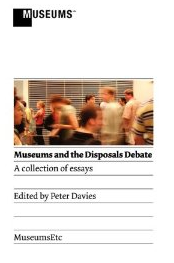
Museums and the Disposals Debate, 2011

One of the findings of the 2007 Kykuit Conference was that “undefined collecting coupled with a lack of professional standards and inconsistent practices regarding deaccessioning are an impediment to change and sustainability” and recommended that “selected sites should develop a pilot process to streamline deaccessioning and share their results with the field.”

Some of this work may have just been accomplished with the publication of Museums and the Disposal Debate, an anthology of essays edited by Peter Davies.  At a hefty 600 pages, it includes two dozen contributions from museums from around the English-speaking world but for those working at historic house museums, you’ll be most interested in “Too Much of a Good Thing: Lessons from Deaccessioning at National Trust Historic Sites” by Terri Anderson, the John and Neville Bryan Director of Museum Collections at the National Trust for Historic Preservation (she moderated the standing-room only session on deaccessioning for AAM a couple years ago).  I read an early version of her essay and it’s the best I’ve seen written on the particular challenges facing deaccessioning at historic sites, which are distinctly different from other museums.

The talk of becoming “21st century museums” is often coded language for Continue reading