Category Archives: Story

Public Writing as Interpretation: Advice from the Editor of Public Humanities

One of the most important roles museums play is sharing scholarship with the public—and it’s also one of the hardest. We are often asked to interpret complex events that unfolded over decades and involved many people, and in the process we rely on shorthand that makes sense to other scholars but not always to our visitors. Words like contextualize, agency, material culture, or periodization can quickly create distance rather than connection. Too often, we respond by simply “simplifying” academic work, when what we really need is something more ambitious: a distinct, rigorous form of interpretation designed specifically for public audiences.

In “How to Do Public Writing,” Jeffrey R. Wilson—director of the Harvard Law School Writing Center—offers a timely corrective: public writing is not scholarship “lite,” but a different craft altogether, one that requires clarity, narrative discipline, and deep respect for audience. Wilson is also the editor-in-chief of the new open-access journal Public Humanities, published by Cambridge University Press, and is currently developing a special museum issue—making his insights especially relevant for those of us working in museums and historic sites.

Wilson defines public writing as scholarship for people outside the academy—what he memorably calls “the folks we grew up with.” His premise is simple but urgent: as humanities education has declined and public trust in expertise has eroded, the responsibility for interpretation has shifted. Museums, libraries, and cultural organizations are now among the primary places where people learn how to make meaning from history, culture, and evidence. In this sense, public writing and museum interpretation are performing the same civic function.

Continue reading
From Sites to Stories: Using ESRI StoryMaps to Interpret Women’s History in Washington, DC

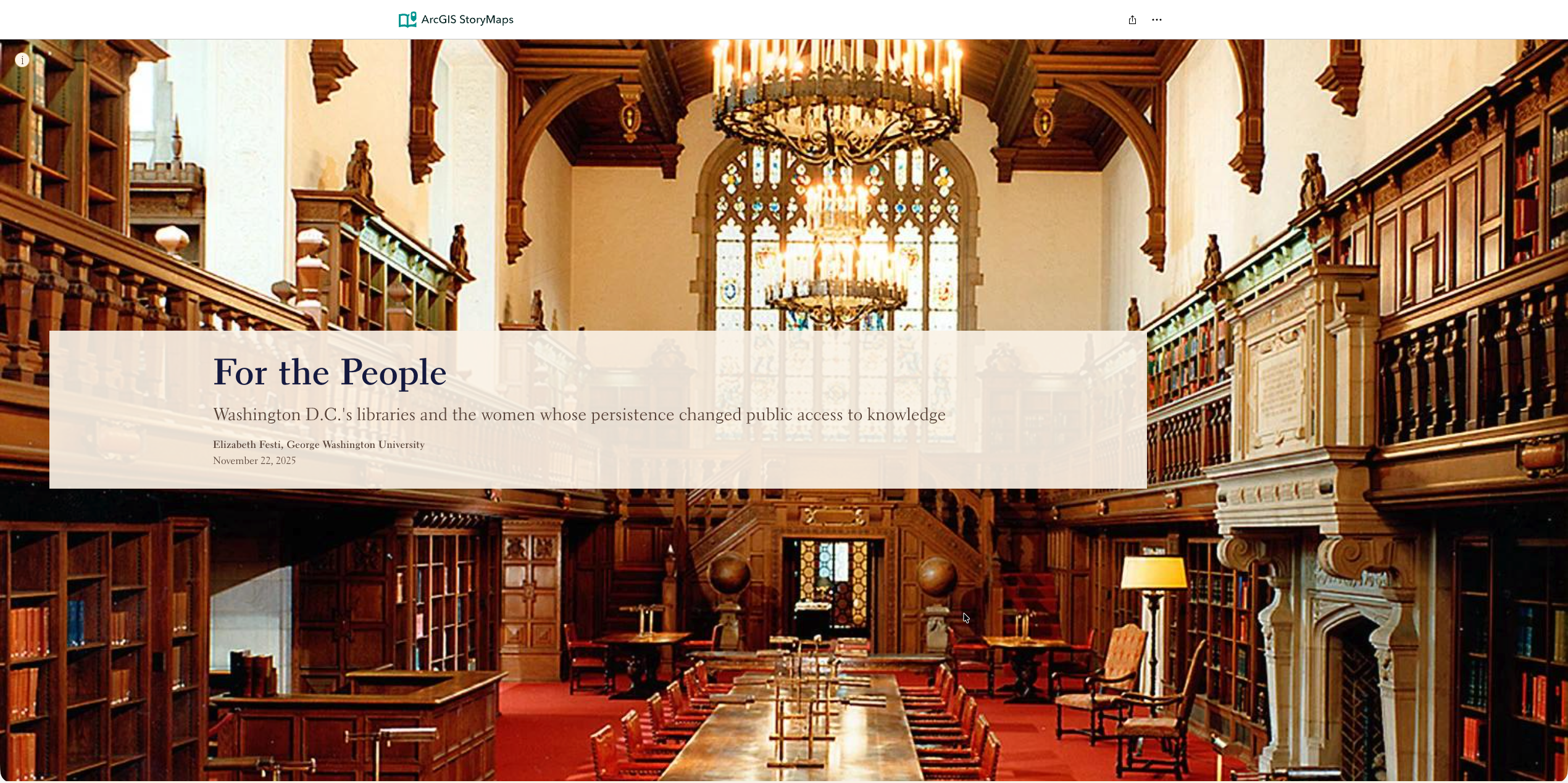
Digital tools do not automatically produce meaningful interpretation. What they can do—when used with discipline—is force clarity about audience, theme, and purpose. This is why I have begun using ESRI ArcGIS StoryMaps as a core interpretive platform in my graduate course CMST6307: Interpretation of Historic Sites at George Washington University.

This fall, students were commissioned—within a realistic professional scenario—to create StoryMaps interpreting the history of women in Washington, DC. Each project connected five or six historic sites through a coherent theme, tailored to a specific public audience. The results demonstrate how StoryMaps can function not as digital scrapbooks, but as public-facing interpretive products grounded in professional standards.

I’m incredibly proud of what they accomplished, but this isn’t a showcase of student work for its own sake. It’s a case study in how digital storytelling platforms can support the interpretation of historic sites and house museums.

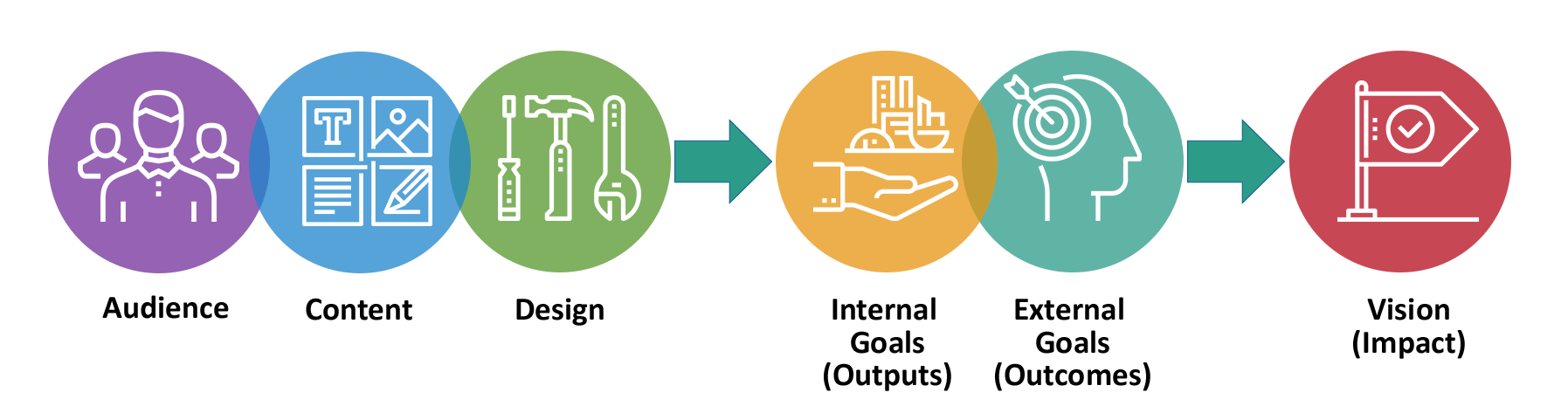
A flowchart of the interpretive planning process used in my course and at Engaging Places, which starts with audience, content, and design.
Interpretive framework used in my interpretation course (and with my clients).

A Professional Product, Not a Classroom Exercise

The assignment was framed as a hypothetical consulting project for the White House Historical Association. Students were told: “The StoryMap should connect 5–6 historic sites through a coherent theme, tailored to a specific audience. It should demonstrate professional standards in historical research, interpretive writing, and digital design.”

From the beginning, the emphasis was not on technology, but on interpretation. Each student had to demonstrate the integration of three core elements: audience, content, and design.

Continue reading

How to Turn Exploratory Visitors into Loyal Fans

Museums and historic sites face a persistent challenge: how to transform mildly interested visitors into deeply engaged patrons. These exploratory visitors—those who follow your social media accounts, visit the website, or attend an occasional event—represent a critical audience segment with untapped potential. How can museums help these visitors feel more connected and motivated to return?

Three recent studies offer actionable insights into addressing this challenge: one on the power of framing and emotional relevance, another on the role of clear wayfinding in reducing visitor anxiety, and a third on the holistic visitor experience at heritage attractions.

Lesson 1: Framing and Emotional Relevance Matter

In “The Role of Framing, Agency, and Uncertainty in a Focus-Divide Dilemma,” Justin Claydon et al highlight how contextual framing—presenting information in a familiar, relatable way—dramatically improves motivation and engagement. When tasks are abstract or unfamiliar, people struggle to prioritize and engage effectively. Conversely, framing a task with real-world relevance reduces uncertainty and increases interest.

Continue reading

Historic House Museums a Special Focus for the Public Historian

Jane Addams Hull-House Museum by Brandon Bartoszek

Jane Addams Hull-House Museum by Brandon Bartoszek

The May 2015 issue of the Public Historian was just released and provides a dozen articles related to historic house museums.  Lisa Junkin Lopez, associate director of the Jane Addams Hull-House Museum and guest editor of this special issue, provides the criteria that helped her select the articles and her vision of historic house museums:

Though a number of sites have turned to revenue-generating activities like weddings and farmers’ markets to stay afloat, rigorous historical content has not necessarily been quashed in favor of parlor room cocktail hours and heirloom tomato beds. Many sites have recommitted to the project of excavating their own histories, digging deeper to find relevance with contemporary audiences and identifying new methods for engagement along the way.

The individual essays are case studies of various projects at historic house museums, but many question and even break the basic assumptions of museum practices and historic preservation standards.  This shift will need to be watched because Continue reading

Is Historic Preservation Ready to Preserve Culture as well as Architecture?

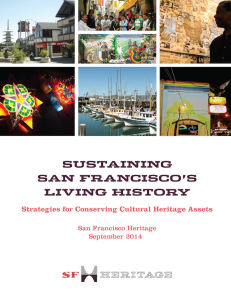
Sustaining San Francisco's Living History by San Francisco Heritage

Sustaining San Francisco’s Living History by San Francisco Heritage

The fundamental boundaries of historic preservation have been significantly expanded by San Francisco Heritage, one of the country’s leading historic preservation organizations. In Sustaining San Francisco’s Living History: Strategies for Conserving Cultural Heritage Assets, they state that, “Despite their effectiveness in conserving architectural resources, traditional historic preservation protections are often ill-suited to address the challenges facing cultural heritage assets. . . Historic designation is not always feasible or appropriate, nor does it protect against rent increases, evictions, challenges with leadership succession, and other factors that threaten longtime institutions.”   In an effort to conserve San Francisco’s non-architectural heritage, historic preservation must consider “both tangible and intangible [elements] that help define the beliefs, customs, and practices of a particular community.” Did you notice the expanded definition?  Here it is again:  “Tangible elements may include a community’s land, buildings, public spaces, or artwork [the traditional domain of historic preservation], while intangible elements may include organizations and institutions, businesses, cultural activities and events, and even people [the unexplored territory].”

With many historic preservation organizations, it’s all about the architecture so protecting landscapes, public spaces, and artwork is already a stretch.  They’re often not aware that Continue reading

Changing Attitudes About History one Grizzly at a Time

This slideshow requires JavaScript.

Politics and Prose, the famous independent bookstore in Washington DC, hosted a booksigning for Tim Grove, chief of museum learning at the Smithsonian Air and Space Museum, that attracted seventy-five listeners this past Saturday.  It’s not often that museum folks share a stage that recently included Patrick Buchanan, Timothy Geithner, Lynn Sherr, and Michelle Obama.  His talk will be aired on C-Span.

A self-professed history geek, Tim shares his love for history in A Grizzly in the Mail and Other Adventures in American History (University of Nebraska Press, 2014), a collection of stories from his years working at Colonial Williamsburg, Missouri Historical Society, National Portrait Gallery, and the National Museum of American History.   Tim wants to improve the public image of history by demonstrating the fun of history and “help history haters change their minds.” To do this requires provoking a deeper thinking about historical programs and activities to better link past and present  As he states in his book,

The staff at [Colonial] Williamsburg and other history sites wants visitors to “experience” history.  What does this mean?  One can visit Yosemite National Park and experience the beauty and grandeur of nature.  One can go whitewater rafting and experience the rush of the river and the cold wetness of the water as it splashes the face.  But experiencing history?  Do you experience history when you walk the hallowed ground of a battlefield or visit a historical house?  Experience in verb form implies action.  What action is actually taking place?

Tim demonstrates that “action” through a wide assortment of stories, from conquering a high wheel bicycle and questioning the significance of Eli Whitney’s cotton gin to navigating the legacy of Lewis and Clark, and yes, unpacking a grizzly bear Continue reading

Can the Exploratorium Help Us Explore History?

Last week I visited the Exploratorium in its new home on Pier 15 in San Francisco. If you haven’t veen there, it’ll seem like a science center but you’ll quickly discover it’s really a place about learning, especially through direct experiences with art, tinkering, and phenomena (yep, that’s how they describe it).  It’s an incredibly active place (almost to the point of overwhelming) that seems to effectively engage its visitors, so I continually watch to see if any of their exhibits or ideas can be applied to historic sites or history museums.  During my latest visit, I found two exhibits that with a mild tweak could be really be innovative for interpreting history.

This slideshow requires JavaScript.

1.  Question Bridge:  Black Males.  This temporary exhibit is, “comprised of many individuals asking and answering questions about the experience of black men in modern America.”  Inside the small dark room are Continue reading

Video: Luminous Hall

The Centenary of the University of Western Australia was celebrated with “Luminous Hall” on February 8, 2013, a 20-minute performance created by Illuminart.   Luminous Hall is a “narrative architectural projection” on the exterior of the historic Winthrop Hall that combines mapped projection with music, stories, and drama interpreting the history of the university and local community. Moving beyond son et lumier, the form engages the viewer in history in an extraordinary way.  Other examples using Norwood Town Hall and a Night Mural Picnic are available.

Video: The Royal Castle

In honor of Historic Preservation month, the videos in May will feature related topics, starting with “The Royal Castle: From Destruction to Reconstruction” by Novina Studio. This 2:28 animation traces the destruction of this historical monument by the Nazis in World War II to its reconstruction in 1974. Simple and dramatic, it provides a quick history of the site.

The Many Flavors of Touring Historic Places

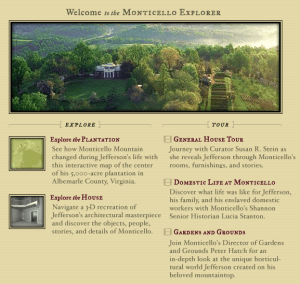
Monticello Explorer provides several virtual tours.

Monticello Explorer provides several virtual tours.

Although guided tours of period rooms is the most common form of interpretation at historic sites, audio tours, video tours, and virtual tours are growing in popularity thanks to technologies that are lowering the cost of production and increasing access to new audiences.  From a short list of examples, the students in my “historic site interpretation” class at George Washington University developed a list of ten best practices for different types of tours of historic sites.  You’ll discover that many of their suggestions emphasize the need for a plan, themes, and a focus–and projects that failed to have these elements were weaker and less effective.

A.  Guided Tours of Period Rooms

Reviewed by Johanna Bakmas, Melissa Dagenais, Emma Dailey
 

Suggested Best Practices

Do
  1. Develop an interpretive plan and themes
  2. Consult primary sources for the property
  3. Decide whether to have reproduction or original pieces Continue reading