Why Board Diversity Matters for Museums (and When It Doesn’t)

Museums are facing a period of transformation—shifting visitor expectations, financial uncertainty, and growing pressure to be more inclusive and socially responsible. But who is making the decisions that shape how museums navigate these challenges?

A museum’s board of directors plays a crucial role in setting strategy, securing funding, and guiding institutional priorities. While board diversity has become a major talking point, research suggests that simply adding diverse voices isn’t enough. The type of diversity, how it’s measured, and how boards function together all influence effectiveness.

Three recent studies offer key insights into how board diversity affects decision-making, resilience, and institutional success. Together, they provide a roadmap for museums looking to build stronger boards.

Insight #1: Measuring Board Diversity Matters but Not All Diversity Is the Same

Behlau and colleagues provide a systematic review of how board diversity is measured and highlight a key problem: diversity is often discussed in broad terms without precise definitions. They categorize board diversity into three dimensions:

  1. Structural diversity, which includes factors like board size, term limits, and leadership roles.
  2. Demographic diversity, which includes observable characteristics like gender, age, and ethnicity.
  3. Cognitive diversity, which includes unobservable attributes like expertise, education, values, and skills.
Continue reading

IMLS Targeted for Elimination—How Museums Can Prepare and Advocate

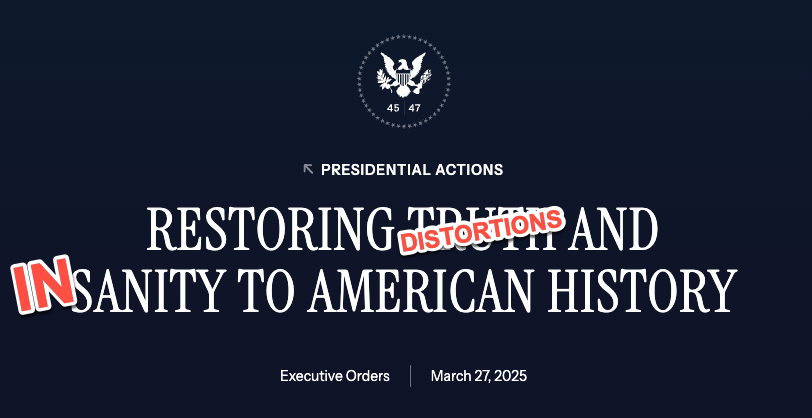
On March 14, 2025, President Trump issued an Executive Order directing the elimination of the Institute of Museum and Library Services (IMLS) and the Woodrow Wilson Center at the Smithsonian Institution “to the maximum extent consistent with applicable law.” While the full impact of this order is still unfolding, museums that rely on IMLS resources should take immediate steps to safeguard critical information. IMLS websites and databases may be taken down soon, limiting access to funding guidelines, research reports, and professional development materials. If your institution depends on these resources, now is the time to download and archive what you need.

If your museum has an active IMLS grant, there’s reason to believe that existing awards will be honored, but based on past experience with federal grant funding disruptions, delays are highly likely. Be proactive in communicating with your IMLS program officer, tracking your grant-related expenses, and preparing contingency plans for potential funding interruptions.

This Executive Order may also signal broader cuts to federal cultural funding. It wouldn’t be surprising to see similar threats to the National Endowment for the Humanities (NEH), National Endowment for the Arts (NEA), National Gallery of Art, and even the Smithsonian Institution. If these agencies are reduced or eliminated, the impact on museums, historic sites, and cultural organizations nationwide will be profound.

If your museum is affected by these potential cuts, now is the time to act. Inform your board, staff, members, and community stakeholders about what this means for your institution. Contact your elected representatives in Congress and urge them to protect federal support for museums, libraries, and cultural heritage. Without direct advocacy from the field, lawmakers may assume these cuts will go unnoticed.

For more details, see the full Executive Order here: White House Executive Orders.

Continue to speak up! Museums, historic sites, historical societies, and libraries matter—let’s make sure Congress knows it.

Rethinking Goals in History Organizations: A New Framework for Internal and External Impact

For many years, history organizations—including history museums, historical societies, house museums, and historic sites—have measured success using a traditional planning framework focused on outputs (what an organization produces). By the 1990s, there was a growing recognition of the importance of outcomes (how visitors change because of that work), over merely completing tasks.

While the confusingly-named outputs and outcomes framework have improved museum projects, they often overlook how history organizations themselves evolve—how their staff, volunteers, and boards gain knowledge, shift perspectives, and take action to improve their work.

I’d like to introduce a new way of thinking about goals in museums, distinguishing between internal change (within the organization) and external change (within the community and visitors). Using the Know, Feel, Do framework, this model helps history organizations better understand their impact—both inside and outside the institution.

The Know, Feel, Do framework is a structured approach to understanding how individuals and organizations learn, experience emotions, and take action. It is based on Benjamin Bloom’s Taxonomy of Learning Domains, which classifies learning into three categories:

  1. Cognitive (Know) – Intellectual engagement and knowledge acquisition.
  2. Affective (Feel) – Emotional and attitudinal responses.
  3. Behavioral (Do) – Actions taken as a result of learning.

This model is widely used in education, marketing, nonprofit management, and project evaluation to design experiences that lead to meaningful change.


The Traditional Model: Outputs vs. Outcomes

Continue reading

Building Lasting Museum Connections: The Four Levels of Audience Engagement

Imagine this: you’ve spent weeks planning a concert at your local history museum. You’ve arranged every detail, from booking a fantastic band to setting up the stage. The chairs are perfectly aligned, the lighting is just right, and the atmosphere feels full of possibility. But as the start time approaches, your excitement gives way to nervous glances at the clock. The parking lot remains empty. You keep hoping someone will arrive late, but after ten minutes, the seats are still vacant. The band—thankfully understanding—decides to use the time to practice, and while their music fills the room, you’re left grappling with embarrassment and frustration. Just a week earlier, a similar concert you organized thirty miles away had a packed house. What went wrong this time? How could the results be so different?

That happened to me early in my museum career and it was a humbling lesson. Perhaps you’ve faced similar moments—community events that fell flat, partnerships that fizzled, or publicity that didn’t attract attention. It’s easy to feel defeated when a community group declines to collaborate because their priorities don’t align, or when a business association’s objectives clash with the mission of interpreting artifacts rather than hosting public events. Sometimes, the problem is simply bandwidth—not enough staff to attend community meetings or follow up with volunteers. Community engagement can feel like a puzzle with a lot of missing pieces. But with the right tools, those challenges can transform into opportunities.

Continue reading

Preserving History or Playing Politics? Marco Rubio Takes Over National Archives

In a significant reshuffling of federal leadership, President Donald Trump has appointed Secretary of State Marco Rubio as the acting Archivist of the United States. This move follows the abrupt dismissal of Colleen Shogan, the former head of the National Archives and Records Administration (NARA), earlier this month. The decision has raised concerns about the potential politicization of an agency traditionally known for its nonpartisan role in preserving the nation’s historical records.

The National Archives has recently been at the center of political tensions, particularly concerning its involvement in the Justice Department’s investigation into President Trump’s handling of classified documents post-presidency. The agency’s referral led to an FBI search of Trump’s Mar-a-Lago estate, culminating in a federal indictment that was later dismissed. In the wake of these events, several senior staff members at NARA have resigned or been terminated, further intensifying debates about the agency’s future direction and independence.

To delve deeper into these developments, the podcast 1A hosted a discussion today titled “The National Archives and the Trump Administration.” The episode explores the implications of Secretary Rubio’s appointment, the recent upheavals within NARA, and what these changes mean for the preservation of America’s historical records. Listeners can access the episode on WAMU’s website.

As the situation continues to evolve, stakeholders and observers alike are closely monitoring how these leadership changes will impact the National Archives’ mission to safeguard the nation’s documentary heritage.

Sources

Gerstein, Josh and Kyle Cheney, “Trump Fires National Archives Chief,” Politico,(February 7, 2025).

 Swenson, Ali and Gary Fields, “The National Archives Is Nonpartisan but Has Found Itself Targeted by Trump,” Associated Press (February 26, 2025).

How to Turn Exploratory Visitors into Loyal Fans

Museums and historic sites face a persistent challenge: how to transform mildly interested visitors into deeply engaged patrons. These exploratory visitors—those who follow your social media accounts, visit the website, or attend an occasional event—represent a critical audience segment with untapped potential. How can museums help these visitors feel more connected and motivated to return?

Three recent studies offer actionable insights into addressing this challenge: one on the power of framing and emotional relevance, another on the role of clear wayfinding in reducing visitor anxiety, and a third on the holistic visitor experience at heritage attractions.

Lesson 1: Framing and Emotional Relevance Matter

In “The Role of Framing, Agency, and Uncertainty in a Focus-Divide Dilemma,” Justin Claydon et al highlight how contextual framing—presenting information in a familiar, relatable way—dramatically improves motivation and engagement. When tasks are abstract or unfamiliar, people struggle to prioritize and engage effectively. Conversely, framing a task with real-world relevance reduces uncertainty and increases interest.

Continue reading

Job Announcements Should Inspire, Not Confuse

Recently, I came across a job announcement for a senior position at a museum that left me more frustrated than inspired. Despite the important role it advertised, the description was riddled with vague language, overused phrases, and an overwhelming list of responsibilities. If it weren’t for the letterhead, this could have been a job at nearly any museum in the country. Here’s what went wrong—and how we can do better:

1. Clear, Specific Language Beats Buzzwords

Phrases like “championing change management,” “leveraging opportunities,” or “fostering growth” sound impressive, but what do they actually mean? Without clarity, these terms are open to interpretation, leading to confusion or disagreements down the line. A good job description uses concrete language to convey expectations. For example, instead of “fostering growth,” specify what kind of growth: increasing visitor numbers? Expanding programming? Generating revenue?

2. Prioritize, Don’t Overwhelm

This particular job description listed a dozen “essential” duties and responsibilities, each with multiple sub-points. While comprehensive, such an exhaustive list signals a lack of prioritization. No one can excel at everything, and candidates may be deterred by the sheer scope of the expectations. Instead, focus on the top three to five priorities that are most critical to success in the role.

Continue reading

Exciting News: Expanded Services for Museum and Historic Site Management

At Engaging Places, we are committed to helping museums and historic sites engage audiences and preserve our shared heritage. We are excited to announce the expansion of our services to include collections stewardship documents that align with the ethics and professional standards set by the American Alliance of Museums, as well as governance materials—essential tools that equip their board members with the necessary knowledge and resources to govern effectively and advance the organization’s mission.

These new services are led by Mary van Balgooy, Vice President of Engaging Places. Mary brings extensive experience as an executive director of both local and national nonprofit organizations and as a collections manager for history museums and historical societies of all sizes. Her expertise allows us to offer customized solutions tailored to each organization’s unique needs. Whether you are a newly established nonprofit or a long-standing institution, we will provide the necessary documentation and best practices to support your collections management and equip your leadership team with effective governance tools. Learn more about Mary’s impressive background here.

Services Provided:

Continue reading

Is Free Admission Really the Key to Unlocking Museum Doors?

Imagine walking into a museum for the first time. The sunlight filters through glass atriums, the smell of polished wood and history greets you, and the quiet hum of curiosity fills the air. For some, this is an everyday experience. For others, it’s a world they’ve never dared to enter. Free admission promises to change that, throwing open the doors to anyone, regardless of their pocketbook. But does it really work? I scanned the journals to see what researchers had discovered.

What Free Admission Gets Right

Let’s face it—free admission has a magnetic pull. People are more likely to take a chance when the price barrier vanishes. Lin (2008) notes that museums offering free access often see surges in attendance. Suddenly, a day at the museum isn’t competing with groceries or a new pair of shoes—it’s a possibility.

In France, Gall-Ely et al. (2007) found that free admission felt like a gift. Visitors talked about how it gave them permission to explore without guilt or second-guessing. Think of it as a universal invitation: “Come in, look around. This is your space, too.” Similarly, Barbosa and Brito (2012) found that open-day events broke the ice, especially for hesitant first-timers. Those who’d never considered a museum visit were finally stepping inside.

Continue reading

Navigating New Federal Policies: What Executive Orders Mean for History Museums and Historic Sites

Museums are no strangers to navigating shifting policy landscapes, but recent executive orders issued by the White House signal significant changes that will affect funding, interpretation, and educational outreach. Whether you work in a history museum, a historic preservation organization, or a community-based historical society, understanding these policies is crucial for adapting to new challenges and opportunities.

Key Themes Across the Executive Orders

1. A Shift Toward Patriotic and Nationalist Narratives

Executive Orders 14190 (Ending Radical Indoctrination in K–12 Schooling) and 14189 (Celebrating America’s 250th Birthday) prioritize “patriotic education” and reinforce a government-endorsed interpretation of American history. This shift is exemplified by the reestablishment of the 1776 Commission and the creation of Task Force 250, which will oversee programming related to the 250th anniversary of American independence. “Patriotic education” is defined as “the history of America grounded in:

  • (i) an accurate, honest, unifying, inspiring, and ennobling characterization of America’s founding and foundational principles;
  • (ii) a clear examination of how the United States has admirably grown closer to its noble principles throughout its history;
  • (iii) the concept that commitment to America’s aspirations is beneficial and justified; and
  • (iv) the concept that celebration of America’s greatness and history is proper.”

2. The Elimination of Federal DEI and Environmental Justice Programs

Executive Order 14151 (Ending Radical and Wasteful DEI Programs and Preferencing) eliminates all federal support for diversity, equity, and inclusion (DEI) initiatives. This includes the termination of DEI-related grants, plans, contracts, programs, initiatives, training programs, offices, positions, and employment policies within federal agencies, “under whatever name they appear.” Museums that have benefited from federal DEI funding or programs may need to reassess their funding strategies and institutional policies.

3. Renaming and Monument Preservation

Executive Order 14172 (Restoring Names That Honor American Greatness) renames Denali back to Mount McKinley and designates the Gulf of Mexico as the Gulf of America. Additionally, the reinstatement of the National Garden of American Heroes and the protection of existing monuments signal a renewed emphasis on traditional historical figures. Museums may face increased scrutiny when interpreting contested histories, particularly around geographic names and public commemorations.

Continue reading