Tag Archives: American Alliance of Museums

Report from the Field: AAM Annual Meeting 2016

This slideshow requires JavaScript.

The American Alliance of Museums held its 2016 meeting in Washington, DC last week, which was incredibly convenient for me because I could easily take Metro from my home in Maryland and incredibly inconvenient because it was far too easy for me to stay in my office and say, “I’ll go later” and skip sessions.  I managed to attend two days along with 6000 other people and came back with an assortment of observations:

  1.  AAM allowed a track of sessions that were focused on one museum or site, which can vary from an indepth examination of a single project to a general show-and-tell of everything they do.  Both have benefits and disadvantages (I tend to find the show-and-tells incredibly dull) but it also reminds me how difficult it is to learn what’s happening in the field, especially if you work at historic sites.  Subscriptions, conferences, and travel to other sites have all been victims to tightening budgets, hence my ongoing commitment to a blog that shares a variety of news and information.
  2. The exhibit hall was packed, primarily with exhibit designers and exhibit lenders, and a couple booths introduced virtual reality.  Lots to see from books to dinosaurs but most handy was the Museums Change Lives brochure from the Museums Association in Great Britain. It provides some useful language on the value of museums that can be easily adapted to public speeches, newsletters, fundraising, and membership renewal letters.
  3. Museums of all types are doing pretty cool programming using games or tranforming mundane topics like agriculture.  And yet, very few provided any evidence that their activities were making any impact on visitors.  Yes, attendance and revenue may have increased, but what did visitor learn? how did it change their attitudes? did they apply what they learned to their lives?
  4. Although there were sessions for historic sites and house museums, I regret to say that there aren’t enough to justify the expense. As a result, I only attend every 3-5 years to check up on things.  Next year, the AAM annual meeting will be in St. Louis, Missouri.

If you attended AAM last week and found some particularly useful information or a new resource, please share them in the comments below.
A Wet but Successful Museums Advocacy Day

This slideshow requires JavaScript.

Washington DC was cold and grim yesterday as hundreds of museum advocates visited the offices of senators and congressmen to encourage their support for the Institute of Museum and Library Services and the charitable tax deduction.  I had a short but very productive meeting with the staff in Congressman Van Hollen’s office, who has been a long-standing supporter of museums, libraries, and historic preservation, so despite the wet weather, my day felt great. I was also reminded how many other people are also promoting their causes and how easy it is for the value of museums and historic sites to get drowned out by others.

On Monday, we prepared for our visits with several solid briefings on IMLS and education policy, hearing some good news (the American Institute for Conservation will manage the Conservation Assessment Program, following the dissolution of Heritage Preservation) and some frustrating news (the recently adopted Every Student Succeeds Act restores history and civics to the curriculum but President Obama’s recently submitted budget eliminated the funding).  Of course, it was really fun seeing colleagues from around the country and hearing about the interesting work they’re doing (l discovered Building Public Will for Arts and Culture, which is surprisingly similar to the History Relevance Campaign).

Thanks to the American Alliance of Museums for coordinating this event!

Unconference in DC Poised to Transform Museums


Openlab is convening an unconference, talks, and a planning workshop in Washington, DC on December 1-2 to “to accelerate the speed and impact of transformational change in the GLAM (gallery, library, archive, and museum) sector” in order to “to increase and disseminate knowledge; to encourage civic dialogue and engagement; and to support individuals in their right to access and participate in culture.”  The brain child of Michael Peter Edson of the Smithsonian, much of OpenLab’s work seems to be focused on using digital technologies to solve age-old questions, such as “what needs to change in galleries, libraries, archives, and museums?” and “what is missing in the current funding and support landscape for GLAMs and the humanities?”  It’s all a bit nebulous and unclear, but that’s the core nature of an unconference. Nevertheless, it’s one of many concurrent efforts to increase the impact of museums in society (and yes, we’re still in the fragmented stage).

The first day on December 1 (today) is the unconference and a series of Ignite talks from 2-7 pm in Arlington, Virginia that’s free and open to the public.  The second day, however, Continue reading

AAM Provides Update on the Direct Care Debate, but no Solution

Direct Care“Direct Care” is the most troubling word in the museum lexicon but it doesn’t look like the specially-charged task force at the American Alliance of Museums will be able to resolve it, according to their recent update:

The Direct Care Task Force met during the Alliance annual meeting in Atlanta to discuss the results of the opinion survey conducted in February and to frame the forthcoming White Paper. Their lively and thoughtful discussions covered discipline-specific issues, philosophies and viewpoints, and frequently went back to the topic of financially motivated deaccessioning.

Representatives from New Knowledge, the non-profit think tank and planning group that conducted the survey for AAM, presented their findings and analysis of the data.A very broad range of museum types and job functions were represented by the survey’s 1258 respondents.

• Nearly three quarters of the respondents identified their primary role in the museumindustry as responsible for Collections (74.1%) while a quarter (24.4%) hold executive office. Nearly all the remaining respondents hold primary roles that are either executive or managerial; a handful are in other roles.

• The types of museum participating broke down as: History 32%; Art 28%; Specialized, Multi-disciplinary or visitor center 17%; Natural History 11%; Science/Technology 5%; Arboretum/ Botanical or Public Garden 4%; Children’s / Youth 2%; Aquarium/Zoo 1%.

Before seeing the results, the Task Force hypothesized that a respondent’s position in an organization and the discipline of participating institutions would influence the outcome of the survey. However, the analysis found no statistical differences. In examining both the open-ended responses and general ratings, it appears that respondents were most likely considering their audience, the Alliance, and answering altruistically as professionals in the field rather than as representatives of a particular disciplinary viewpoint.

Survey results showed 1) a few areas of consensus from a statistical perspective and 2) a vast gray area. The most common of the open-ended final comments expressed appreciation for the timeliness of the survey and the need for resolving the parameters for direct care. As a result, the Task Force focused on identifying guiding principles and criteria for decision-making, not creating a definitive yes/no list or a singular definition of “direct care.”

The survey results provided the Task Force with a useful scan of the attitudes on the issue of direct care and acquisition costs, from a wide variety of viewpoints. They will inform the White Paper to be released in the spring of 2016. The Task Force agreed that the White Paper should not be prescriptive but should clarify the ethical issues surrounding the topic of direct care and provide guidance for museums in their decision-making.

Looks like they’re agreeing to disagree and won’t be Continue reading

IMHO: The National Trust’s Collections Management Policy is Not Ready to Eat

Last year, the National Trust for Historic Preservation adopted a new Collections Management Policy (CMP) and widely promoted it at professional conferences and in national publications as a model to house museums and historic sites to resolve some of their stewardship challenges. At its heart is,

“a new approach—one that treats the historic structures and landscapes, and the object collections, as being the same type of resource. This approach places the historic buildings and landscapes on a par with objects and documents, strengthening the interconnected stewardship and interpretation of these historic resources.”

It’s a good idea but it’s not a new approach.

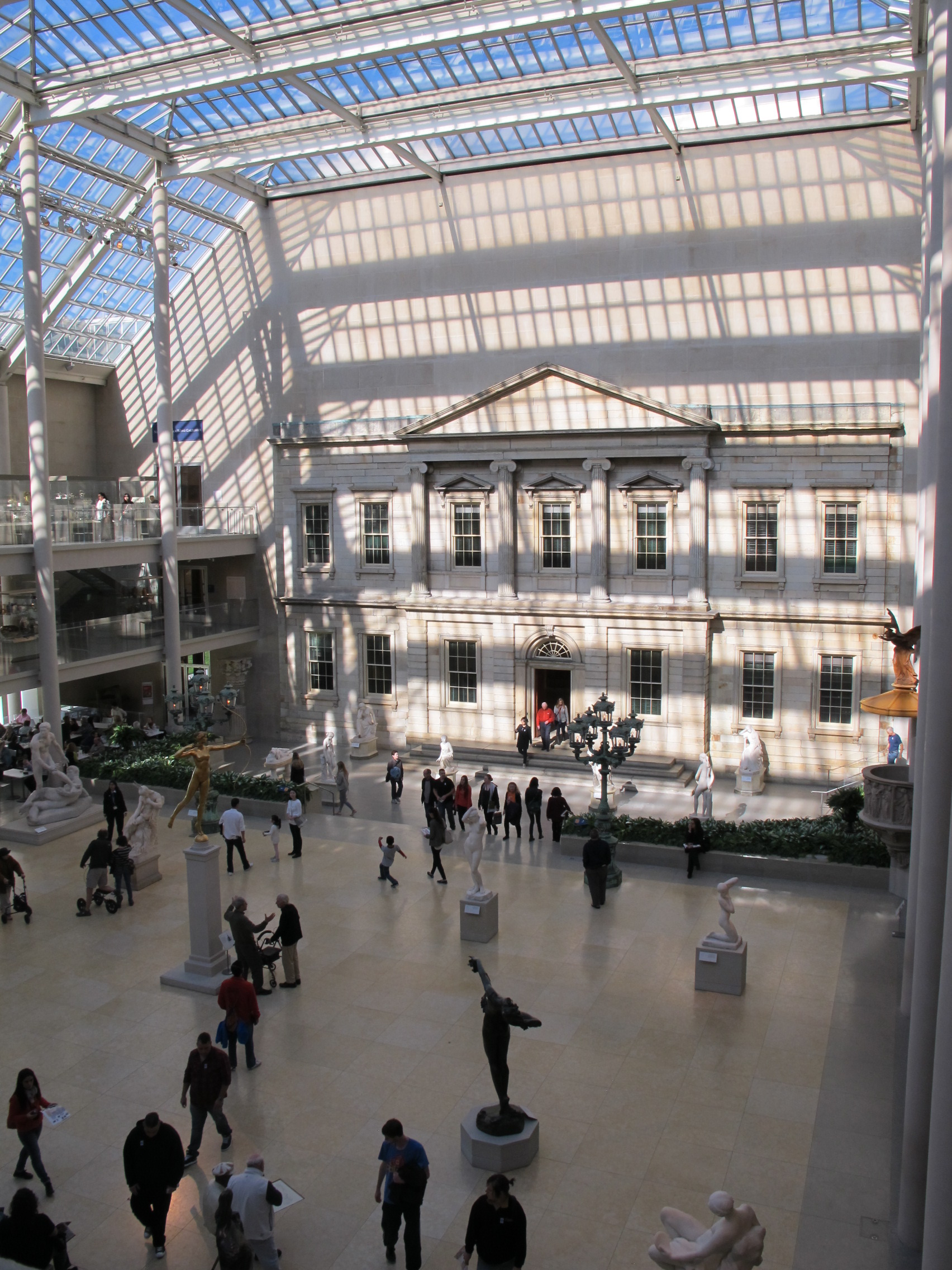
American Wing at the Met featuring the 1822 Branch Bank of the US.

American Wing at the Met featuring the facade of the 1822 Branch Bank of the United States.

Early in the twentieth century, museums of various types began collecting buildings. Henry Ford moved Edison’s laboratory and the Wright Brothers bicycle shop to his Greenfield Village, John D. Rockefeller quietly bought dozens of buildings to create Colonial Williamsburg, and the Metropolitan Museum of Art installed the facade of the Branch Bank of the United States as the featured object of its 1924 American Wing. Much later, landscapes were considered worthy of preservation and now most historic estates, such as Casa del Herrero, Miller House and Garden, and Marsh-Billings-Rockefeller National Historical Park, treat their gardens and landscapes with the same respect as the furniture and art works at their sites.

The National Trust’s rationale for their new approach is that, “conflicts between Continue reading

AAM’s Education Committee revives its Web Page

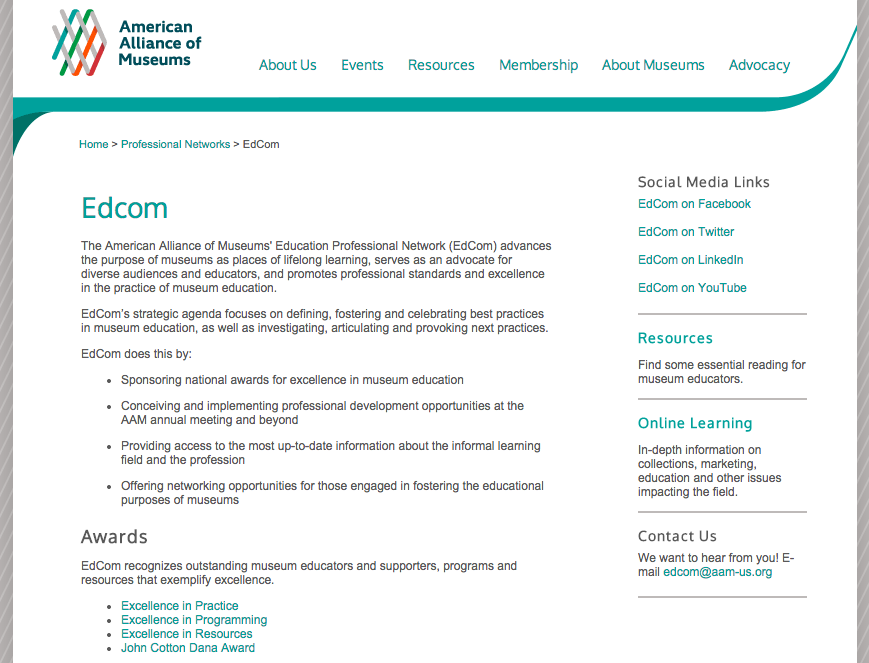
AAM EdCom web pageEdCom, the Education Professional Network of the American Alliance of Museums, recently revived its web page after a few months on hiatus.  You’ll not only find basic information about EdCom, the group that’s focused on education and interpretation in all types of museums (including historic sites), but resources, such as “Excellence in Practice: Museum Education Principles and Standards,” and a suggested bibliography.  If you want to keep on news, you’ll want to join them on Facebook, Twitter, or LinkedIn.

With the recent restructuring of membership at AAM, you can join any one of the 22 professional networks (there’s even one for Historic House Museums) for free if you’re an individual professional member.

Delaware’s Strategic Plan Meets AAM Standards

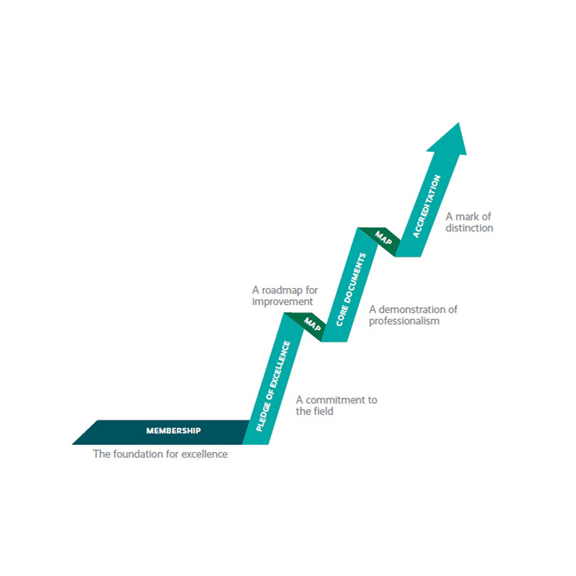
AAM's "Continuum of Excellence."

AAM’s “Continuum of Excellence.”

A couple years ago, the American Alliance of Museums introduced the Continuum of Excellence, a “multi-program structure [that] offers opportunities for various levels of assessment, feedback, and recognition that build on one another.”  It’s a significant expansion of the Museum Assessment Program and Accreditation process because it now includes additional intermediate steps, including verification of five core documents, including a strategic plan.

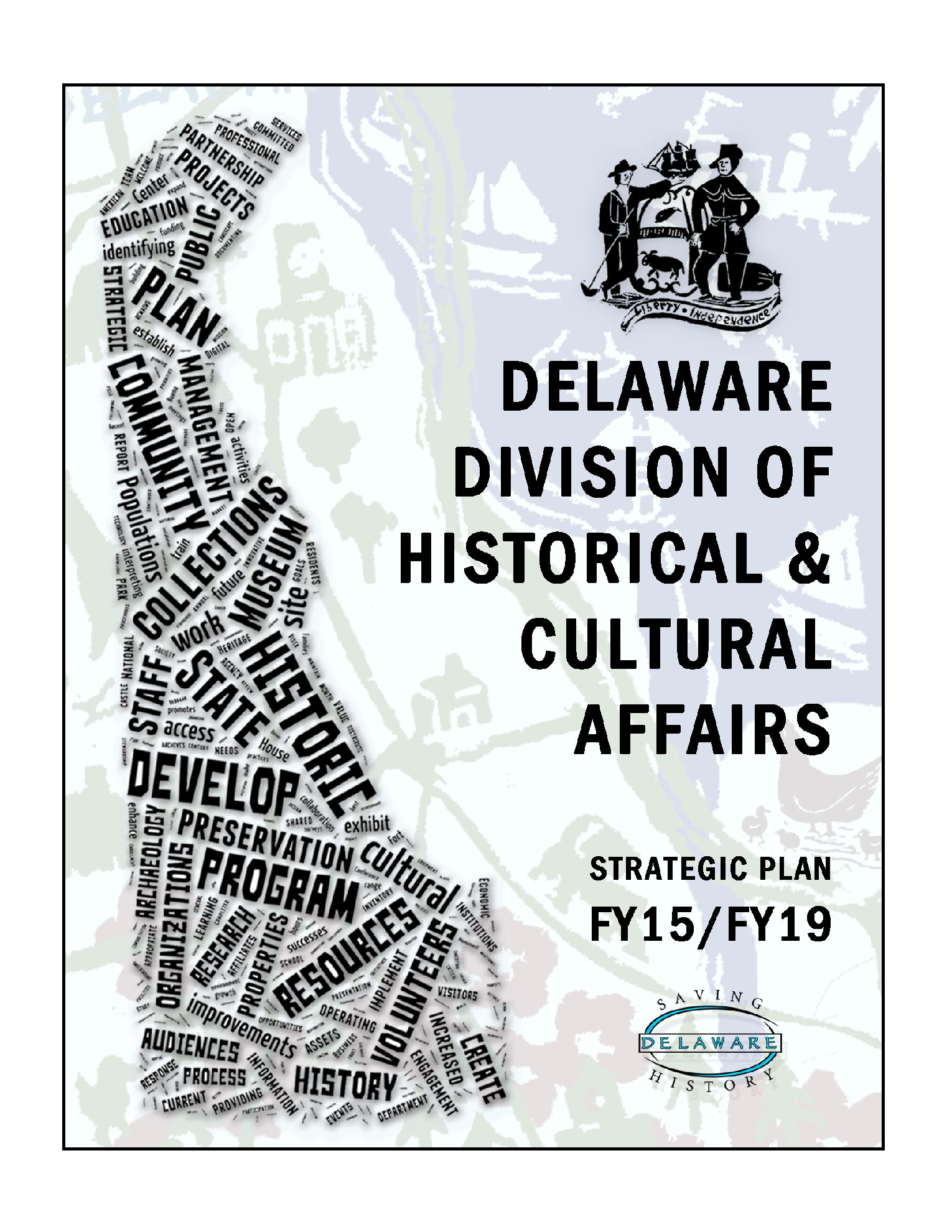
Delaware Strategic Plan FY15-FY19 coverLast year I worked with the Historical and Cultural Affairs Division of the State of Delaware to prepare a strategic plan that would meet or exceed AAM’s standards for professional museums.  The planning process was more complex than usual because it involved a state government agency that is responsible for over forty historic properties, five museums, a conference center, welcome center, historic preservation, and archaeology and has numerous local partners and affiliates. They also wanted a strong emphasis on team work and a heavy reliance on staff expertise, so the process included large and small group meetings, staff surveys, and community research to create a vision, core values, major audiences, goals, implementation, evaluation, and a budget within eight months.  Whew!

I facilitated the meetings and provided general direction, but the staff wrote, revised, and developed the strategic plan from beginning to end while still working their regular jobs.  I’m incredibly proud Continue reading

Online Learning Opportunities for Historic Site Interpreters

The opportunities for sharpening your skills as an historic site interpreter continue to grow online, sometimes even for free.  Here are a sampling of a few non-degree granting organizations where you’ll find workshops and classes on the Internet to keep your thinking fresh and improve your technique.  All times are Eastern unless noted.

American Alliance of Museums

  • Embracing 360 Engagement, Widening the Circle.  September 2, 2014 at 2:00 pm Eastern.
  • Building Trust through High Performance, Becoming Essential.  December 3 at 2:00 pm.

American Association for State and Local History

  • Historic House Calls: Using Futures Thinking to Navigate Ongoing Change.  August 20, 2014 at 2:00 pm. Free for AASLH members.
  • Writing the Grant: What’s the Process Like?  August 27 at 3:00 pm.  $115; $40 members.

Coursera

Continue reading

Snapshots from the AAM Annual Meeting in Seattle

This slideshow requires JavaScript.

The American Alliance of Museums finished up their annual meeting in Seattle this week with about 5,000 people in attendance, including many from China, England, and Canada.  The weather was jaw-dropping beautiful so trading it for the sessions indoors was a dilemma at times, but nothing would have pulled me away from the opening plenary which featured Erik Larson, author of Isaac’s Storm and Devil in the White City, who discussed his process for writing these histories.   He doesn’t think of himself as an historian, however, but as an “animator of history” who seeks to “create a rich historical experience.”  Hmm.  Sounds like what historic sites do.  I was also provoked by several very intriguing sessions related to history museums and I’ll be sharing highlights soon.  In the meantime, enjoy these snapshots from the annual meeting.

Is Planning Giving You the Creeps?

Scope CreepThis afternoon at the annual meeting of the American Alliance of Museums in Seattle, Washington, I’ll be part of “Strategic Planning Made Simple,” a panel session discussing approaches to designing and implementing strategic plans with Liz Maurer (National Women’s Museum), Laurie Baty (National Capital Radio and Television Museum), and Steve Shwarzman (Institute of Library and Museum Services).  I’ll be highlighting four ways to overcome “planning creep,” the seemingly inevitable and invisible force that pulls you away from your goals:

1.  Adopting a Meaningful Purpose and Vision.  Strategic plans have been with us for nearly a century, first for military purposes and then adopted by businesses in the 1970s.  It’s now pretty clear that planning without a purpose is a wasted effort and now you’ll find both businesses and non-profit organizations adopting “mission statements.”  While mission statements are needed, not all mission statements are helpful.  I’ll be outlining the six elements of a Continue reading