Author Archives: Max van Balgooy

Unknown's avatar

About Max van Balgooy

President of Engaging Places LLC, a design and strategy firm that connects people to historic places.

Knowledge of US History Unchanged Overall for 8th Graders, but Differences Are in the Details

Average score changes between 2010 and 2014 in NEEP at grade 8 by subject.

Average score changes between 2010 and 2014 in NEEP at grade 8 by subject. To view the full report, go to NationsReportCard.gov.

The National Center for Education Statistics, which administers National Assessment of Educational Progress (NAEP, also known as the Nation’s Report Card), recently announced that overall academic performance of eighth-graders in U.S. history, geography and civics has remained unchanged since 2010, though Hispanic students have made gains in U.S. history and geography.

NAEP reports performance using average scores and percentages of students performing at or above three achievement levels: Basic, Proficient and Advanced. The Basic level denotes partial mastery of the knowledge and skills needed for grade-appropriate work; Proficient denotes solid academic performance; and Advanced represents superior work. The assessment is based on nationally representative samples of more than 29,000 eighth-graders in total across the country.

The 2014 results for U. S. history show that 18 percent of eighth-grade students performed at or above Proficient, which is basically unchanged from 17 percent in 2010 and 2006. There are significant differences by ethnicity: Continue reading

Reinventing the House Museum in Portsmouth

This slideshow requires JavaScript.

A sold-out crowd of history enthusiasts packed the auditorium at the Strawbery Banke Museum in Portsmouth, New Hampshire on April 21 to discuss ways to reinvent the house museum.  Sponsored by the American Association for State and Local History and the New England Museum Association, the one-day workshop explored ways that historic house museums can more successfully engage their community and improve their financial sustainability.

The morning featured several presentations and the afternoon was a hands-on workshop at a nearby historic house.  I opened the day with a process for developing a plan and then focused on Michael Porter’s Five Forces, a diagnostic tool that’s superior to SWOT for assessing a house museum’s strategic position.   Ken Turino of Historic New England provided a smorgasbord of ideas from house museums around the county to rethink existing conceptions.  Larry Yerdon, CEO of the Strawbery Banke Museum, discussed ways they are introducing new programs and activities to be both more engaging and financially sustainable.

After lunch, we gathered at the Governor John Langdon House, a property of Historic New England, where Joanne Flaherty and Linda Marshall led us on a quick inspection of the property and described its operations and recent efforts to use it for temporary exhibits.  Then the audience became temporary consultants using the Five Forces, analyzing existing and potential competition for exhibits, interests from visitors, and collaborating with exhibit providers.  The consensus seemed to be that an exhibit program could have a competitive advantage if it focused on the collections of Historic New England and may be better suited for rooms other than the parlor or dining room, which are architecturally significant.

This workshop will travel next to Atlanta, Georgia on June 12, where we’ll be using the Margaret Mitchell House as the case study.  To register and for more information, visit AASLH.org.


Reconstructing a Lost “Field Quarter”

In this 34-second time-lapse video, James Madison’s Montpelier in Virginia constructs a log “field quarter” (a dwelling for enslaved field workers).  It’s first constructed in a building to cut and fit all the pieces in a protected place during winter, then re-assembled in the field on a beautiful spring day in 2015.  It’s now on the exact spot where the foundations for a house were uncovered through archaeology (if you look carefully to the horizon on the left, you’ll see the Visitor Center).

Montpelier is in the midst of reconstructing many of the lost buildings associated with the enslaved African community, using archaeological and documentary evidence assembled over the past decade.  Their major project is the South Yard, six buildings next to the Madison’s mansion, which will be completed in the next few years, thanks to a generous gift from David Rubenstein.

Introducing Amazon “Dash Button” for Historic Sites

Amazon-Dash-for-Historic-SitesIn an exclusive partnership with Engaging Places LLC, Amazon.com has introduced a “Dash Button” for historic sites and house museums. Dash Button is a simple one-touch button that can be placed in your kitchen, bath, and laundry where you store your favorite products.  When you’re running low, simply press the Dash Button and Amazon delivers your household favorites to you so you can skip a last-minute trip to the store.

This innovative technology can be used for a variety of services, not just products, and Amazon and Engaging Places is launching Dash Button specifically for house museums and historic sites.  In the last year, the Dash Button has been field-tested with Continue reading

Video: Smithsonian’s Museum Goes High Tech

In this 3:35 video, The Verge interviews Aaron Cope, the head of engineering, about the new high tech exhibits at the Cooper Hewitt Museum, which is in the former home of Andrew Carnegie and part of the Smithsonian Institution.  The Cooper Hewitt closed for the last three years for an extensive renovation to imagine a museum that was part of the Internet and served as a bridge to their huge 130-million-object collection.

How to Get a Behind-the-Scenes Look at Historic New England

Program in New England StudiesHistoric New England presents its annual Program in New England Studies (PINES), an intensive week-long exploration of New England from Monday, June 15 to Saturday, June 20, 2015.  PINES includes lectures by noted curators and architectural historians, workshops, behind-the-scenes tours, and special access to historic house museums and collections. The program offers a broad approach to teaching the history of New England culture through artifacts and architecture in a way that no other museum or historic site in the Northeast can match.  It’s like the Attingham Summer School as a week in New England.

Examine New England history and material culture from the seventeenth century through the Colonial Revival with some of the country’s leading experts in regional architecture and decorative arts. Curators lecture on furniture, textiles, ceramics, and art, with information on history, craftsmanship, and changing methods of production. Architectural historians explore architecture starting with the seventeenth-century Massachusetts Bay style through the Federal and Georgian eras, to Gothic Revival and the Colonial Revival.

Expert presenters include: Continue reading

Are There Cultural Connections Between North and South?

Newport Symposium Banner 2015On April 26-29, 2015, the Preservation Society of Newport County (aka the Newport Mansions) is hosting a symposium on the cultural connections between the North and South from the Colonial Period to the Gilded Age as seen through furnishings, silver, textiles, painting, architecture, and interiors.  Scholars include:

  • Daniel Kurt Ackerman, Associate Curator, Museum of Early Southern Decorative Arts
  • Brandy Culp, Curator, Historic Charleston Foundation
  • Caryne Eskridge, Project Manager & Research Coordinator, The Classical Institute of the South
  • Stephen Harrison, Curator of Decorative Art & Design, Cleveland Museum of Art
  • Brock Jobe, Professor of American Decorative Arts, Winterthur Museum, Garden & Library
  • Alexandra Kirtley, The Montgomery Garvan Associate Curator of American Decorative Arts, Philadelphia Museum of Art
  • Jefferson Mansell, Historian, Natchez National Historical Park
  • George McDaniel, Executive Director, Drayton Hall
  • George H. McNeely IV, Vice President, Strategic & International Affairs, World Monuments Fund
  • Richard Nylander, Curator Emeritus, Historic New England
  • Tom Savage, Director of Museum Affairs, Winterthur Museum, Garden & Library
  • Susan P. Schoelwer, Robert H. Smith Senior Curator, George Washington’s Mount Vernon
  • Arlene Palmer Schwind, Curator, Victoria Mansion
  • Carolyn Weekley, Juli Grainger Curator, Colonial Williamsburg Foundation
  • Martha Willoughby, Senior Specialist, Christie’s

Registration is $600 and includes an opening reception at Rosecliff (1902) and dinner in the Great Hall at the Breakers (1895).  Scholarships are available to undergraduate and graduate students, as well as arts and humanities professionals.  To register or for more information, contact symposium@NewportMansions.org or call 401-847-1000 x 160.  Tell them that you heard about it from Engaging Places and you’ll receive a 10% discount!

SlideShare: Promoting Teen Night Out Using Social Media

In this 17 slide deck, the Lukens Company explains how they promoted Teen Night Out at the Seattle Art Museum using social media.  Since 2007, the museum has held thirteen Teen Night Outs with over 8,000 attendees.   You’ll find that it’s a well-rounded campaign that carefully defined the target audience and used several measures of success.  If you want to reach teenagers, you’ll want to check this out.

IMHO: The National Trust’s Collections Management Policy is Not Ready to Eat

Last year, the National Trust for Historic Preservation adopted a new Collections Management Policy (CMP) and widely promoted it at professional conferences and in national publications as a model to house museums and historic sites to resolve some of their stewardship challenges. At its heart is,

“a new approach—one that treats the historic structures and landscapes, and the object collections, as being the same type of resource. This approach places the historic buildings and landscapes on a par with objects and documents, strengthening the interconnected stewardship and interpretation of these historic resources.”

It’s a good idea but it’s not a new approach.

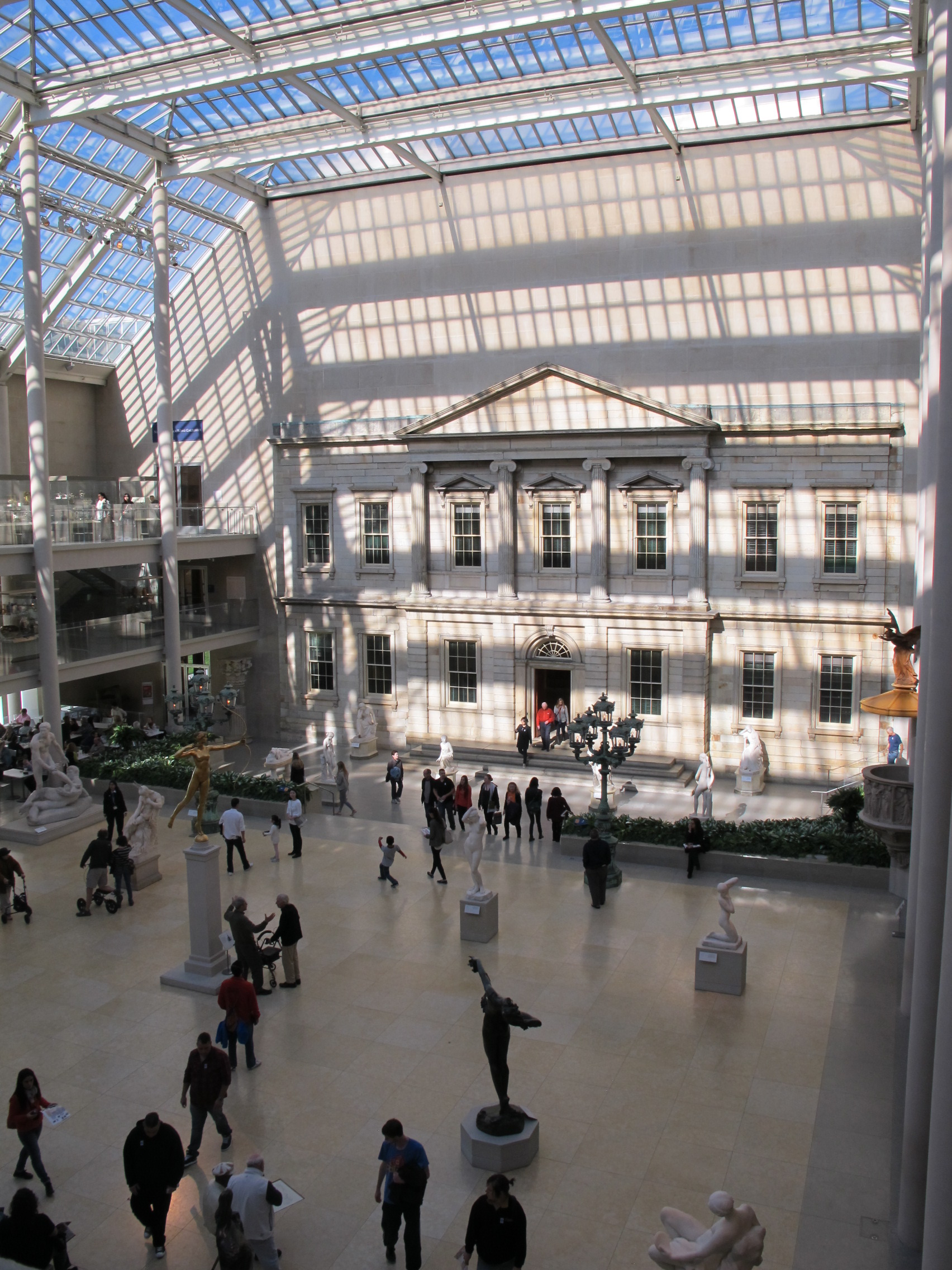
American Wing at the Met featuring the 1822 Branch Bank of the US.

American Wing at the Met featuring the facade of the 1822 Branch Bank of the United States.

Early in the twentieth century, museums of various types began collecting buildings. Henry Ford moved Edison’s laboratory and the Wright Brothers bicycle shop to his Greenfield Village, John D. Rockefeller quietly bought dozens of buildings to create Colonial Williamsburg, and the Metropolitan Museum of Art installed the facade of the Branch Bank of the United States as the featured object of its 1924 American Wing. Much later, landscapes were considered worthy of preservation and now most historic estates, such as Casa del Herrero, Miller House and Garden, and Marsh-Billings-Rockefeller National Historical Park, treat their gardens and landscapes with the same respect as the furniture and art works at their sites.

The National Trust’s rationale for their new approach is that, “conflicts between Continue reading