Mary van Balgooy, vice president of Engaging Places, shared a brief history of the ranch house in America on Marketplace today. The ranch house was one of the most prolific housing styles of the mid-twentieth century, and Mary is one of the nation’s leading experts on Cliff May, the designer behind more than 3,000 homes in the U.S. who played a pivotal role in popularizing this style with the help of Sunset and House Beautiful magazines. Mary has authored two influential articles on Cliff May (here and here), one of which earned the Doyce Nunis Award from the Historical Society of Southern California, and a lengthy series of blog posts at Xamary.
Hosted by Kai Ryssdal, Marketplace provides essential context on the day’s economic news through stories, conversations, and data, helping listeners make sense of the economic landscape. The show reaches more than 11.7 million listeners each week across 800 public radio stations nationwide, with an additional 2.3 million listeners tuning in via podcasts.
I’m gearing up for my upcoming trip to London, and I’ve noticed that many museums now require advance ticket purchases. This makes planning more complex and leaves less room for spontaneity. As I navigate through various websites to check public hours and ticket availability, I’ve also come across some surprisingly clever visitor information along the way.
At the Charles Dickens Museum, there’s a Frequently Asked Questions section on the Admissions page which includes, “do I have to pay?” and “is it worth it?”
Frequently Asked Questions section on the Admissions page of the Charles Dickens Museum in London.
The Home page features a well-organized matrix of visitor information, covering everything from visiting hours and shopping options to exhibitions, performances, and unique tour experiences. Among these are evening and special-topic guided tours. Unfortunately, I’ll have to miss out on the intriguing “Sex, Gin, and Opium” tour, which only runs monthly. Otherwise, I’d be there, ready to dive into “Dickens’s world of boozy parties, illicit romances, and dangerous medical treatments.” And, wow, such bright happy colors for a historic house museum! It’s further proof that history doesn’t have to be brown and beige.
A well-organized matrix of visitor information at the Charles Dickens House.
In a previous post, I offered a detailed guide on using the “Verbs for Significant Learning Outcomes” framework. However, I find that many people benefit from concrete examples, particularly when it comes to the deeper learning experiences—the “yellow” ones related to the human dimension, caring, and learning how to learn.
In the United States, the fight for liberty, equality, and justice has a long and complex history. Through formal politics, grassroots organizing, boycott, protest, litigation, war, and a wide range of other mass and individual actions, people have continually challenged America to live up to our highest ideals—often drawing on ideas expressed in our founding documents. Before, during, and after the Revolution, people have fought for their rights to life, liberty, and the pursuit of happiness and worked tirelessly to secure the blessings of liberty for themselves and their posterity. This history is not a consistent march of progress, but a complex story full of both advancements and setbacks. These stories reveal the ways the Revolution began before 1776 and reverberates through to the present.
Examples of Outcomes
Some potential outcomes for adults during a two-hour visit to a history museum or historic site based on the Unfinished Revolutions theme are:
Foundational Knowledge
1. Visitors will identify three key figures and three pivotal events in U.S. history that significantly contributed to the fight for liberty, equality, and justice.
2. Visitors will describe two core principles from the U.S. founding documents and their influence on major social justice movements.
3. Visitors will define and contextualize three essential terms related to equality and fairness, such as civil rights, freedom, and suffrage.
As museum educators and managers, our goal is to create impactful and memorable experiences for our visitors. Whether we’re designing tours, exhibitions, programs, or events, it’s crucial to start with clear and measurable learning outcomes. “Verbs for Significant Learning Outcomes” can guide us in articulating what we want our visitors to know, feel, or do as a result of their experience. Here’s how you can use this taxonomy to develop effective learning outcomes for your museum or historic site.
1. Start with the End in Mind
Before diving into the content, consider the ultimate goals of your tour, exhibition, or school program. What do you want your visitors to know, feel, or do? Are you aiming to increase their knowledge, change their attitudes, or develop new skills? By defining these goals upfront, you can ensure that your entire project aligns with your desired outcomes.
2. Choose the Right Category
“Verbs for Significant Learning Outcomes” is divided into six categories: Foundational Knowledge, Application, Integration, Human Dimension, Caring, and Learning How to Learn. Each category addresses different aspects of learning in ever-deepening levels:
Foundational Knowledge: Focuses on understanding and remembering essential information.
Application: Involves using knowledge and skills in practical situations.
Integration: Encourages connecting and synthesizing ideas across disciplines.
Human Dimension: Emphasizes personal growth, empathy, and interpersonal skills.
Caring: Involves developing new feelings, interests, and values.
Learning How to Learn: Focuses on developing self-directed learning skills.
Select the category that best aligns with your goals. For instance, if you want to deepen visitors’ understanding of a historical period, you might focus on Foundational Knowledge. If you want to encourage visitors to apply what they’ve learned, consider the Application category. Most museums confine their outcomes to the most basic levels (the “green” experiences) so take a risk and try to add one from the more ambitious levels (the “yellow” experiences).
When it comes to developing tours, exhibitions, events, school programs, or publications, the most important concept is to start with the goal in mind or to “design backwards.” Goals are usually defined as products, services, or deliverables, but museums are educational institutions, so our goals should shift from being about the museum or historic site produces or creates to being about what the visitor learns. In other words, what do you want visitors to know, feel, or do as a result of your tour, exhibition, or program?
“Appreciate” and “understand” are often typical outcomes, but they’re hopelessly vague and amorphous. It’s too easy for us to have different definitions of what it means to “appreciate history” or “understand the Constitution.” Thankfully, educators, psychologists, and neuroscientists have been working on the science and practice of learning for decades, providing us with frameworks and methodologies to craft more precise and actionable learning goals.
The Popular but Incomplete Bloom’s Taxonomy (skip to next section if too nerdy)
Let’s start with a brief history of the development of educational taxonomies, which systematically classify learning goals and objectives. Bloom’s Taxonomy is perhaps the most well-known framework in this area. However, users often overlook that it was originally published in 1956 as part of a broader work titled Taxonomy of Educational Objectives: The Classification of Educational Goals. This foundational text was actually the first of three planned volumes.
The first volume, authored by Benjamin Bloom and colleagues, focused on the cognitive domain (knowledge). The second volume, which addressed the affective domain (emotion), was published in 1964 by David Krathwohl. Unfortunately, the third volume, intended to cover the psychomotor domain (action), was never completed, leaving Bloom’s Taxonomy somewhat incomplete despite its significant influence on educational theory and practice.
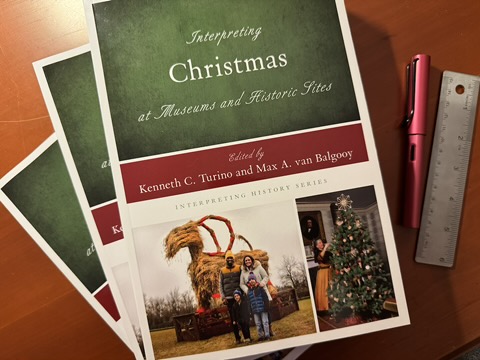
In an earlier post, I shared a sneak peek of our book, Interpreting Christmas at Museums and Historic Sites. Next week, Ken and I will provide a comprehensive overview during the upcoming AASLH webinar, “Jingle All the Way: Maximizing Your Museum’s Holiday Potential.” This webinar draws from the book but is not an hour-long sales pitch. Instead, we’ll share key advice and ideas on leveraging holiday celebrations, researching the local history of Christmas, planning and hosting holiday events, expanding traditional programs, and enhancing cultural sensitivity and inclusivity. With so much to cover, we’ll be hitting the highlights. If you’re seeking inspiration for Christmas during these hot summer days, join us on July 23, 2024 at 3:00 pm Eastern. For more details and to register, visit here. Plus, you’ll receive a 30% discount code for the book upon registration.
With proofs in hand, the book is moving closer to reality with a publishing date in fall, but more likely later than earlier. It has 21 chapters, 40 images, and an extensive bibliography of nearly 175 books and articles packed into 270 pages, which is about 25% longer than my Interpreting African American History and Culture at Museums and Historic Sites that Rowman & Littlefield published ten years ago (btw, Rowman was recently acquired by Bloomsbury Publishing). It’s now available for pre-order at Rowman.com for $50 for paperback and a jaw-dropping $125 for hardcover (I don’t set the prices but a 30% discount code is available for webinar attendees).
Behind the Scenes of Indexing
Ken Turino, Sara Bhatia, and I spent nearly two months creating he index, despite the publisher allocating just two weeks. The delay was partly due to other commitments (I was closing out the semester and attending the Newport Summer School), but also because the scope of the book made it significantly more complex. As anticipated, there’s an abundance of content on gifts, trees, lights, ornaments, decorating, and a variety of Santas. Rather than list two dozen pages that mention “lights,” we added subheadings for candles and electric lights, as well as safety considerations, and included “see also” references to help readers find specific information more quickly. But geez, that was slow going.
My chapter, “I’m Dreaming of a Warm Christmas: Researching California (and Other Local Places)” was initially indexed by GPT-3.5, then corrected manually as seen in this example. GPT-4o is more accurate when trained for indexing, but every entry still needs to be confirmed.
We experimented with GPT to produce the index, and the results were mixed. While GPT can generate an initial index with proper nouns and some concepts correctly formatted with page numbers, about half of the entries are usually either missing or incorrect (see example above). Thus, manual review of the proofs is still necessary, but at least GPT provides a head start. If you are interested in learning more in using GPT for indexing, I’m happy to share what I learned.
The index eventually grew to 22 pages, which is longer than most chapters! Indexing required a meticulous review of every page, during which we discovered errors that had slipped past four proofreaders. Ugh. Should we consider these flaws a characteristic of an artisanal, handcrafted gift to the field?
The Gilded Age mansions in Newport, Rhode Island, attract over a million visitors annually. Guiding, engaging, and assisting this vast number of people often falls to signs—our silent servants. At such iconic properties as The Breakers, The Elms, and Chateau-sur-Mer (owned and operated by the Preservation Society of Newport County), I discovered many signs that were beautifully designed or cleverly worded that could inspire historic sites and house museums. These signs have been tested extensively by gazillions of visitors, providing valuable insights that could be adapted to enhance your own site.
We’re now at the midpoint of the Newport Summer School and by the end of each day, we all share sore feet and stiff backs—except for Richard Guy Wilson, the director of the program. He may be in his 80s, but he has a bottomless reserve of energy.
Participating in the course are a wide range of interests. We have a couple people who lead historic preservation organizations and a couple more who are in graduate school and getting ready to enter the field. We have a handful who work with historic sites, including Edith Wharton’s The Mount, National Park Service, and Lisbon Cathedral. A couple of interior designers and a few who don’t work in the field but love the art and architecture of the 19th century. Ages stretch from early 20s to late 60s.
The diversity of interests and experiences makes for fun conversations and as several noted, can feel comfortable “nerding out” about a preservation issue or an architectural feature. But I’ve also discovered the value of the program—and it varies. Everyone wants to learn about 19th century architecture in Newport, which has an extraordinary collection by some of America’s best architects and interior designers. The combination of illustrated lectures and field sessions allows us to see a lot in a very short time. For graduate students, it creates a foundation of knowledge that will inform their studies and careers. For mid-career professionals, it provides comparisons for our projects and communities, broadening our perspectives. Perhaps more importantly, it also “feeds our soul,” providing a much needed break from the demands of the office while refreshing our passions.
Today we head north to Providence, starting earlier and returning later than usual, so I expect another exhausting day. But it will be worth it.
I’m in Newport, Rhode Island for the Newport Summer School. The Victorian Society in America (an offshoot of the one in London) has been hosting this week-long program for 42 years. Directed by Dr. Richard Guy Wilson, a well-recognized expert in the field of architectural history, it is a mix of lectures and guided tours of significant houses, churches, and civic buildings that are both open to the public and private. In a week, you gain a deep understanding of the history of Newport through architecture—and a network of new colleagues.
Our first day was devoted to the 18th century, considered Newport’s first Golden Age because it brought new wealth to the town and a higher level of architectural design. That wealth came from trade, including enslaved people, a topic that is increasingly being addressed in the interpretation at historic sites and museums.
Indeed, the Rhode Island Black Heritage Society, Newport Historical Society, and the Preservation Society of Newport County are collaborating on exhibitions on the history and contributions of African Americans in the region. Before we officially began the course, Soni Stokes, curator of the exhibition, generously gave me and a small group of colleagues a tour of “Gilded Age Newport in Color” at Rosecliff, one of the mansions owned by the Preservation Society. It discusses the lives of dozens of people and families of African heritage through geography, biography, and topics such as business, entrepreneurship, religion, recreation, and politics. What most impressed me was the variety of documents and objects in the exhibition, most on loan from a private collection, giving me a much more holistic view into the lives of African Americans in New England.
Soni Stokes discussing the role of women. Section on recreation and spot.African heritage neighborhoods in Newport.Introductory label to the exhibition.Equal Rights party ticket, 1888.
ChatGPT-4o created this image in less than a minute.
The highly anticipated release of ChatGPT-4o has once again thrust artificial intelligence (AI) into the spotlight. So how can historic sites and house museums harness the power of ChatGPT to craft thought-provoking mission statements, an essential element of effective management?
The American Alliance of Museums states that excellence requires that, “all aspects of the museum’s operations are integrated and focused on meeting its mission.” And yet, crafting mission statements is among the most difficult tasks for an organization. Writing and revising as a board or staff committee can result in circular arguments, the infinite parsing of words, or resignation to a milk-toast statement that offends no one. So how can you take a mission statement that’s weak or mild and turn it into something stronger and more meaningful?
My typical response is that a small committee of diverse leaders within the organization discuss the purpose and role of the museum in the community, and then appoint one person to draft a mission statement for approval. Although that’s much more effective than writing-by-committee, it can also result in a tremendous commitment of time and frustrations during the review as members defend their ideas. Instead, I’ve found ChatGPT to be much more efficient and less frustrating. You can revise frequently and quickly, try out variants and new ideas easily, and even better, criticize the “robot” and it won’t care.
The mission of The Gamble House is to inspire the public’s appreciation and understanding of architecture as a fine art through the example of The Gamble House, the most complete and best-preserved work of American Arts and Crafts architects Charles and Henry Greene.
Using a simple prompt, “Create a mission statement for the Gamble House in Pasadena, California,” ChatGPT-3’s version was:
Our mission at the Gamble House is to preserve and celebrate the legacy of this iconic American Arts and Crafts masterpiece. As a cultural destination and community resource, we aim to inspire and educate visitors about the significance of the Gamble House’s architecture and design, and its enduring influence on American culture.
The first sentence is the usual celebratory mission statement but notice that the next sentence goes further to explain why it matters today (“its enduring influence on American culture”). That’s a significant improvement that can improve the mission statement’s ability to guide decisions and establish priorities—which is the core function of a mission statement.
Going further, you can use ChatGPT to create mission statements inspired by the ideas of influential thinkers. English designer and writer William Morris inspired the Arts and Crafts Movement, so he’s an ideal choice for the Gamble House. By changing the prompt to, “Create a mission statement for the Gamble House in Pasadena, California in style of William Morris,” the result is:
“Our mission at the Gamble House is to preserve the beauty and integrity of this magnificent home, which is a masterpiece of American craftsmanship and design. Through our efforts to maintain the house and its surroundings in a state of harmony and balance, we seek to embody the principles of the Arts and Crafts movement, which holds that art and beauty should be an integral part of everyday life. By promoting the values of craftsmanship, simplicity, and authenticity, we aim to create a more just and equitable society, one in which the arts and culture are accessible to all, and the beauty of the natural world is cherished and protected.”
Far too long to be a modern mission statement for a museum, it does offer some intriguing ideas, particularly in the last sentence. By mentioning “craftsmanship,” “equitable society,” and “accessible to all,” it addresses values that could be meaningful to modern visitors and supporters of the Gamble House and inspire innovative programming.
In the year that followed, I’ve continued to explore how ChatGPT can help historic sites and house museum improve their mission statements, as well as create a vision and values. Lest anyone think that ChatGPT is a simple mindless hack to the usual hard work of crafting a mission statement, the use of AI requires a thoughtful human hand on the computer keyboard. ChatGPT can be biased, inaccurate, and hallucinate, so you need to know the organization and theories of management strategy. A weak or poor mission statement can harm a nonprofit organization, whether created by humans or AI.
ChatGPT-4o created this image of the Gamble House, demonstrating the need for the human expert—there’s very little that is correct in this image.
Getting Started
If you’re interested in the best explanation and practices of AI and ChatCPT, read Ethan Mollick’s Co-Intelligence: Living and Working with AI (2024) or listen to an interview with him on the HBR IdeaCast, “Tech at Work: What GenAI Means for Companies Right Now.” If you’re interested in practical applications with lots of examples, read AI and the Future of Education (2023) by Priten Shah. AI is being incorporated into an increasing number of applications, including Microsoft Word, Evernote, Notion, and WordPress, but if you want to explore ChatGPT, it is available free with registration at OpenAI.
If you want to use ChatGPT to craft a mission statement, be aware that it relies on the information that is available to it. If your organization has a very small presence on the Internet or in publications (unlike the Gamble House), a simple prompt will be ineffective. You’ll need to take an additional step to provide it with information, such as the museum’s goals, primary audiences, collection strengths, historical background, and what makes it unique or distinctive. If you’re unsure how to do this in ChatGPT, start with the prompt, “I need help writing a mission statement for [your museum name]. Here are the details: [insert information].” You can follow up with additional instructions, such as “”Give me three different mission statement options,” “Can you make this mission statement more engaging for a younger audience?”, or “I like the direction of this mission statement, but can you make it shorter?”
If ChatGPT has helped your organization improve or rethink its mission statement, please share your experiences in the comments.