Category Archives: Governance and management

A Process for Rethinking the Historic House Museum

Mission-Sustainability Matrix Next week I’ll be at the Margaret Mitchell House in Atlanta, Georgia leading a workshop with Ken Turino of Historic New England on the rethinking the historic house museum.  We’re not the only ones who are working on this topic, indeed, Michelle Zupan at Hickory Hill  assembled a five-page bibliography of books, articles, and dissertations for the workshop, so long that I’m hesitant to distribute it because it could be discouraging (“what? I have to know all this to rethink my historic house?”).

And if we want to go beyond historic house museums, the list would be even longer. Businesses have been “rethinking” for decades in order to grow in size or increase their profits.  They have the resources to study this topic rigorously and there is a lot we can borrow for our field (and much that doesn’t apply and can Continue reading

Reinventing the House Museum in Portsmouth

This slideshow requires JavaScript.

A sold-out crowd of history enthusiasts packed the auditorium at the Strawbery Banke Museum in Portsmouth, New Hampshire on April 21 to discuss ways to reinvent the house museum.  Sponsored by the American Association for State and Local History and the New England Museum Association, the one-day workshop explored ways that historic house museums can more successfully engage their community and improve their financial sustainability.

The morning featured several presentations and the afternoon was a hands-on workshop at a nearby historic house.  I opened the day with a process for developing a plan and then focused on Michael Porter’s Five Forces, a diagnostic tool that’s superior to SWOT for assessing a house museum’s strategic position.   Ken Turino of Historic New England provided a smorgasbord of ideas from house museums around the county to rethink existing conceptions.  Larry Yerdon, CEO of the Strawbery Banke Museum, discussed ways they are introducing new programs and activities to be both more engaging and financially sustainable.

After lunch, we gathered at the Governor John Langdon House, a property of Historic New England, where Joanne Flaherty and Linda Marshall led us on a quick inspection of the property and described its operations and recent efforts to use it for temporary exhibits.  Then the audience became temporary consultants using the Five Forces, analyzing existing and potential competition for exhibits, interests from visitors, and collaborating with exhibit providers.  The consensus seemed to be that an exhibit program could have a competitive advantage if it focused on the collections of Historic New England and may be better suited for rooms other than the parlor or dining room, which are architecturally significant.

This workshop will travel next to Atlanta, Georgia on June 12, where we’ll be using the Margaret Mitchell House as the case study.  To register and for more information, visit AASLH.org.


IMHO: The National Trust’s Collections Management Policy is Not Ready to Eat

Last year, the National Trust for Historic Preservation adopted a new Collections Management Policy (CMP) and widely promoted it at professional conferences and in national publications as a model to house museums and historic sites to resolve some of their stewardship challenges. At its heart is,

“a new approach—one that treats the historic structures and landscapes, and the object collections, as being the same type of resource. This approach places the historic buildings and landscapes on a par with objects and documents, strengthening the interconnected stewardship and interpretation of these historic resources.”

It’s a good idea but it’s not a new approach.

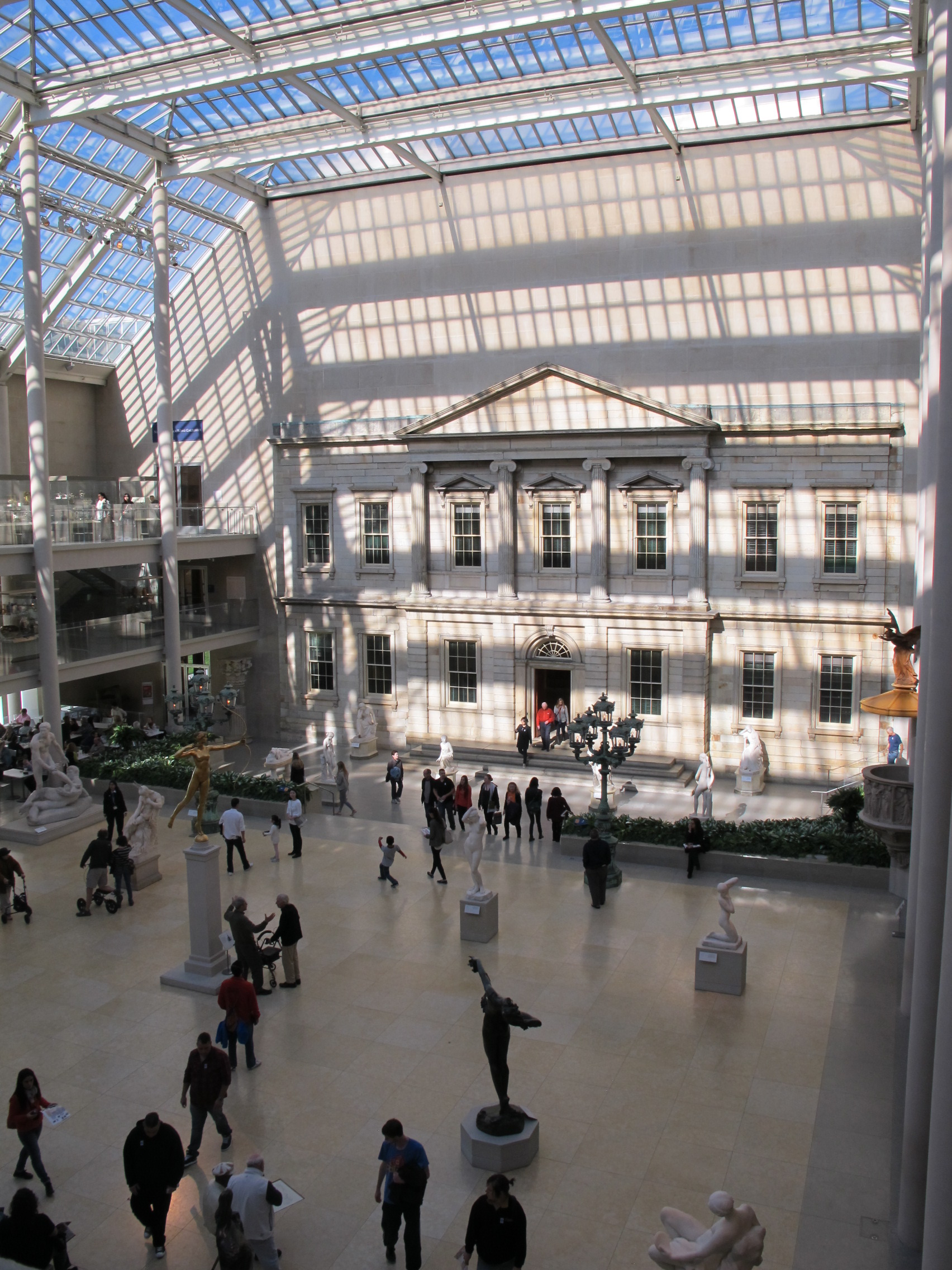
American Wing at the Met featuring the 1822 Branch Bank of the US.

American Wing at the Met featuring the facade of the 1822 Branch Bank of the United States.

Early in the twentieth century, museums of various types began collecting buildings. Henry Ford moved Edison’s laboratory and the Wright Brothers bicycle shop to his Greenfield Village, John D. Rockefeller quietly bought dozens of buildings to create Colonial Williamsburg, and the Metropolitan Museum of Art installed the facade of the Branch Bank of the United States as the featured object of its 1924 American Wing. Much later, landscapes were considered worthy of preservation and now most historic estates, such as Casa del Herrero, Miller House and Garden, and Marsh-Billings-Rockefeller National Historical Park, treat their gardens and landscapes with the same respect as the furniture and art works at their sites.

The National Trust’s rationale for their new approach is that, “conflicts between Continue reading

Historic House Museums Gather for AASLH Workshop in Charleston

This slideshow requires JavaScript.

For the past fifteen years, George McDaniel and I have taught a two-day workshop on the management of historic house museums for the American Association for State and Local History.  We cover a wide range of topics from fundraising to interpretation to disaster response to collections management–we really need a week, especially if there’s a lot of discussion.  That was certainly our experience last week in Charleston, South Carolina (and thanks to our hosts, the Historic Charleston Foundation!), where our discussions were so rich that I wasn’t able to complete most of my presentations.  That’s okay because the workshop is for the participants and as long as they find a topic that’s worth exploring, I’ll stay with them.  Indeed, George and I often find that we’re not instructors but facilitators, raising ideas and questions to provoke thoughtful discussions to help participants improve the management of their historic sites.

At the core of workshop is each participant’s “burning question.” They share their biggest concern or issue at the start of the class and at the end, they describe how they might address it when they return to their site.  It’s not only a way to make the workshop more relevant to the participants, but it also gives us a glimpse into the issues facing historic house museums around the country.  This year the questions included: Continue reading

A Handy Way to Keep Table Tents Neat

This slideshow requires JavaScript.

At a recent board meeting of the Montpelier Foundation, the organization that manages James Madison’s Montpelier, I discovered they had developed a nice device to keep table tents neat.  I often create table tents or nameplates on my computer, folding a letter-sized sheet in half.  Despite using cover stock to give them some heft, they still manage to sag and wilt, not only making them hard to read but creating a sad-looking appearance for a meeting.

Montpelier tapered a small block of wood to fit within the table tent, attaching a short brass screw at the back.  Using a small “super-strong” magnet, the table tent sticks to the screw on the block.  Everything looks sharp for the meeting and the blocks can be easily reused (and they never break, even if you drop them).  Another great idea from the carpenters at Montpelier.


Whose Job Is It? Board or Staff?

tug-of-war-300x200A common and contentious management issue for museums and historic sites is the the role and responsibilities of board members and the staff.  Frequent complaints I’ve heard are that board members are interfering in staff projects or lack interest in their role as leaders, or that staff is withholding crucial information from the board or is unable to make progress on major goals.  Navigating these concerns requires a good hand on the tiller by both the executive director and board chair, but I’ve also found that a facilitated group discussion about roles and responsibilities is often just as effective.

In my years of service on several different boards, each was at a different place in their organizational development, which means the roles and responsibilities was different as well.  An all-volunteer start-up organization operates differently from one with a large staff and a long-established set of activities.  Boards are not all the same.

Board members also require orientation and training, which rarely happens.  There doesn’t seem to be Continue reading

Want to Sharpen Your Historic Site Management Skills?

If you manage an historic site or house museum, there are several ways to sharpen your skills in the next few months.

Historic House Museum workshop at the Haas-Lilienthal House in San Francisco, 2014.

Historic House Museum workshop at the Haas-Lilienthal House in San Francisco, 2014.

For nearly fifteen years, the American Association for State and Local History has offered a two-day workshop on historic house museum issues and operations and next month it will be in Charleston, South Carolina on February 26-27, 2015.  Held in partnership with the Historic Charleston Foundation (one of the oldest historic preservation organizations in the US) and co-taught by me and Dr. George McDaniel of Drayton Hall, we’ll examine a wide range of topics from the unique perspective of house museums and historic sites, including leadership, interpretation, disaster preparedness, membership, and audience, through interactive presentations, group discussions, and site-specific exercises.  You’ll leave with a better sense of how your organization can better fulfill its mission and be more financially sustainable.  Registration is $345, $270 for AASLH members, plus there’s a $40 discount if you register by January 22.  Be sure to add a day to explore the historic sites in Charleston–it’s one of the best places to see a wide variety of visitor experiences in one place.

New this year is “Re-inventing the Historic House Museum,” a one-day workshop offering current thinking, practical information, and solutions to the challenges facing historic sites. The historic house museum in America is not dead nor are most of them dying. The field, however, needs to reflect and renew as the world around our historic sites continues to change.  This workshop was inspired by a sold-out symposium presented by the Historic House Museum Consortium of Washington, DC at Gunston Hall in March 2014, and now has been taken nationally to various regions by the American Association for State and Local History.  Ken Turino of Historic New England and I will be giving the core presentations and the others will vary to take advantage of the workshop location.  We’ll be at Strawbery Banke in New Hampshire on April 21, 2015 and the Margaret Mitchell House in Georgia on June 12, 2015.  Registration is $170; $95 for members of AASLH and NEMA (for April 21).

HBR: Where Boards Fall Short

HBR 2014 JanBoards aren’t working. A mere 34 percent of the 772 board members of historic sites surveyed by Engaging Places in 2013 agreed that the boards on which they serve fully comprehended their museum’s strategies. Only 22 percent said their boards were completely aware of how their museums fulfilled their mission and just 16 percent claimed that the board had a strong understanding of the dynamics of the museum field. When it comes to strategy and planning, organizations emphasize the short-term at the expense of the long-term.

You’re probably not surprised by these results–but you may be surprised that this actually describes major corporations based on studies conducted by McKinsey and Company, a national consulting firm. Governance is not just a challenge for nonprofits but the business world as well.

So how can the situation improve? In “Where Boards Fall Short” in the January-February 2015 issue of the Harvard Business Review, Dominic Martin and Mark Wiseman claim that a fundamental issue is that boards don’t understand their “fiduciary duty,” which consists of two core components:

  • loyalty (placing the company’s interest ahead of one’s own)
  • prudence (applying proper care, skill, and diligence to business decisions).

“Loyalty and prudence” encourages boards to focus on the long-term to help the organization thrive for years into the future. Keeping in mind the big distant goal (otherwise called a vision) clarifies choices and directs board actions. From my observations of nonprofit boards, there’s often confusion about fiduciary responsibilities and rarely a vision (but usually a mission–but so vaguely worded to be nearly useless for making decisions). To help clarify fiduciary duty, it’s a good idea to explain it during recruitment and orientation (don’t assume they’ll support it) and consider an annual commitment agreement and planning retreat for both board and executive staff.

In addition to addressing fiduciary duty, Martin and Wiseman suggest four ways to improve board performance.  Here are their key ideas from their article along with my translation for the non-profit environment):

1. Select the right people. “Having a diversity of perspectives and proven experience building relevant businesses as well as the functional knowledge is critical. But if our surveys are any indication, too many directors are Continue reading

On Ferguson and Related Events: How Should Historic Sites Respond?

Storefronts that were covered with plywood during the protests in Ferguson were painted by local artists and collected by the Missouri History Museum.

Ferguson and related events are sparking broad protests over the treatment of African Americans by the police and the courts.  Should museums and historic sites be involved?  Should they be collecting, preserving, or interpreting these present-day events? Should they provide a place for protest or response?  Or are these beyond their roles and responsibilities?  There are no easy answers because every site and every community is different, but ultimately, people engage with historic places because there’s a personal connection–historic sites are collecting, preserving, or interpreting topics that are relevant and meaningful to the visitor.

Identifying what is relevant and meaningful isn’t always easy but contemporary events offer a glimpse.  People discuss, explore, study, question, react to, and protest about issues that matter to them, and the more people that are involved around the same issue, the more significant it is.

Museums and historic sites inhabit a special “third space” in society that allows us to do things that can’t happen at home or work. They allow diverse people to discuss, explore, study, question, react to, and protest about issues in a safe place.  As Presence of the Past has shown, we are Continue reading

Plenty for Historic Sites at 2015 NCPH Meeting

National Council on Public History annual meeting 2015The National Council on Public History will be holding its 2015 conference in Nashville from April 15-18 and there are lots of sessions that will interest house museums and historic sites, including:

  • Best Practices for Interpreting Slavery at Historic Sites and Museums
  • Re-imagining Historic House Museums for the 21st Century with President Lincoln’s Cottage, Roger Brown Study Collection, and others
  • On the Cutting Edge of American Historic Preservation:  The Role of the Mount Vernon Ladies’ Association
  • Religion, Historic Sites, and Museums with Gettysburg Seminary Ridge Museum, Ephrata Cloister, and others
  • Historic Sites, Racialized Geographies, and the Responsibilities of Public Historians with the Lower East Side Tenement Museum and Weeksville Heritage Center
  • The Woodrow Wilson Family Home: Our Story of a Radical Makeover
  • Pulling Back the Curtain: Displaying the History-Making Process in Museums and Sites
  • Hidden Histories:  Cultural Amnesia, Interpretive Challenges, and Educational Opportunities
  • Haunted Histories: Ghost Lore Interpretation at Historical Sites

Nashville also has many historic sites and NCPH will be offering walking tours and field trips on musical heritage, the state capitol, crime, Civil War, civil rights, and Fisk University.  Nearby are several notable historic house museums, including the Hermitage, Belle Meade Plantation, and Belmont Mansion.

Registration is $240 and for members it’s $192.  Sign up before March 4 as a member, and it’s only $167.  For a copy of the preliminary program, visit http://bit.ly/NCPH2015prog.