Category Archives: Historical interpretation

Warning: Objects in Museums May Be More Complicated Than They Appear

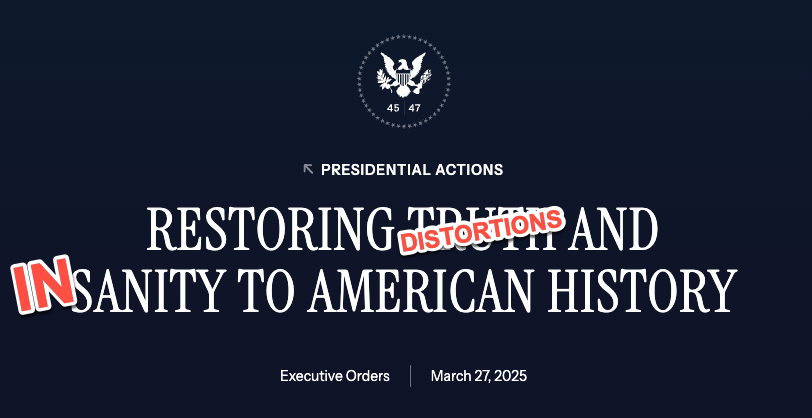
Today, the White House issued an executive order titled “Restoring Truth and Sanity to American History”, which aims to reshape the presentation of history within federal institutions—particularly the Smithsonian. The directive calls for the removal of “divisive or anti-American ideology,” restoration of monuments that have been “improperly removed,” and new restrictions on federally funded exhibits that “degrade shared American values.” While some may see this as a return to patriotic education, as a historian and museum professional, I see troubling implications for our field.

The Illusion of a Single Truth

At the heart of the order is the assertion that a “true” version of American history must be restored. But history is not a static set of facts—it is a discipline grounded in evidence, interpretation, and debate. Historical understanding evolves as new sources emerge, as questions shift, and as voices long excluded are brought into the conversation. There is no single, timeless narrative to return to—only a continuing effort to make sense of the past as honestly and inclusively as possible.

Independence Under Threat

The Smithsonian Institution, like many of our most trusted public history institutions, relies on scholarly rigor and curatorial independence. By assigning Vice President JD Vance a role in overseeing content and linking congressional appropriations to ideological compliance, this executive order politicizes museum interpretation and undercuts professional standards. When history is shaped by political power instead of evidence, public trust erodes.

Continue reading

History Redacted? What Museums Can Do About Censorship and Content Restrictions

Across the United States, museums and historic sites are feeling the pressure of growing efforts to limit how history is interpreted and shared with the public. Whether it’s school boards restricting curricula, exhibitions removing stories about women or African Americans, or state legislatures targeting specific narratives, the landscape for public history is shifting. Two recent statements—one from national associations of professional historians and another from a leading association of history organizations—offer timely guidance for navigating this challenge.

Upholding Academic Freedom and Public Access to History

In their joint statement, the American Historical Association (AHA) and the Organization of American Historians (OAH) raise alarm over federal directives aimed at censoring public-facing historical content. Specifically, they object to restrictions on the use of terms like “diversity,” “equity,” and “inclusion,” as well as efforts to remove access to resources about gender, race, and immigration history across government platforms. These actions, the associations argue, “deny the American public access to the complex, nuanced, and evidence-based historical knowledge that is essential to democratic society.”

For museum professionals, this serves as a reminder that we are not only stewards of collections but also of public understanding and trust. AHA and OAH call on historians–including those in museums and historic sites–to resist these pressures by reaffirming their commitment to historical accuracy, critical inquiry, and public service. The practical takeaway? Review interpretive plans, online content, and programs to ensure they are grounded in evidence-based scholarship, even–and especially–when the topics are politically charged.

Standing with the National Park Service: A Sector-Wide Response

Continue reading

Rethinking Goals in History Organizations: A New Framework for Internal and External Impact

For many years, history organizations—including history museums, historical societies, house museums, and historic sites—have measured success using a traditional planning framework focused on outputs (what an organization produces). By the 1990s, there was a growing recognition of the importance of outcomes (how visitors change because of that work), over merely completing tasks.

While the confusingly-named outputs and outcomes framework have improved museum projects, they often overlook how history organizations themselves evolve—how their staff, volunteers, and boards gain knowledge, shift perspectives, and take action to improve their work.

I’d like to introduce a new way of thinking about goals in museums, distinguishing between internal change (within the organization) and external change (within the community and visitors). Using the Know, Feel, Do framework, this model helps history organizations better understand their impact—both inside and outside the institution.

The Know, Feel, Do framework is a structured approach to understanding how individuals and organizations learn, experience emotions, and take action. It is based on Benjamin Bloom’s Taxonomy of Learning Domains, which classifies learning into three categories:

  1. Cognitive (Know) – Intellectual engagement and knowledge acquisition.
  2. Affective (Feel) – Emotional and attitudinal responses.
  3. Behavioral (Do) – Actions taken as a result of learning.

This model is widely used in education, marketing, nonprofit management, and project evaluation to design experiences that lead to meaningful change.


The Traditional Model: Outputs vs. Outcomes

Continue reading

Navigating New Federal Policies: What Executive Orders Mean for History Museums and Historic Sites

Museums are no strangers to navigating shifting policy landscapes, but recent executive orders issued by the White House signal significant changes that will affect funding, interpretation, and educational outreach. Whether you work in a history museum, a historic preservation organization, or a community-based historical society, understanding these policies is crucial for adapting to new challenges and opportunities.

Key Themes Across the Executive Orders

1. A Shift Toward Patriotic and Nationalist Narratives

Executive Orders 14190 (Ending Radical Indoctrination in K–12 Schooling) and 14189 (Celebrating America’s 250th Birthday) prioritize “patriotic education” and reinforce a government-endorsed interpretation of American history. This shift is exemplified by the reestablishment of the 1776 Commission and the creation of Task Force 250, which will oversee programming related to the 250th anniversary of American independence. “Patriotic education” is defined as “the history of America grounded in:

  • (i) an accurate, honest, unifying, inspiring, and ennobling characterization of America’s founding and foundational principles;
  • (ii) a clear examination of how the United States has admirably grown closer to its noble principles throughout its history;
  • (iii) the concept that commitment to America’s aspirations is beneficial and justified; and
  • (iv) the concept that celebration of America’s greatness and history is proper.”

2. The Elimination of Federal DEI and Environmental Justice Programs

Executive Order 14151 (Ending Radical and Wasteful DEI Programs and Preferencing) eliminates all federal support for diversity, equity, and inclusion (DEI) initiatives. This includes the termination of DEI-related grants, plans, contracts, programs, initiatives, training programs, offices, positions, and employment policies within federal agencies, “under whatever name they appear.” Museums that have benefited from federal DEI funding or programs may need to reassess their funding strategies and institutional policies.

3. Renaming and Monument Preservation

Executive Order 14172 (Restoring Names That Honor American Greatness) renames Denali back to Mount McKinley and designates the Gulf of Mexico as the Gulf of America. Additionally, the reinstatement of the National Garden of American Heroes and the protection of existing monuments signal a renewed emphasis on traditional historical figures. Museums may face increased scrutiny when interpreting contested histories, particularly around geographic names and public commemorations.

Continue reading

AI in Action: Enhancing Museum Programs with Audience-Driven Insights

In museums and historic sites, whether you’re designing school programs, workshops, docent training, or exhibitions, understanding the needs and interests of your audience is key to success. But how do you efficiently analyze diverse feedback and connect it to your goals? Recently, I experimented with a creative process that combined audience input and AI to revise the learning objectives for my graduate course, Creating Sustainable Museums. The results not only improved the course but also offered insights into how AI can be used to enhance museum work.  

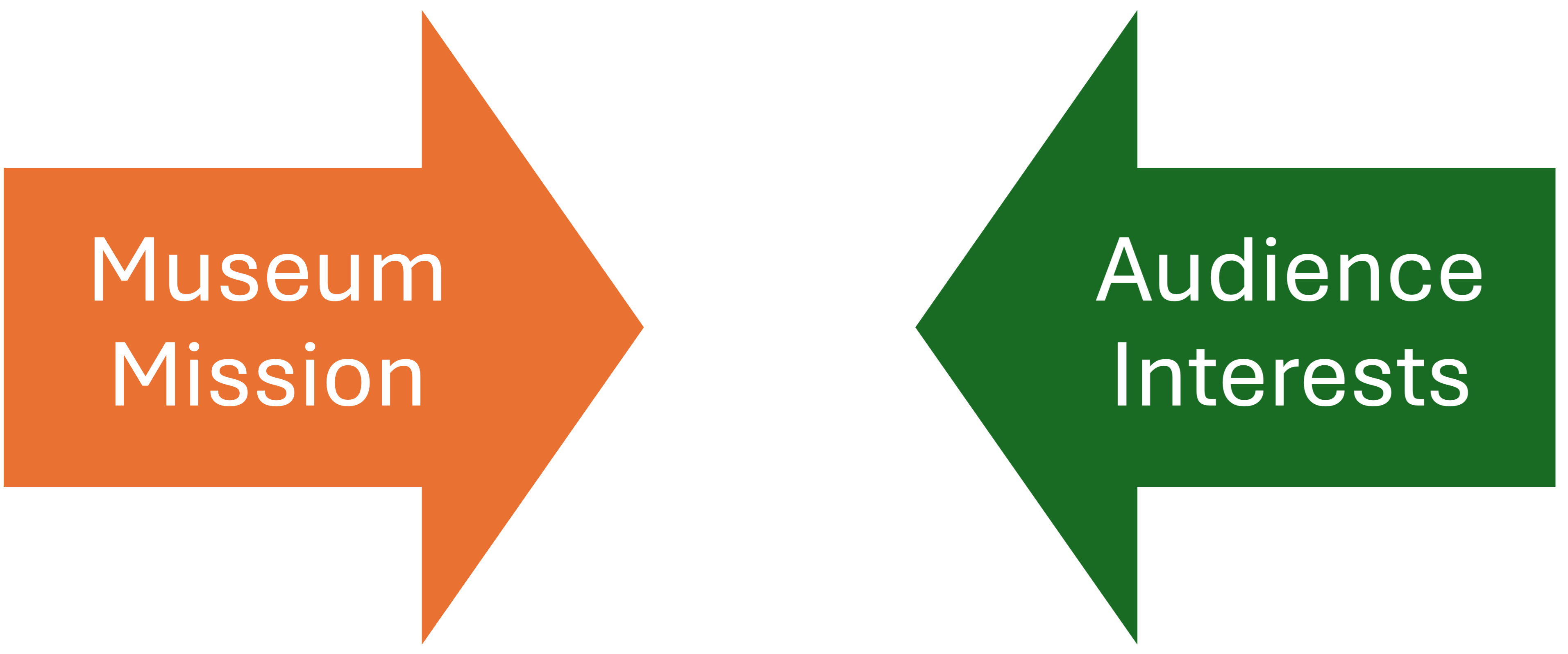
This approach was inspired by research conducted by Conny Graft at Colonial Williamsburg decades ago, which revealed that the goals of museum educators for school field trips often didn’t align with those of teachers. When those misalignments went unaddressed, they could lead to disappointment for both parties. Graft’s work emphasized the importance of finding common ground between institutional goals and participant expectations—a principle that remains essential in museum work today.

Start with Your Audience’s Goals

My course revision process began with a pre-course online survey, asking students to share what they hoped to know, feel, and do by the end of the semester. Using GPT, I quickly synthesized and categorized their responses to reveal predominant interests in financial, social, and environmental sustainability, as well as a strong desire to gain practical, job-ready skills. This step is akin to understanding your audience in a museum setting: what do your participants want to know, feel, or do? Are they looking for historical context, practical skills, or a new way to connect with the past?

Continue reading

Engaging Visitors with Weenies and MacGuffins

Historic sites and house museums have long relied on storytelling and visual appeal to captivate their audiences. Drawing inspiration from Walt Disney’s “weenie” and Alfred Hitchcock’s “MacGuffin” offers creative ways to enhance visitor experiences.

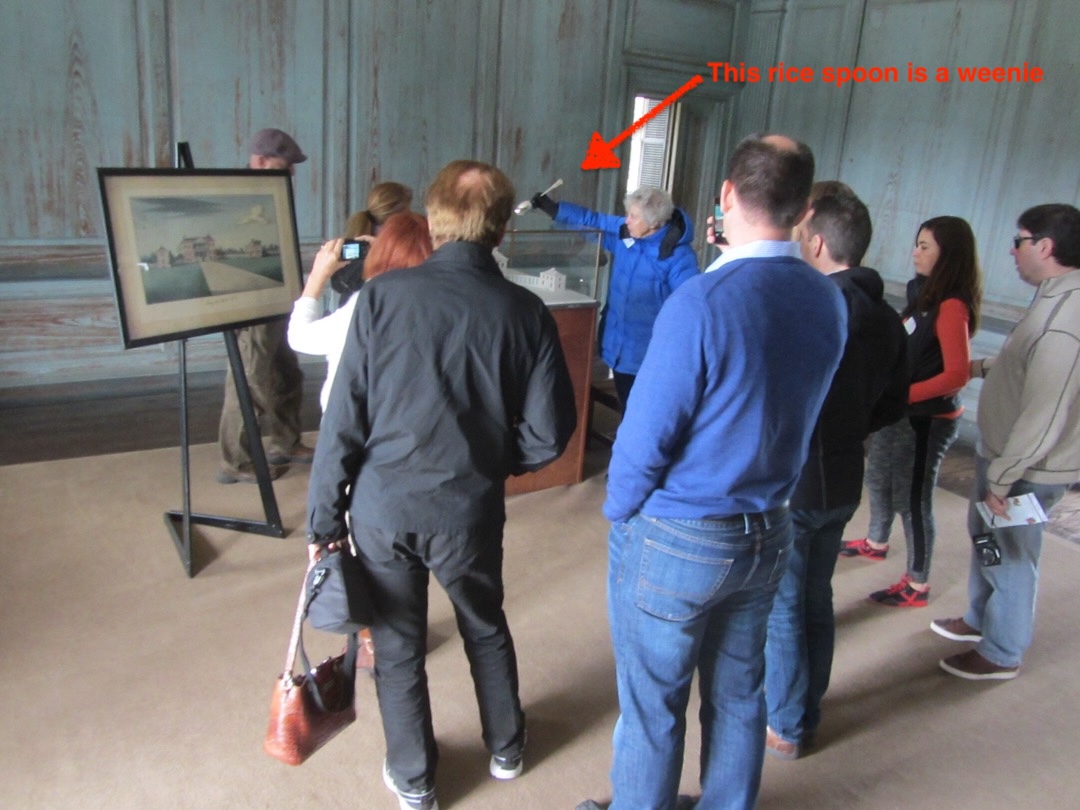
Disney’s “weenie” is a visual lure—a grand staircase, a striking artifact, or a distinctive monument such as Cinderella’s Castle—that draws attention and guides visitors through a space. It can be something small as well. At Drayton Hall, for instance, the guide uses a rice spoon (a large silver serving spoon historically linked to the region) as a pointer throughout the tour. The spoon is a weenie, pulling visitors into a closer examination of the house’s architecture and at the end of the tour, becomes a premium for visitors who become members that day.

Hitchcock’s “MacGuffin,” on the other hand, drives the narrative. It’s the letter that unlocks the secrets of a family’s past or the seemingly mundane object that sparks a larger story. I’ve seen several house museums use a historic newspaper to connect news, people, places, and advertising to provide an intriguing narrative. The best MacGuffins motivate visitors to explore, ask questions, and connect emotionally—a technique I’ve seen done incredibly well by experienced educators at art and natural history museums.

Combining these concepts creates a dynamic experience. Imagine a grand portrait (weenie) in a historic home that invites visitors to admire it, while the tour reveals it’s tied to a thrilling event (MacGuffin) that shaped the community’s history.

By strategically incorporating weenies and MacGuffins, historic sites can guide visitors visually while immersing them in compelling narratives, making their visit both engaging and memorable. How might you use these techniques at your site?

Wrapping Up 2024 and Looking Ahead

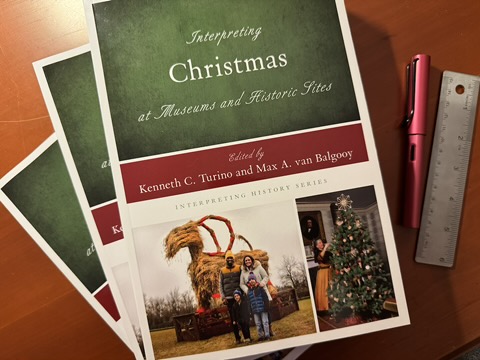
As 2024 comes to a close, it’s time to reflect on what turned out to be a busy and productive year. The highlight was completing Interpreting Christmas at History Museums and Historic Sites, co-edited with Ken Turino, which released in September. This project was a labor of love for the two dozen contributors, and it’s been gratifying to see it resonate with so many museum professionals.

Another major milestone was taking a sabbatical from George Washington University in the fall. During this time, I attended two intense and inspiring programs: the Newport Summer School, which focused on Victorian architecture and decorative arts, and the Royal Collection Studies course, which explored the management and interpretation of royal palaces and their collections. These experiences gave me fresh insights into interpretive strategies and leadership in historic sites that I look forward to integrating into my work and teaching. I can easily recommend these two professional development programs (and a sabbatical)!

Continue reading

Join Today’s Museum People Call on Interpreting Christmas at Museums!

Are you ready to explore how the holiday season can transform your museum? Today at 12 pm Central Time (1 pm Eastern), the Illinois Association of Museums is hosting its monthly “Museum People Call”, and this month’s topic is Christmas at Museums and Historic Sites!

I’ll be joined by Ken Turino, my co-editor of the new AASLH book series Interpreting Christmas at Museums and Historic Sites, to discuss how your organization can leverage the holiday season to its fullest potential.

We’ll cover key topics to help you:

  • Leverage the holiday season to attract visitors and engage your community.
  • Increase financial stability through creative programming, gift shop sales, and end-of-year giving campaigns.
  • Enhance cultural sensitivity and inclusivity, ensuring your holiday interpretation is meaningful and welcoming to diverse audiences.

Whether your site has a long history of holiday programming or you’re just starting to explore the possibilities, this session will offer practical tips and inspiring ideas to align holiday traditions with your mission.

🎄 Join Us on Zoom 🎄
Click here to join the meeting
Meeting ID: 861 3328 4346

Let’s come together to make the holiday season brighter, more inclusive, and impactful for your museum and its visitors. We look forward to seeing you there!

PS. On Wednesday, December 25, the Gilded Age and Progressive Era podcast will release an interview about the Interpreting Christmas book with me, Ken, and Lenora Henson, formerly director of the Theodore Roosevelt Inaugural Historic Site in Buffalo, New York.

Discovering Inspiration: Innovative Ideas from Texas Museums

Last week, Ken Turino and I conducted two “Reimagining House Museums” workshops in Mesquite (near Dallas) and Houston. These sessions sparked meaningful conversations about the future of house museums, but the inspiration didn’t stop there. We used our free time to visit several nearby museums, each offering unique approaches that left us thinking about how museums can better serve their audiences. Here are some standout ideas we discovered:

1. Personalizing Donor Recognition and Wayfinding at the Perot Museum of Science and Nature

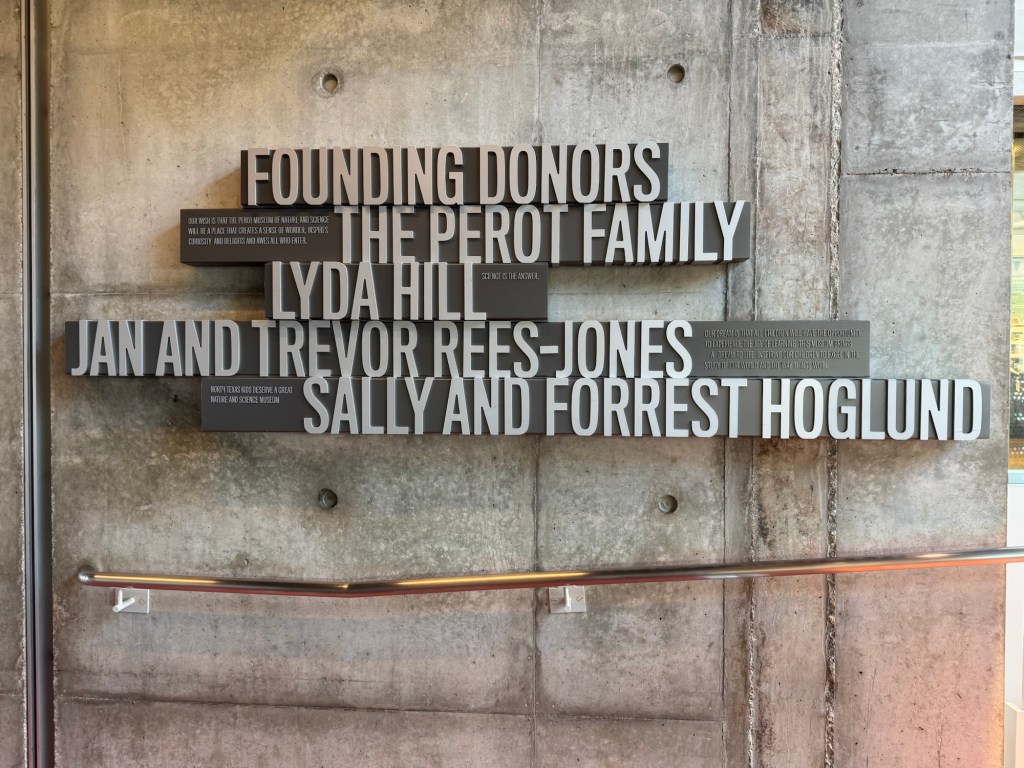
The Perot Museum caught our attention with its donor wall, which didn’t just list names but included statements of intent from the donors. This added a personal touch, connecting visitors with the motivations behind the support. Another smart detail: wayfinding signage that directed visitors to “more cool exhibits.” This casual yet engaging language was both clear and inviting, proving that small touches can make a big impact.

Donor wall with statements of intent at the Perot Museum in Dallas.
Continue reading

Beyond the Mill: Clarke County Historical Association’s Model for Modern Historical Programming

The Burwell-Morgan Mill in Berryville, Virginia, which hosts the Art in the Mill shows in fall and spring.

On a recent road trip through the Shenandoah Valley, we passed through the small but charming village of Millwood (south of Berryville, Virginia). With its historic church, a corner gas station turned into a post office, a hip country store, and an 18th-century stone grist mill, it feels like you’ve stepped back into mid-century America. The mill, dating back to the 1780s, ceased operations in 1943, but thankfully the Clarke County Historical Association (CCHA) stepped in to preserve this important piece of local history. They restored and reopened the mill as a museum, offering milling demonstrations that continue to connect the community with its past—a business that, while no longer economically viable, resonates deeply with those of us who value local landmarks.

Fast forward 80 years, and the CCHA not only continues to produce flour at the mill but has expanded its offerings in creative and impactful ways for a county with 15,000 residents. Today, their mission—”to help preserve the historic resources and records of Clarke County and to foster their use, understanding, and enjoyment through stewardship and education”—may sound familiar, but their approach is anything but ordinary. Their programming stands out as a model for how historical societies can evolve, attract diverse audiences, and ensure long-term sustainability. Here’s a preview of some of the exciting events and initiatives they have planned for this fall:

Continue reading