Category Archives: Historical interpretation

New NEH Interpretive Planning Grant for Small Organizations

Scholars reviewing the archives at the Haas-Lilienthal House.

The National Endowment for the Humanities, a federal granting agency, recently announced a special grant program to support interpretive planning at small organizations for up to $25,000, no match required.

What does “small” mean? You need to meet at least two of the following:

  • Annual operating expenses of less than $1,000,000
  • Located in a community with less than 300,000 residents
  • A staff of less than 50 people
  • Rely primarily on volunteers or part-time staff.
  • A mission to interpret under-told stories or serving a non-traditional audience

Hmm…that describes most history organizations in the US, so if you’re reading this post, you’re probably eligible.

Now, what will it support? Nearly anything that improves or enhances the interpretation of your collection, site, or community, such as:

  • help you think creatively about the hidden strengths of your collections or historic site
  • generate new ideas for engaging with the community
  • train staff and volunteers on interpretive methods and techniques
  • develop a framework for developing public programs
  • creating interpretive plans for exhibitions, tours, or school programs
  • visiting other historic sites or museums to sharpen skills and knowledge
  • evaluating existing tours or exhibitions
  • testing new programs for their ability to engage new audiences
  • conducting historical research to support new interpretive themes

Projects must include at least one scholar from a humanities discipline (e.g., history) or one consultant specializing in interpretation to the public (Engaging Places can help you with this), as well as at least one expert on your local community. 

Applications are due June 28, 2023 for one to two year projects beginning between March 1 and May 1, 2024. You will need all of that time to prepare an application and NEH will read draft applications submitted by May 24. Remember to register in advance with the System for Award Management (SAM) and Grants.gov—those are steps you cannot do at the last minute.

For more details, scan the overview or jump right to the 35-page grant application instructions (officially called a Notice of Funding Opportunity).

Planning for the 250? This Webinar Will Help You Get Started

Join Conny Graft and Max van Balgooy on May 24 at 3:00 pm Eastern for a ninety-minute webinar on interpretive planning as we prepare for the U.S. 250th anniversary in 2026. To help you feel more confident in this specialized topic, we will discuss the basic process of interpretive planning, provide a simple rubric to develop goals, and distinguish topics and themes (and why themes are more valuable). As a bonus, we’ll briefly mention ways to identify target audiences and expand your thinking about methods and formats. Registration is $20; $10 for AASLH members.

It’s the start of a three-part series on interpreting the 250th at historic sites and house museums. Other sessions will dive into the field-wide themes for the 250th with Ashley Jordan (African American Museum in Philadelphia) and Steve Murray (Alabama Department of Archives and History) and offer an interactive platform to workshop ideas with fellow practitioners with Sarah Pharaon (Dialogic Consulting). Whether you have a clear tie to the Revolution or not, this webinar series will help you make history relevant and captivating for your audience. Attend all three webinars for $55; $25 for AASLH members.

The American Association for State and Local History is hosting these webinars. Scholarships to attend all three webinars are available on a first come, first served basis, thanks to support from the Classical American Homes Preservation Trust.

Hagia Sophia: An Experiment with Virtual Tours

An experiment with a virtual tour of the famous Hagia Sophia in Istanbul.

Warning: this is an experiment in historic site interpretation. Things went wrong but we’re also learning a lot together.

I’ve been working on improving and enhancing the interpretation of historic sites and house museums for decades, plus I’ve also been interested in ways to improve access to these incredible places. If you’ve ever met me at a historic site, you know I take LOTS of photos and share them in my workshops, classes, and in this blog.

Last year, a friend introduced me to the Insta360 One X2, a small camera with two lenses that captures 360-degree photos and video. It’s popular with skiers, mountain bikers, skateboarders, and other active sport players because it captures everything, which can later be edited to the best views and moments. But how can it be used in the interpretation of historic sites? Is this a low-cost solution to create immersive videos?

I’ve just returned from a vacation in Greece and Turkey, where I visited several museums and historic sites that have long been on my list. As usual, I took lots of photos, including video using an Insta360. Fixed at the end of a yard-long selfie stick, it allowed me to capture drone-like views above the heads of the people around me without interfering with their experiences.

This first video experiment simply stitches four videos together of the Hagia Sophia in Istanbul during a daily prayer service. There’s no voice-over or narration as in a traditional tour, just a simple walkthrough with ambient sounds. Remember that it was originally a 360-degree video that was edited to frame the view and add camera movements. I discovered that the video is smudged or blurred at times. I’m not sure if that due to a dirty lens or the low light conditions, but I hid the worst parts with photos from my iPhone (yes, I was juggling two cameras at the same time!).

Take a look at the video and tell me what you think. How might this format enhance the interpretation of historic sites? What are possible next steps?

Should Local History and Historic Preservation Dominate the Museum Field?

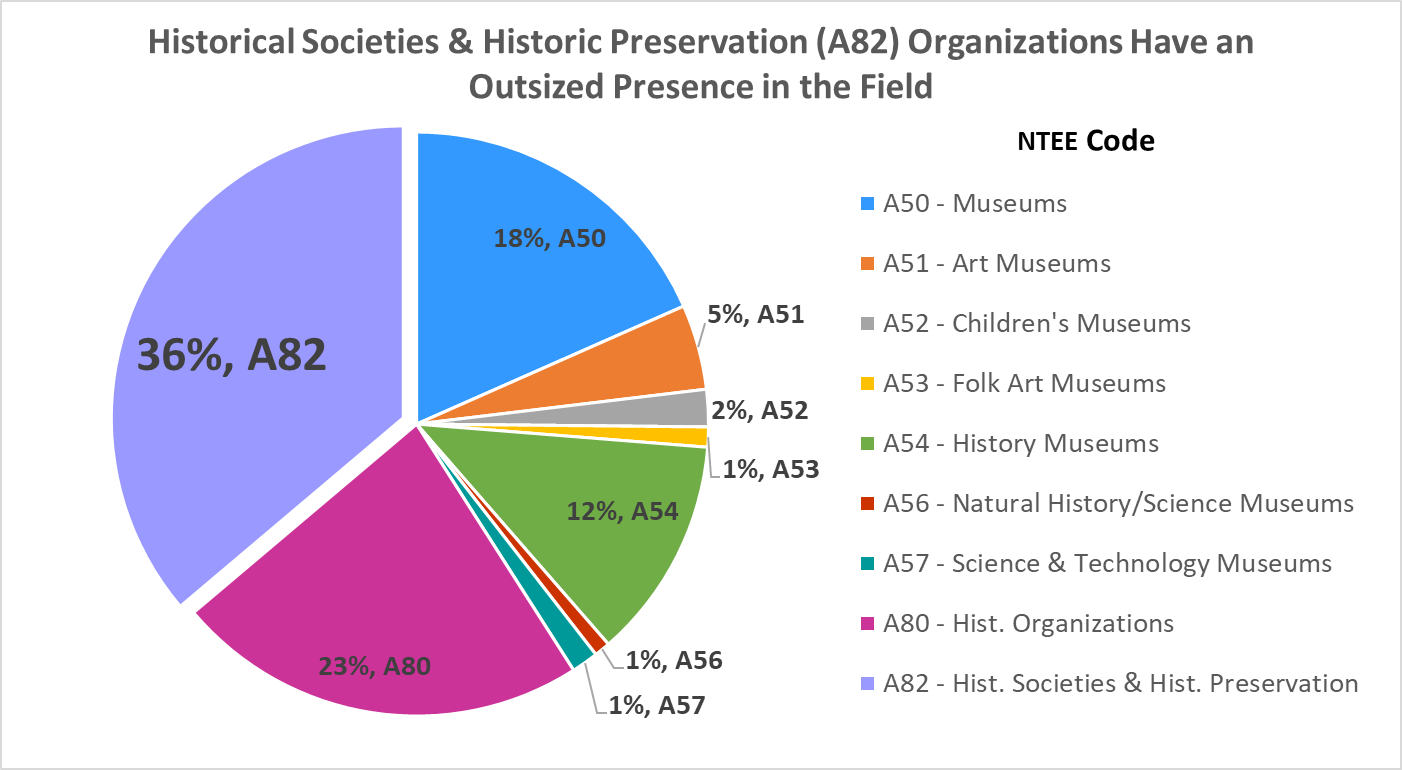
Figure 1. Historical Societies & Historic Preservation (A82) organizations have an outsized presence in the field. Source: Internal Revenue Service and National Center for Charitable Statistics.

Of all the organizations in the United States devoted to arts, culture, and humanities, Historical Societies & Historic Preservation (NTEE A82) organizations have an outsized presence.   More than a third of all organizations “sponsor activities which celebrate, memorialize and sometimes recreate important events in history such as battles, treaties, speeches, centennials, independence days, catastrophes that had an important impact or other similar occasions.” “Historical society,” “historical association,” “heritage society,” “preservation,” and “restoration” are in the name of nearly 80 percent of institutions in this category.  They are also focused on local history—only one in twenty institutions appear to have a geographic scope larger than the county level.

While preserving and interpreting local history is their primary interest, these organizations are the smallest by revenue.  More than 90 percent operate with less than $1 million in revenue annually and have a median revenue near $64,000 (yes, the median is $64,000 annually for all A82 organizations for 2011-2017—half of these organizations operate with less than this amount).  Only Historical Organizations (A80) produce similar financials, albeit with slightly higher figures.

Continue reading

HLI Seminar Returned in New Format, New Season

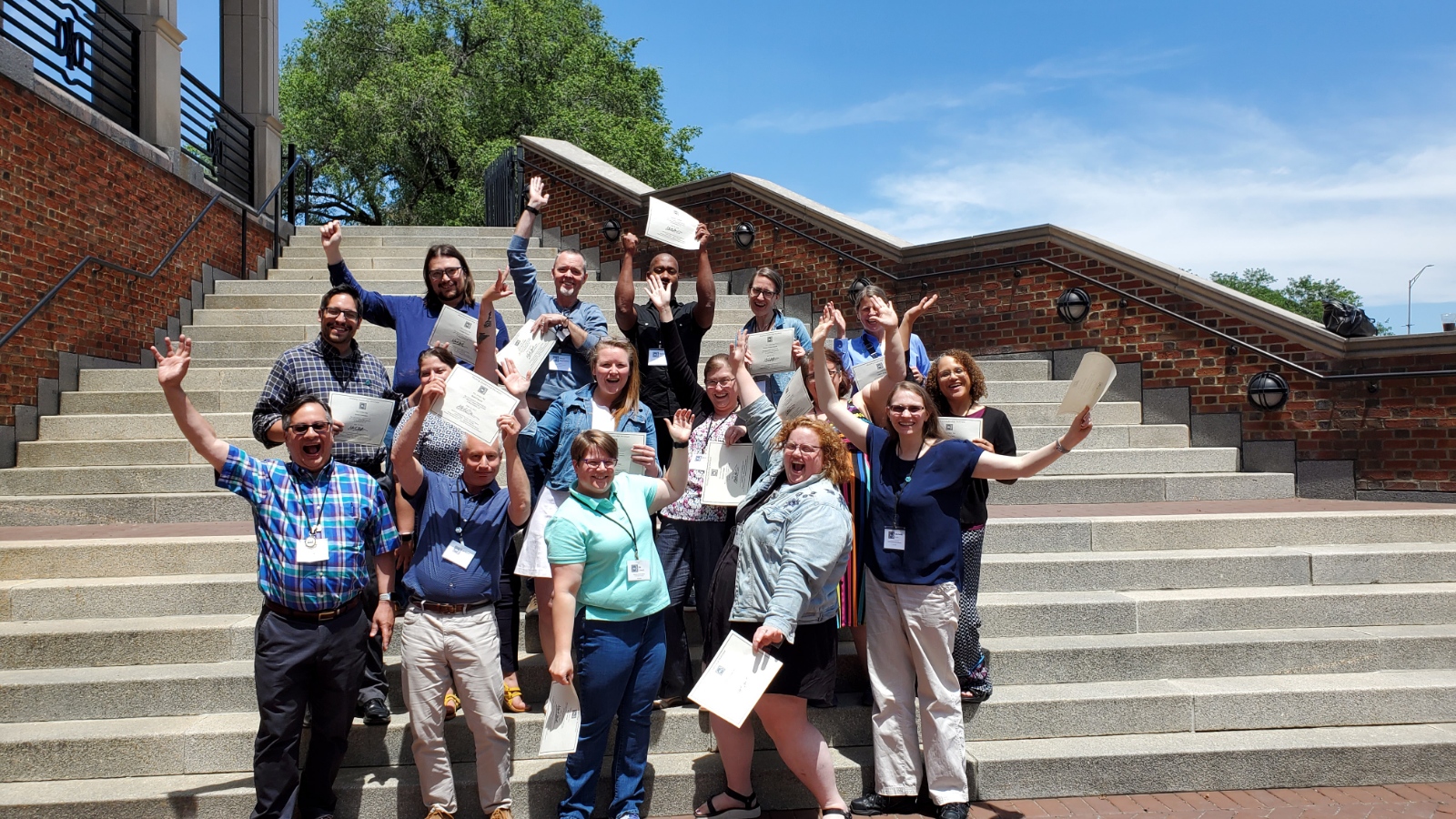
The Class of 2022 celebrating their graduation from the HLI Seminar.

The History Leadership Institute, AASLH’s professional development program for mid-career history professionals, introduced its long-running Seminar in a new format in June.

In 1959, the Seminar began as an effort to train newly graduated history students and directors of history museums in the unique skills of managing museums, historic sites, and archives in a six-week program held at Colonial Williamsburg, During the decades that followed, the Seminar has continually changed to meet the needs of the field and explore new and emerging practices.

Continue reading

Doing History with Gummies

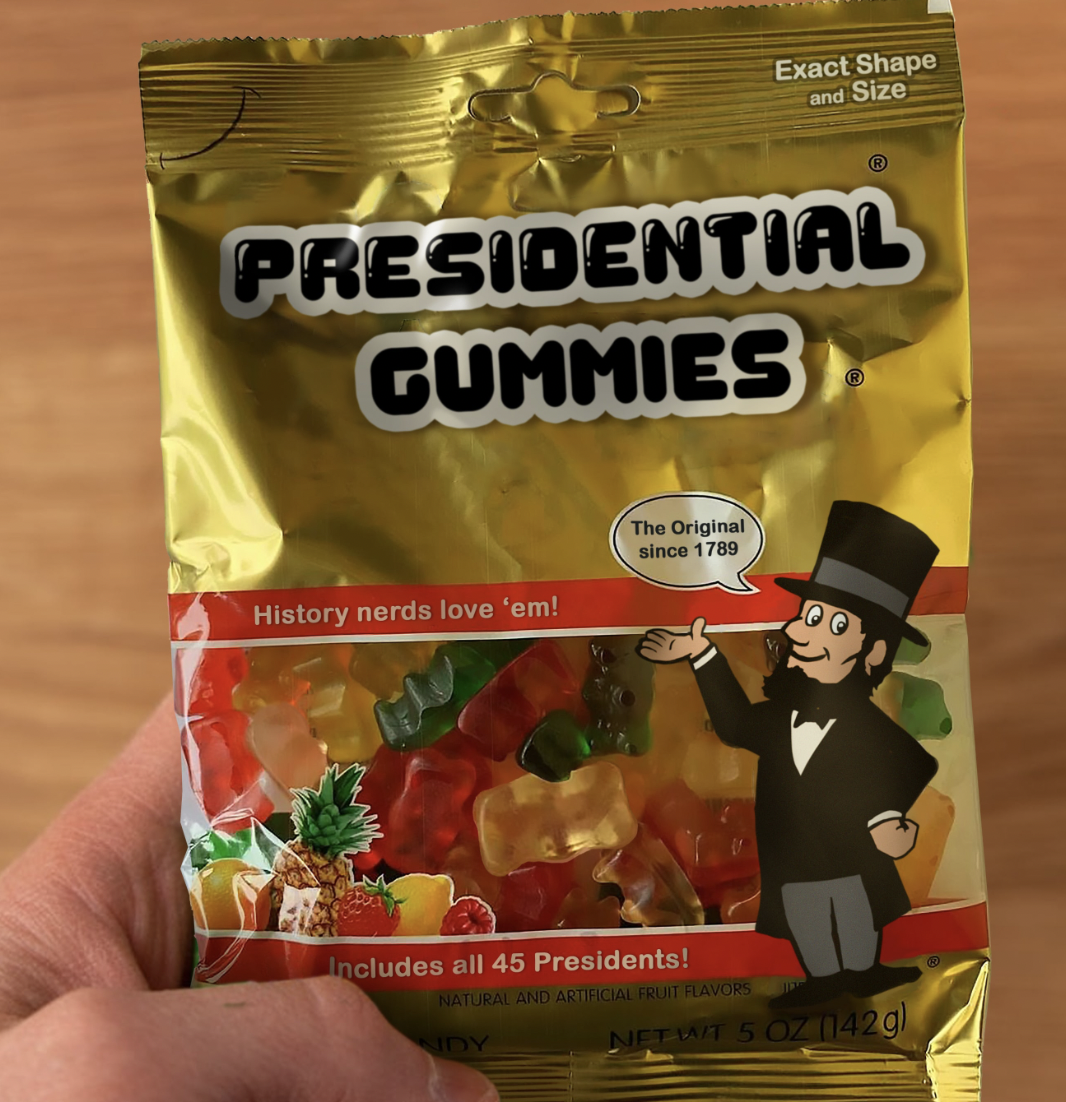
Limited edition of Presidential Gummies available from The History List.

The History List, creators of the annual History Camp, continues to launch a series of fun and engaging products to inspire Americans to explore and share their history. Today they’re releasing a limited supply of Presidential Gummies that are sure to turn children into history nerds. They also align with the “Doing History” theme for the 250th Commemoration by encouraging open conversations about what history is, the many ways it is done, and why it matters.

Made by Haribo, the German manufacturer of Goldbears® since 1922, these colorful gummies in flavors from pineapple to strawberry representing all the presidents are sure to delight (and become a collector’s item among history buffs). These Presidential Gummies and other cool history stuff are available online in The History List store.

New! Interpreting Slavery with Children and Teens

Interpreting Slavery with Children and Teens by Kristin Gallas will be released this month.

Kristin Gallas, co-editor of Interpreting Slavery at Museums and Historic Sites (2015) and a contributor to my book on Interpreting African American History and Culture at Museums and Historic Sites (2015), has turned her attention on interpreting this essential but sensitive topic with children and teenagers. She will be launching her new book, Interpreting Slavery with Children and Teens at Museums and Historic Sites virtually on Tuesday, October 5 at 7:00 pm Eastern. Registration is free and you can pre-order the book with a 30% discount using code RLFANDF30 (expires at end of September 2021).

Readers of History News will have caught a preview of her new book in a Technical Leaflet that accompanied the Winter 2021 issue. In this Leaflet, Kristin lays out a compelling need to change our approach:

Presenting the history of slavery inclusive and conscientious school programs is difficult and necessitates challenging the prevailing, and incomplete, narrative. It requires diligence and compassion—for the history itself, for those telling the story, and for those hearing the stories. It is a necessary part of the collective narrative about our past, present, and future.

We must talk with young people about slavery and race, as it is not enough to just talk to them or about the subject. By engaging students in dialogue about slavery and race, they bring their prior knowledge, scaffold new knowledge, and create their own relevance—all while adults hear them and show respect for what they have to say. We cannot fail future generations of learners the way many of us were failed by the sites we visited as children.

Her new book will provide more advice, examples, and replicable practices for the comprehensive development and implementation of slavery-related school and family programs at museums and historic sites.

If you haven’t met Kristin, she’s worked in museums for nearly 30 years. She holds a master’s degree in museum education from George Washington University (where I now teach in the museum studies program) and has led the education departments at the Montana Historical Society and the USS Constitution Museum and is currently the project manager for education development at the Tsongas Industrial History Center. She facilitates workshops for museums and historic sites on developing comprehensive and conscientious interpretation of slavery and speaks regularly at public history and museum conferences.

On the Road: Chimney Rock National Historic Site

Chimney Rock National Historic Site, western Nebraska.

History Nebraska (formerly known as the Nebraska Historical Society) has six historic sites, including Chimney Rock near Bayard. Growing up in California, this natural landmark figures prominently in the schoolbook history of western settlement with images of slowly moving wagons crossing empty plains accompanied by men carrying rifles and women carrying children.

As my first experience in Nebraska, my road trip showed me the physical challenges of living in the mountains and plains of the western United States. That’s one of the big reasons I love to travel because it establishes the physical context for historical events and places that can’t be adequately captured in books or exhibitions. It’s one of the reasons I’m so committed to the preservation and interpretation of historic sites—it’s where history happened.

History Nebraska debuted a renovated Visitor Center at Chimney Rock in July 2020 and received a Rising Star Award as an outstanding tourism attraction from the NebraskaLand Foundation. My chance to see it last month showed that it was a terrific experience for tourists with families from the architecture to the exhibitions to the restrooms. It’s a significant improvement from a couple years ago, as described by Karrin Doll Tolliver at A Taste for Travel.

Continue reading

On the Road: Hitting Triples with a Single Artwork

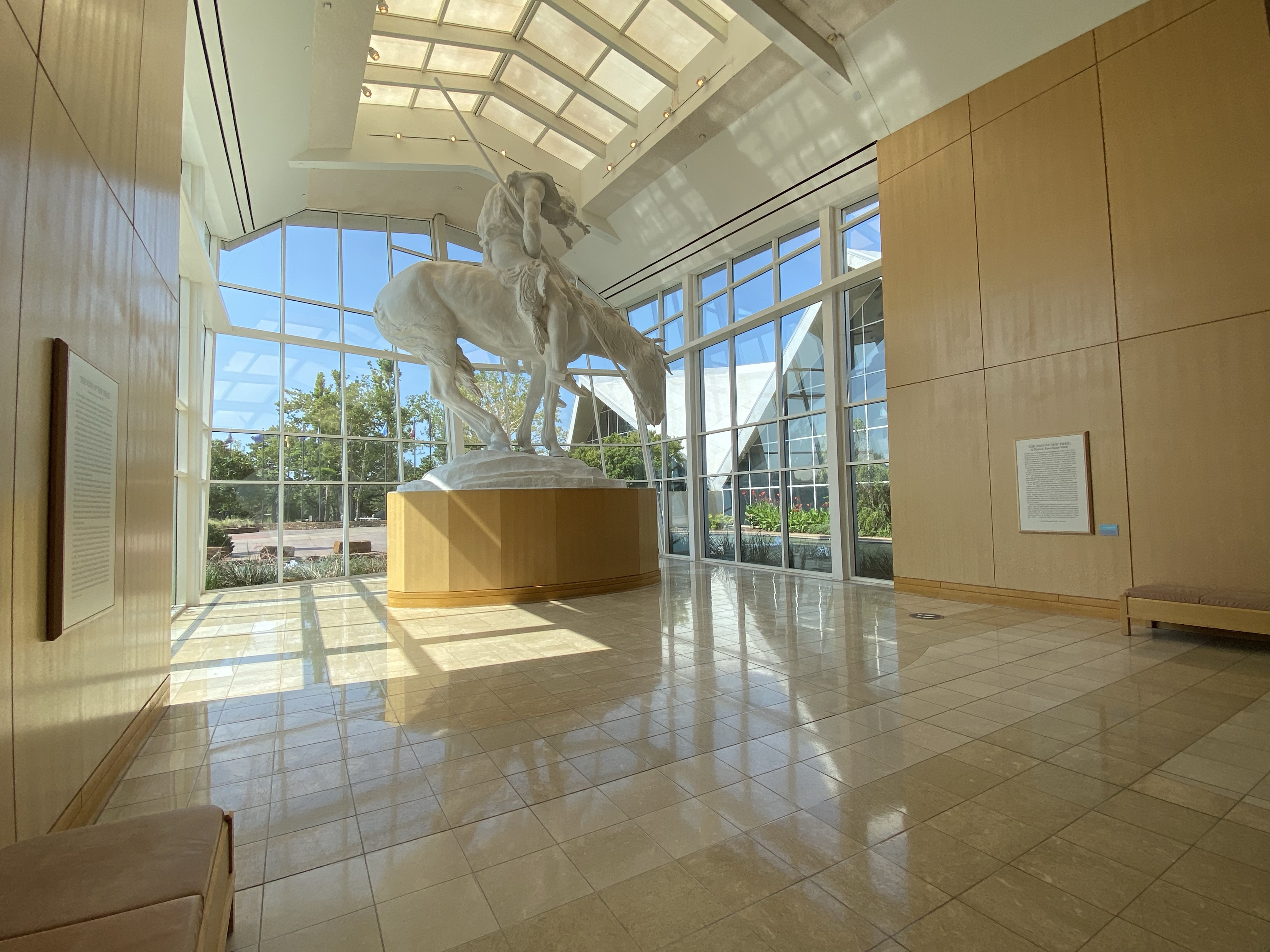
Entrance hall, National Cowboy and Western Heritage Museum, Oklahoma City.

At the National Cowboy and Western Heritage Museum in Oklahoma City, a monumental bright white sculpture of an Indian slouched on a horse fills the end of the entrance hall. James Earle Fraser created “The End of the Trail” for the 1915 Panama-Pacific International Exposition in San Francisco, earning him a Gold Medal. It also became a popular image that signaled the end of a free people.

The Museum acquired the plaster statue from Tulare County (California) Historical Society, where it sat outside in a city park deteriorating for nearly 50 years. Now the restored statue is the centerpiece of this large museum and they’ve used this one object to hit a triple with visitors, to borrow a phrase from baseball.

Along with a typical label describing the sculpture’s creation, acquisition, and significance, it includes a Native American View in a second label of equal length by Dr. R. David Edmunds, a Cherokee. He states that the sculpture represents the popular view of “a nineteenth century Indian warrior defeated and bound for oblivion—frozen in time. By the 1890s, Native Americans knew their trail had become steep and rocky, but they believed it would continue.” The label continues to discuss the challenges and opportunities faced by Native Americans in the 20th century and that “being Indian has never been cast in stone. Today, Native Americans proudly ride forward on a trail into the future.”

The use of labels to provide multiple perspectives is not uncommon in art museums, but I haven’t seen it used enough in history museums. They are ideal places to show that events, places, and eras are experienced differently by different people. It’s an easy way to enrich interpretation without the need to create entirely new exhibitions or special events on women, African Americans, or Native Americans.

Continue reading

On the Road: Rethinking “Cast in Bronze”

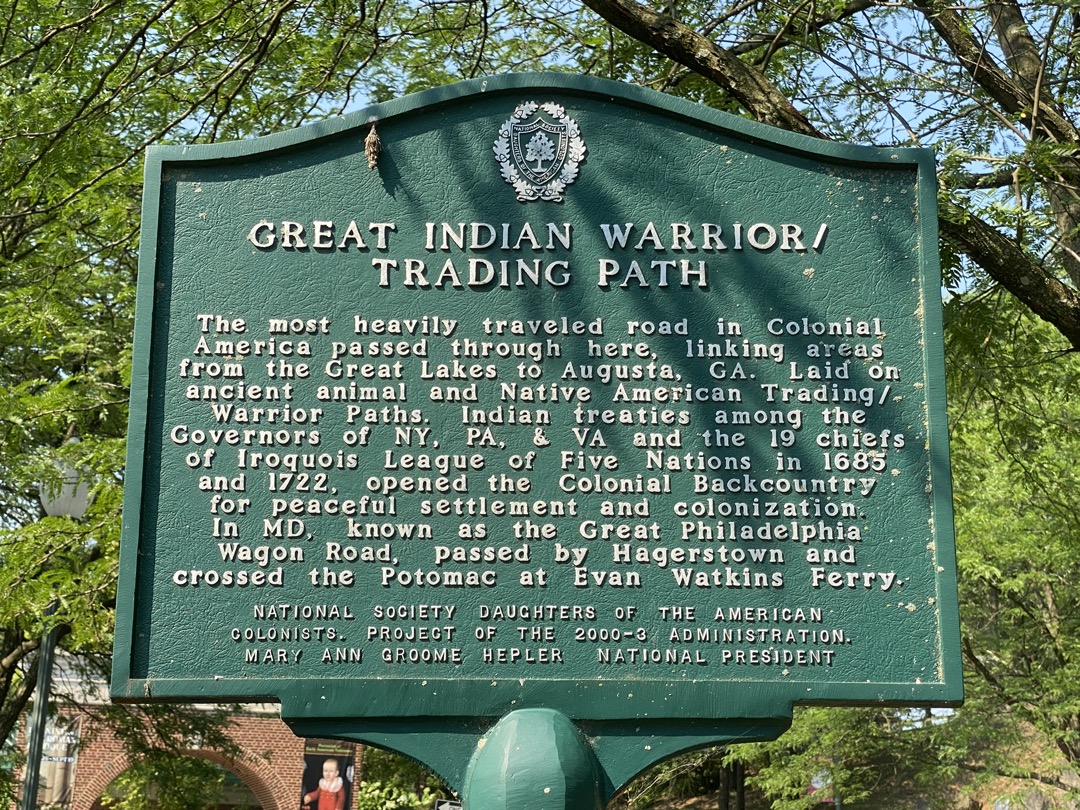
At my first stop at the Washington County Museum of Fine Arts, I was faced with a historical marker at the entrance to the parking lot. A unexpected location but far more accessible than on the side of a busy highway. All of the recent conversations about decolonization has me always take a closer look at these markers but more interestingly, I’ve encountered several different types of markers so far on my road trip that have me thinking more about their value, veracity, authenticity, and permanence by being “cast in bronze”.

As you’ll see, location matters as much as the text. Some are intentional efforts to deceive, some are not. Some are historical, some artistic, some a bit of both. They are all designed to be inspirational, some more deeply than others. Do any of them matter? Do they have any impact? What do you think?

“Great Indian Warrior/Trading Path,” Washington County Museum of Fine Arts, Hagerstown, Maryland.
“Eddie Taylor, Mayor of 7th and Wabash,” Terre Haute, Indiana.

“History of Springfield Public Square,” Springfield, Missouri.