Category Archives: Museum

Rethinking Board Governance in a Post-COVID World

At the recent Mid-Atlantic Association of Museums (MAAM) conference in Pittsburgh, I attended “Headwinds and Tailwinds: A Panel Discussion about the Financial and Operational Impacts on the Museum and Arts Management Field.” One of the panelists, Hayley Haldeman of the Pittsburgh Cultural Trust, offered particularly insightful observations about board governance in the post-COVID landscape. Her comments confirmed what many of us have observed firsthand—museum boards are facing more challenges and opportunities than ever before.

A Changing Landscape—But Familiar Structures

Despite the upheavals of recent years, Haldeman noted that few organizations have made major changes to their board structures. Most boards remain large, and many governance documents have yet to be updated. The notable exception has been a growing emphasis on board diversity—though progress toward real inclusion varies widely.

At the same time, museums are experiencing significant leadership transitions. Many long-serving executive directors have retired, while others are navigating the aftermath of the “Great Resignation,” which has affected both staff and board leadership. These changes can be destabilizing, but they also open the door for renewal.

New Pressures on Museums and Nonprofit Organizations

Board service today comes with new (and sometimes unexpected) responsibilities. Museums and other nonprofit organizations are grappling with a range of threats, both real and perceived:

  • Drops in individual giving and shifts in foundation priorities
  • Greater community expectations for accountability and transparency
  • Political and legal questions (e.g., DEAI initiatives, exhibition content)
  • Cybersecurity and AI-related risks

Meanwhile, board members are harder to recruit and retain. COVID-19 reshaped personal and professional priorities, making time an even scarcer resource. For organizations, that means it’s harder than ever to fill board seats, onboard new members, and keep them engaged—especially when board work happens virtually.

Continue reading

Heading to Cincinnati for AASLH—Will You Be There?

This week I’m heading to Cincinnati for the American Association for State and Local History’s Annual Meeting—and I couldn’t be more excited. After a couple of years of scheduling conflicts that kept me away, I’m very much looking forward to reconnecting with colleagues and friends from across the country.

If you’ll be there, I hope to see you at the History Leadership Institute reception on Wednesday afternoon. If we miss each other then, perhaps we’ll cross paths in the exhibit hall or between sessions. Please do say hello—I always enjoy hearing what others are working on.

I’ve been fortunate to visit many of Cincinnati’s museums over the years, but there’s always more to discover. I’m especially looking forward to Friday morning’s walking tour of the Over-the-Rhine District (which includes a special preview of the new OTR Museum) and Friday night’s reception at the American Sign Museum. There are so many museums to see and I can easily recommend the Cincinnati Art Museum, Taft Museum of Art (in a historic house), Harriet Beecher Stowe House, National Underground Railroad Freedom Center, and the Cincinnati Museum Center (a multi-museum complex in a splendid Art Deco train station). In addition, I’ll make a return visit to two places within walking distance: the 21c Museum Hotel (a surprising blend of luxury hotel and contemporary art museum—what are they doing now?) and the Contemporary Arts Center (by Zaha Hadid, the first woman to design an art museum in the US—how it is holding up?).

It promises to be a week full of learning, inspiration, and connection. I hope to see many of you in Cincinnati!

Mapping Slavery in Amsterdam: Reflections on a Heritage Guidebook

During a recent trip to the Netherlands, I picked up a copy of Amsterdam Slavery Heritage Guide (Gids Slavernijverleden Amsterdam) , the second extended edition published in 2018. Although it’s been around for nearly a decade, this was my first encounter with it—and I’m glad I made the discovery. As someone interested in the interpretation of African American history and culture, as well as city guides, I found it to be a compelling model for documenting and acknowledging slavery’s legacy in public spaces.

The full-color Guide identifies over 100 locations throughout the city connected to slavery, from major institutions to architectural details that would be easy to overlook. Each site is presented with a bilingual (Dutch and English) description that varies in length, sometimes accompanied by historical context. The locations are not limited to traditional sites such as mansions and churches—many are ordinary houses or warehouses, gablestones, offices, or former homes of prominent individuals. A map at the beginning allows you to design your own exploration of the city’s slavery heritage.

The content is categorized among four topics:

  • Trade and Profit
  • Africans and Asians in Amsterdam
  • Resistance and Abolition
  • Museums and Archives
Continue reading

New Vision, Old Masterpieces: Transformation Ahead at the National Gallery of Art

The National Gallery of Art in Washington, DC has quietly launched an ambitious reimagining of its original West Building, a structure completed in the early 1940s and long known for its grand architecture and displays of masterpieces. For generations, galleries have been organized by geography and time period, with paintings neatly arranged on walls in a format familiar—and comforting—to many visitors. But as expectations change and audiences diversify, the NGA is reconsidering what a national art museum can and should be in the 21st century.

Project Goals: From Comfort to Connection

The West Building Reimagining Project is driven by a compelling vision: to make visible the profound links between art and our shared humanity. The project seeks to move beyond static displays and conventional categorizations to create exhibitions that are more resonant, inviting, and engaging—especially for multi-generational families and first-time visitors. The team aims to evoke a broader range of responses, from curiosity to awe, while incorporating a wider variety of objects and histories than traditionally seen in the West Building.

Listening, Learning, and Prototyping

The project began in earnest in 2023 with a series of listening sessions involving both staff and visitors. One key insight quickly emerged: diversity—of objects, perspectives, and people—matters. Since then, the Gallery has taken a human-centered design approach, engaging more than 100 participants across departments and partnering with faculty from the Corcoran School of Art at George Washington University (including me!).

Subcommittees were formed in 2024 to tackle specific challenges, and in 2025 the focus has shifted to testing experimental display strategies. These prototypes will be refined throughout the year, with recommendations to the NGA’s president and CEO slated for 2026. The process is intentionally iterative, emphasizing learning and responsiveness over rigid outcomes.

A Workshop on the Social Role of Art

Continue reading

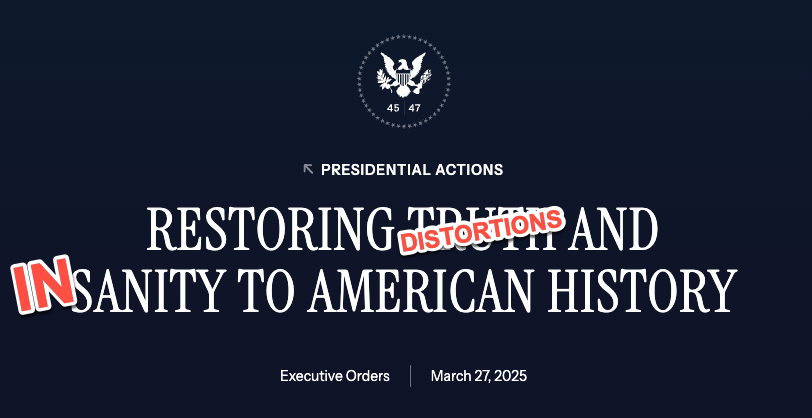
Warning: Objects in Museums May Be More Complicated Than They Appear

Today, the White House issued an executive order titled “Restoring Truth and Sanity to American History”, which aims to reshape the presentation of history within federal institutions—particularly the Smithsonian. The directive calls for the removal of “divisive or anti-American ideology,” restoration of monuments that have been “improperly removed,” and new restrictions on federally funded exhibits that “degrade shared American values.” While some may see this as a return to patriotic education, as a historian and museum professional, I see troubling implications for our field.

The Illusion of a Single Truth

At the heart of the order is the assertion that a “true” version of American history must be restored. But history is not a static set of facts—it is a discipline grounded in evidence, interpretation, and debate. Historical understanding evolves as new sources emerge, as questions shift, and as voices long excluded are brought into the conversation. There is no single, timeless narrative to return to—only a continuing effort to make sense of the past as honestly and inclusively as possible.

Independence Under Threat

The Smithsonian Institution, like many of our most trusted public history institutions, relies on scholarly rigor and curatorial independence. By assigning Vice President JD Vance a role in overseeing content and linking congressional appropriations to ideological compliance, this executive order politicizes museum interpretation and undercuts professional standards. When history is shaped by political power instead of evidence, public trust erodes.

Continue reading

Discover Projection Mapping: A New Way to Engage Museum Visitors

As museums continue to evolve, so do the tools we use to connect with our audiences. Projection mapping is creating new opportunities to bring stories and objects to life. Although it’s been used for decades, it is increasingly adopted by museums and historic sites. I’m excited to share my new video, now available on YouTube, where I explore some fascinating projection mapping experiences in museums that I encountered while on the road this past year.

In this video, I take you through the basics of projection mapping, explaining how it works and offering real-world examples of its use in museums and historic sites in England, Italy, and the United States. From the virtual ledger of servants at Kensington Palace to the immersive storytelling at the Capitoline Museums in Rome, projection mapping is proving to be a versatile tool for creating memorable and educational museum experiences.

Whether you’re familiar with projection mapping from iconic attractions like the Haunted Mansion at Disneyland, or this concept is new to you, the video is designed to inspire museum professionals to think creatively about how to integrate this technology into exhibitions, tours, and programs. I’ll also show how more advanced applications, like the complex presentations at the Handel Hendrix House, are pushing the boundaries of how we engage with historical spaces and objects.

Projection mapping is about more than just projecting images—it’s about creating interactive, immersive environments that deepen the visitor’s connection with museum collections.

Check out the video now and see how your museum can harness the power of projection mapping to enhance visitor engagement and interpretation. Just be aware that it’s a handcrafted video that took me two days to edit and narrate, but it’s a topic better explained in a video than in text.

Watch the full video here: https://youtu.be/c3WX7kdD0Jg

I look forward to your comments and learning how you might use projection mapping in your own work!

Decolonization in London Museums: A Firsthand Look at Progress and Challenges

During my recent visit to several London museums, I was struck by the growing emphasis on decolonization. As a museum professional, I’ve been following this movement for some time, but seeing these efforts firsthand inspired me to reflect on the challenges and progress being made. Some London museums are actively re-examining their collections and narratives, working to address the complex legacies of colonialism in tangible ways, and both Royal Collections and the National Trust have staff members specifically focused on this issue. But others have a long way to go.

If you’re not familiar with decolonization, it’s the process of rethinking and revising interpretations that have historically favored the perspective of a dominant power, such as an imperial empire over a colonized nation (like Great Britain and India). However, decolonization goes beyond the empire-colony dynamic, addressing any situation where one perspective is elevated due to power imbalances. For instance, terms like “prehistory” suggest a time without history, labeling settlers as “pioneers” overlooks the people who were already living in those areas, and describing conquering armies bringing “civilization” implies they were superior to the existing cultures. Words shape our perceptions and carry significant consequences, influencing relationships across race, gender, and other social divides. Decolonization helps us recognize and correct these biases, leading to more inclusive and accurate narratives.

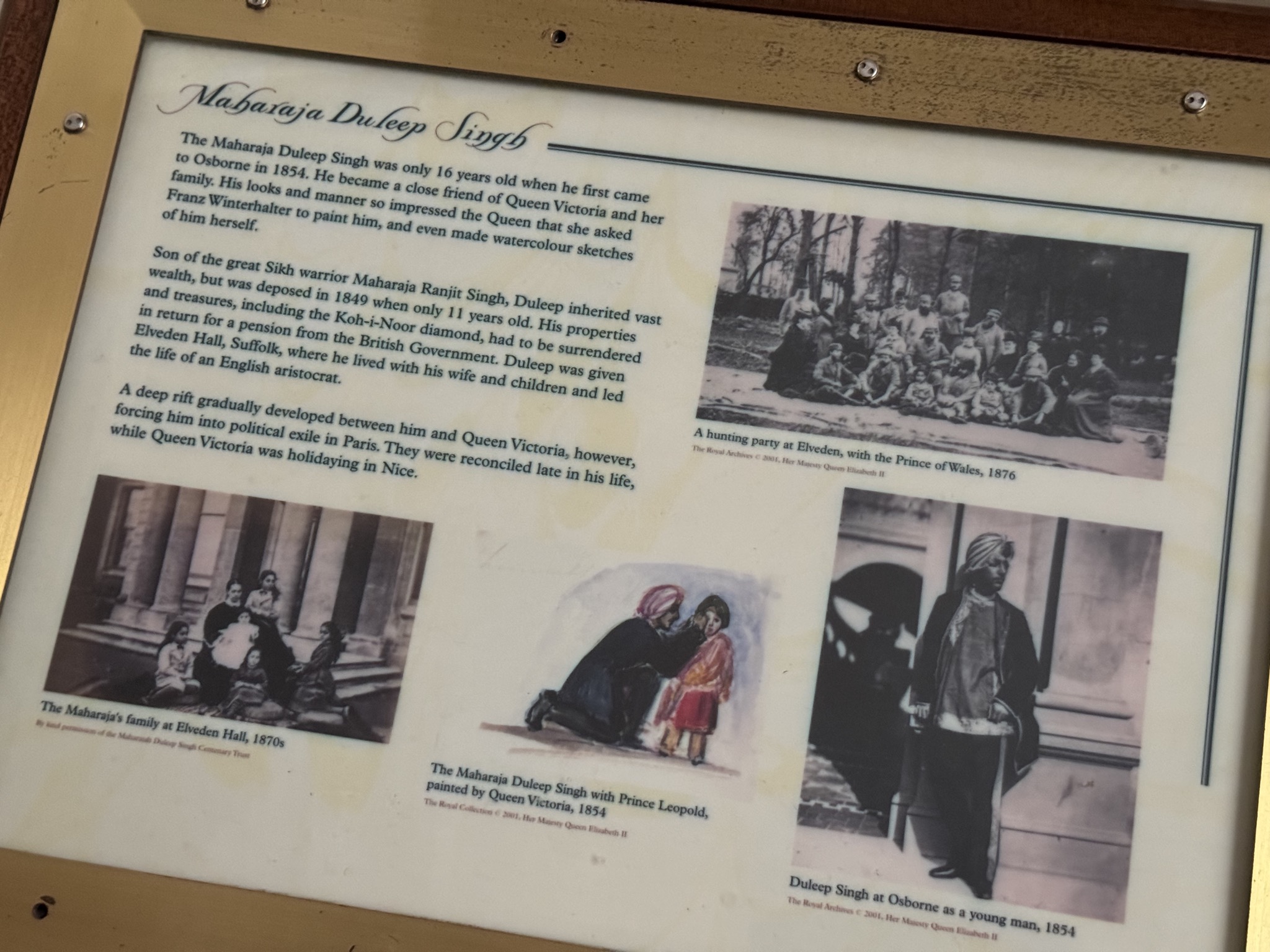
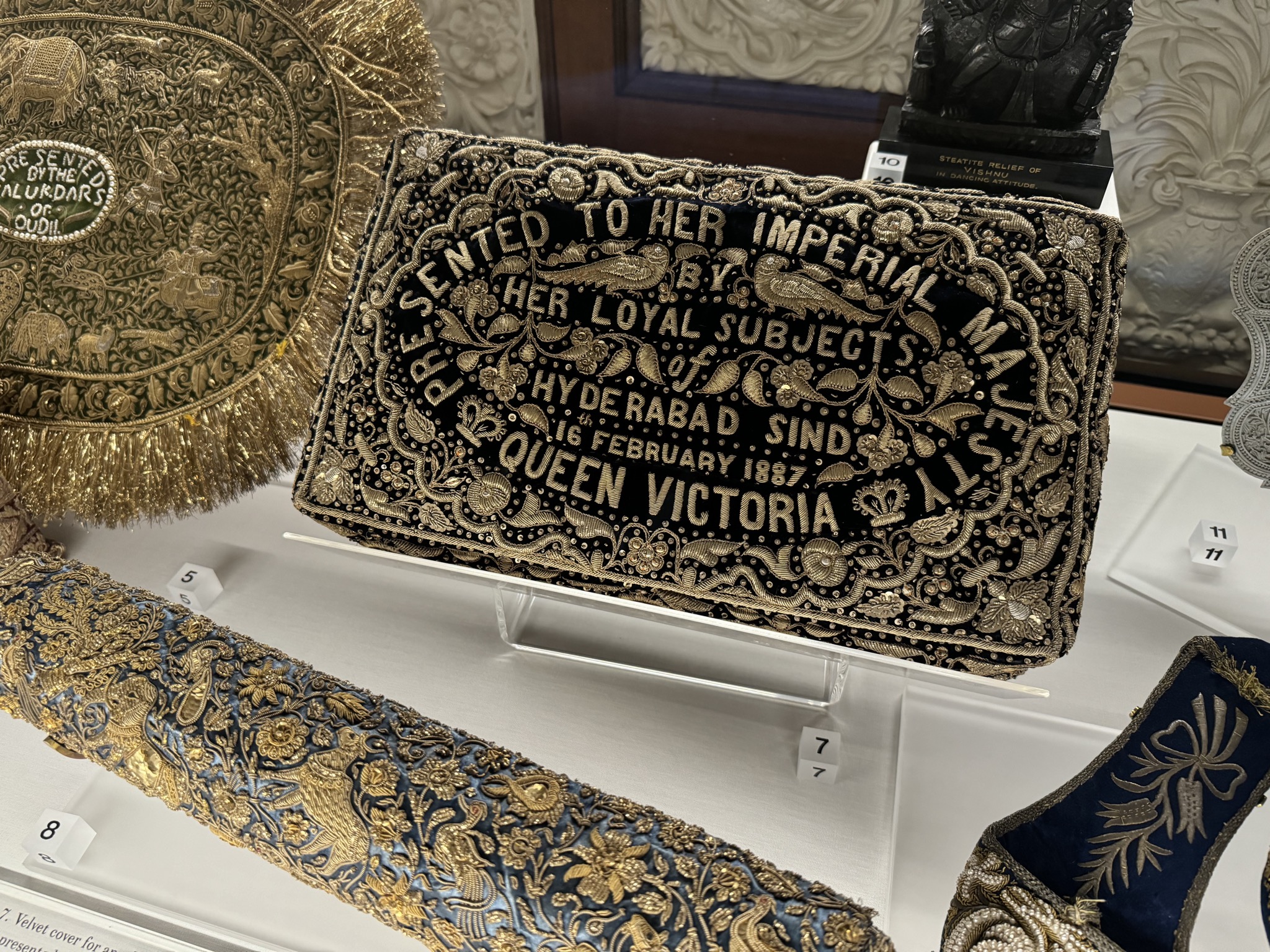
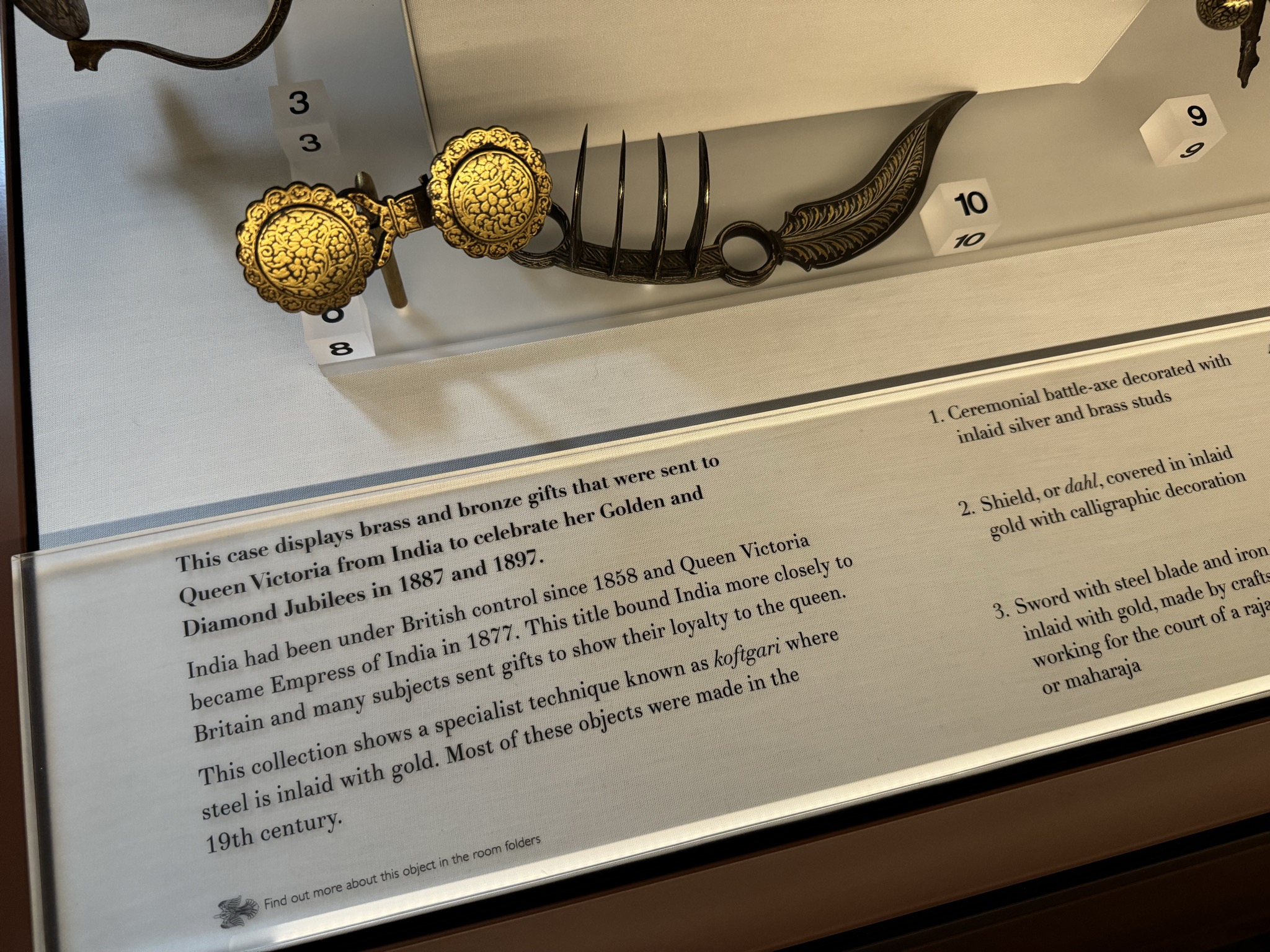
For an example of a museum waiting to undertake a re-examination of its exhibitions, consider Osborne House (operated by English Heritage), the country palace of Queen Victoria and Prince Albert. The displays in and around the Durbar Room discuss Britain’s relationship with India. The exhibitions include a panel about Maharaja Duleep Singh and that “his properties and treasures, including the Koh-i-Noor diamond, had to be surrendered in return for a pension from the British Government” and feature gifts sent from India to Queen Victoria to “show their loyalty to the queen.” The history is far more complex and this exhibition emphasizes only the British perspective and continues a mythology of India’s grateful subservience to the Queen.

1. Re-examining Collections

Many London museums are conducting in-depth reviews of their collections to identify items acquired during the colonial era. This process includes acknowledging the contexts in which objects were collected, often under unequal power dynamics. They are being more transparent about the provenance of key objects but contested ownership isn’t addressed publicly. Some examples:

Continue reading

Demystifying Spending Patterns in Small Museums

In the world of small museums, location and audience significantly influence expenses, rendering a one-size-fits-all approach ineffective. However, gaining insight into the various types of expenses museums incur can shed light on common challenges and their causes. The non-profit financial Form 990 categorizes expenses into five areas, providing a framework for understanding spending patterns. Our goal is to simplify the concept of museum spending and guide museums toward prudent budget management by exploring these key expense categories.

Continue reading

Untangling the “Other” Revenue Stream

In the colorful tapestry of history-focused organizations, every thread of revenue has a role to play in the success of the organization. Perhaps the most unique collection of these threads is the “Other” revenue category. This singular “Other” thread houses a miscellany of revenue sources that don’t fit into the categories of “Investment Income”, “Program Service Revenue”, and “Contributions and Grants”. At first glance, this classification may appear insignificant, yet it often proves to be a silent contributor that underpins the fiscal health of History-Focused Organizations [Museums (NTEE A50), History Museums (A54), History Organizations (A80), and Historical Societies & Historic Preservation (A82)].

Understanding this “Other” revenue can be like deciphering an ancient dialect. It is made no easier by the fact that IRS Form 990 at times uses the terms revenue and income interchangeably. While some categories of this revenue such as royalties and inventory sales may be familiar, “miscellaneous” often contains difficult to parse odds and ends such as third-party events, insurance proceeds, ATM fees, and revenue from hosting satellite towers. Most often this miscellaneous revenue is unspecified and simply named “miscellaneous” or “other” which can make it difficult to get the full picture of a particular institution’s revenue sources. We advise limiting the classification of your total revenue as “miscellaneous” to no more than 1%. While judicious use of this category can help define your other revenue streams more clearly, overuse could lead to a lack of clarity about a significant portion of your revenue. It is crucial to maintain a comprehensive understanding of your financial situation.

Continue reading

Impact, Sustainability, and Non-Profit Programs

For small non-profit organizations operating on less than a million dollars annually, programs are often the beating heart of the operation. The best programs balance mission and financial sustainability to serve their audiences. Program revenue (admissions, events, and membership dues) can be a vital means of maintaining financial stability and growth. For History-Focused Organizations [Museums (NTEE A50), History Museums (A54), History Organizations (A80), and Historical Societies & Historic Preservation (A82)] as overall revenue grows, so does the share of program revenue. This means as your organization grows, so should the prominence of your programs as a true revenue driver (see figure 1 below).

As small history-focused organizations expand, it’s crucial to manage their programs wisely to increase income while keeping the mission in mind. For small groups, program decisions can be very personal, often influenced by board or staff interests. Taking a strategic approach to these decisions can boost the organization’s growth and success.

Continue reading