Kristin Gallas, co-editor of Interpreting Slavery at Museums and Historic Sites (2015) and a contributor to my book on Interpreting African American History and Culture at Museums and Historic Sites (2015), has turned her attention on interpreting this essential but sensitive topic with children and teenagers. She will be launching her new book, Interpreting Slavery with Children and Teens at Museums and Historic Sites virtually on Tuesday, October 5 at 7:00 pm Eastern. Registration is free and you can pre-order the book with a 30% discount using code RLFANDF30 (expires at end of September 2021).
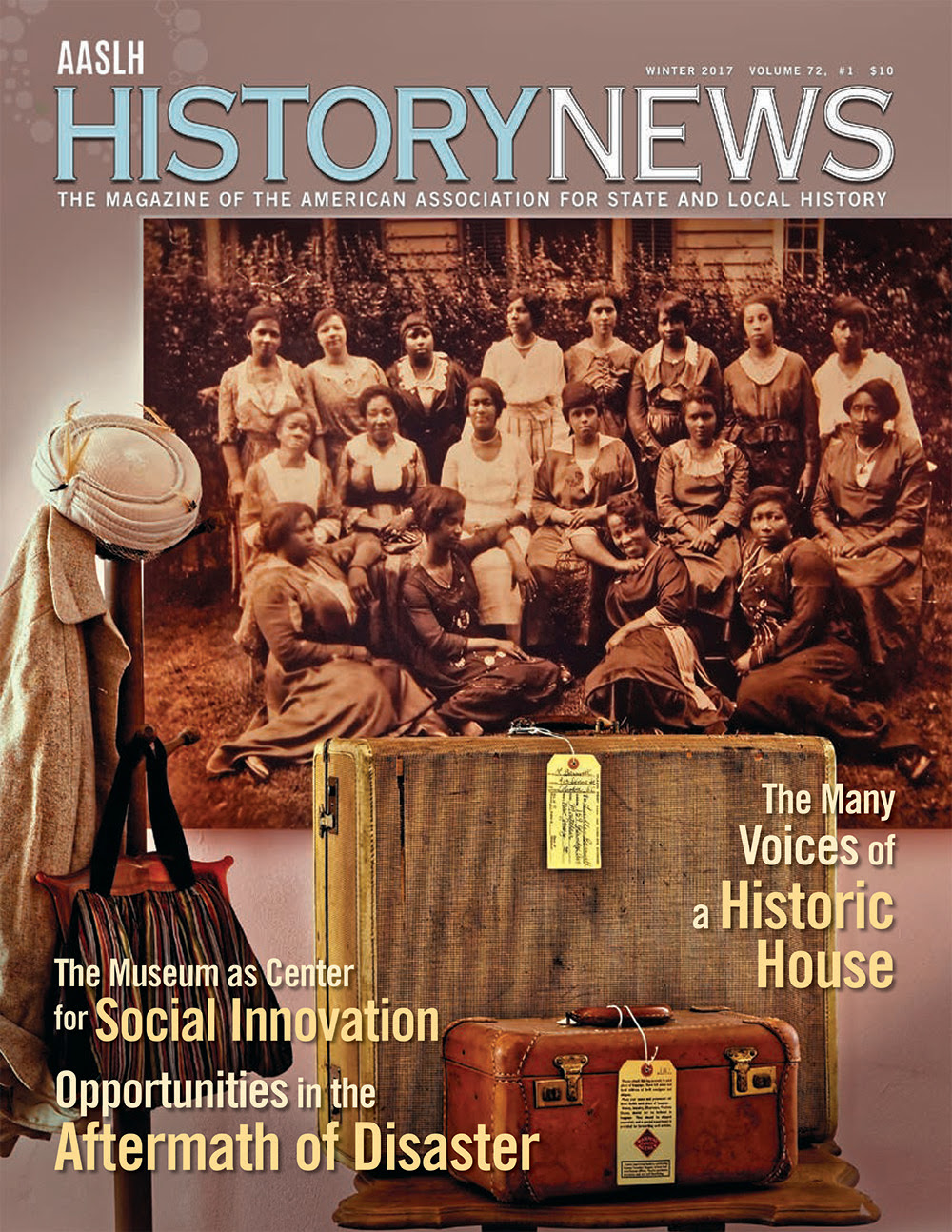
Readers of History News will have caught a preview of her new book in a Technical Leaflet that accompanied the Winter 2021 issue. In this Leaflet, Kristin lays out a compelling need to change our approach:
Presenting the history of slavery inclusive and conscientious school programs is difficult and necessitates challenging the prevailing, and incomplete, narrative. It requires diligence and compassion—for the history itself, for those telling the story, and for those hearing the stories. It is a necessary part of the collective narrative about our past, present, and future.
We must talk with young people about slavery and race, as it is not enough to just talk to them or about the subject. By engaging students in dialogue about slavery and race, they bring their prior knowledge, scaffold new knowledge, and create their own relevance—all while adults hear them and show respect for what they have to say. We cannot fail future generations of learners the way many of us were failed by the sites we visited as children.
Her new book will provide more advice, examples, and replicable practices for the comprehensive development and implementation of slavery-related school and family programs at museums and historic sites.
If you haven’t met Kristin, she’s worked in museums for nearly 30 years. She holds a master’s degree in museum education from George Washington University (where I now teach in the museum studies program) and has led the education departments at the Montana Historical Society and the USS Constitution Museum and is currently the project manager for education development at the Tsongas Industrial History Center. She facilitates workshops for museums and historic sites on developing comprehensive and conscientious interpretation of slavery and speaks regularly at public history and museum conferences.


 This blog has been fairly sparse this past year because Ken Turino and I were editing and assembling two dozens essays for Reimagining Historic House Museums: New Approaches and Proven Solutions, an anthology to be published by Rowman and Littlefield as part of the AASLH series. I’m delighted to announce that it is now off my desk and in the hands of the publisher; we expect it will be released in fall 2019.
 Because I have a successful consulting practice, friends and colleagues occasionally ask for guidance on starting their own business. Working for yourself is thrilling, which can be both joyous and scary. We can all imagine that running your own business is very different than being an employee, and that consulting is much more than being paid for your advice.
 Historic House Museums in the United States and the United Kingdom: A History by Linda Young. Lanham, MD: Rowman & Littlefield, 2017. v + 299 pp.; bibliography, index; clothbound, $85.00; eBook, $80.00.
 The National Park Service has issued an updated version of the