
 You’d think historic sites and geography would be an obvious combination because they both focus on place, and yet, I didn’t really see the connection until a few years ago when I started teaching at George Washington University. Joe Downer, an archaeologist at Mount Vernon who was participating in my historic house museum class, inspired me with his work using ArcGIS and their annual conference. By coincidence, I was conducting research for my anthology on interpreting African American history and culture and encountered useful articles in the Journal of Historical Geography, Southeastern Geographer, and Geographical Review. Finally, my wife became the Executive Director of the Society of Woman Geographers, which introduced me to lots of geographers across the United States (you mean they don’t just create maps?). As a result, I’ve increasingly used geographical along with historical approaches in my courses and in the business and interpretive plans I develop for my clients.
Next month, I’m diving in deeper by attending a conference of geography conferences: 2018 International Geographical Union (IGU) Regional Conference; Canadian Association of Geographers (CAG) Annual Meeting; and the National Council for Geographic Education (NCGE) Annual Conference (or as they say in Quebec, Congrès régional de l’UGI – Congrès annuel de l’ACG – Congrès annuel du NCGE). Yes, it’ll be in Quebec, so I’m a bit nervous that the language and content will be foreign to me. Nevertheless, I’m encouraged by the preliminary program, which lists dozens of presentations that immediately appealed to me (and they’re in English!): Continue reading

 I didn’t realize it at the time, but twenty years ago I began working with interpretive themes when I was refreshing the tours at the
 TED Talks has spawned the renewal of lectures as an engaging form of education (who would have guessed?) and many universities and organizations are regularly sharing lectures from their public programs, staff workshops, and student courses online with the public. They’re also a great resource for house museums and historic sites, who can use them for professional development and staff training, or to check out a potential speaker for a special event. They might even inspire museums to record their own events and share them online. Here are a couple programs that caught my eye:
 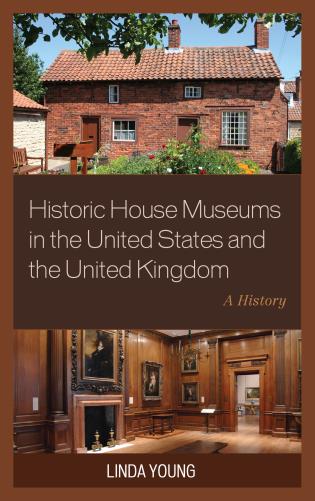 Historic House Museums in the United States and the United Kingdom: A History by Linda Young. Lanham, MD: Rowman & Littlefield, 2017. v + 299 pp.; bibliography, index; clothbound, $85.00; eBook, $80.00.

