 Looking for an idea for an upcoming exhibit? Need some alternatives for an interactive activity? Want to know if anyone else has installed an outdoor exhibit at a bus station? You’ll want to explore “Exhibit Files,” a free online collection of exhibition records and reviews for exhibit designers and interpretive planners. The Association of Science-Technology Centers launched this website in 2007 with funding from the National Science Foundation, but despite those affiliations, you’ll find plenty of files related to history, including a case study of Lewis & Clark (the national Bicentennial exhibition); a review of Terror House in Budapest by Daniel Spock of the Minnesota Historical Society; and a case study of a low-tech document-based interactive exhibit at the Missouri State Archives. Because most exhibit techniques can be used with any subject, you can adapt many ideas for your specific needs. The files can be searched by title, date, tag, or topic (such as history or architecture). And if you have an exhibit experience to share or you’re looking to solve a problem, you can join for free and become one of the nearly 3,000 members.
Category Archives: Historical interpretation
Interpreting Race: Challenges and Solutions from NCPH
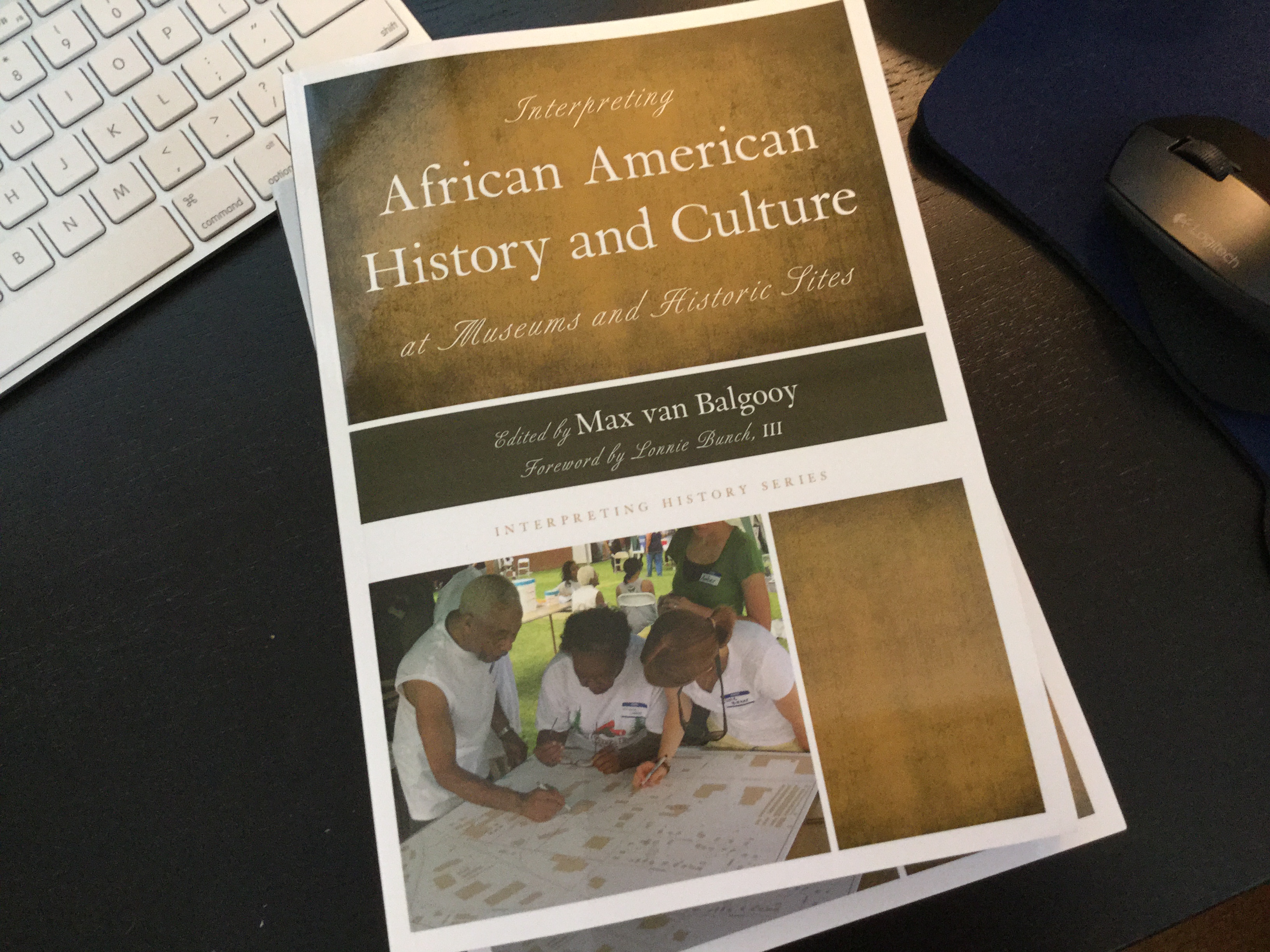 Last year when I was preparing Interpreting African American History and Culture at Museums and Historic Sites, it seemed that the obvious had been overlooked: race. Although we all advocated for the integration of African American history in interpretation in part to overcome racism, I wondered if instead we are inadvertently promoting the idea that races exist and we simply need to find ways to get along, just like dogs and cats in our homes. We never questioned or uncovered the assumptions about race that visitors may carry with them into museums and historic sites. Our bigger concern was that African American history was sufficiently significant to merit preservation and integration into the interpretation.
We know that races do not exist and it was a theory developed by scientists in the 18th and 19th century as a way to explain human differences. Race has long been disproven, but certainly race and racism continues, probably in the minds of many of our visitors. So if more of our visitors could understand that race is socially constructed and artificial, it may go a long way towards Continue reading
An App That Easily Merges Oral History and Images
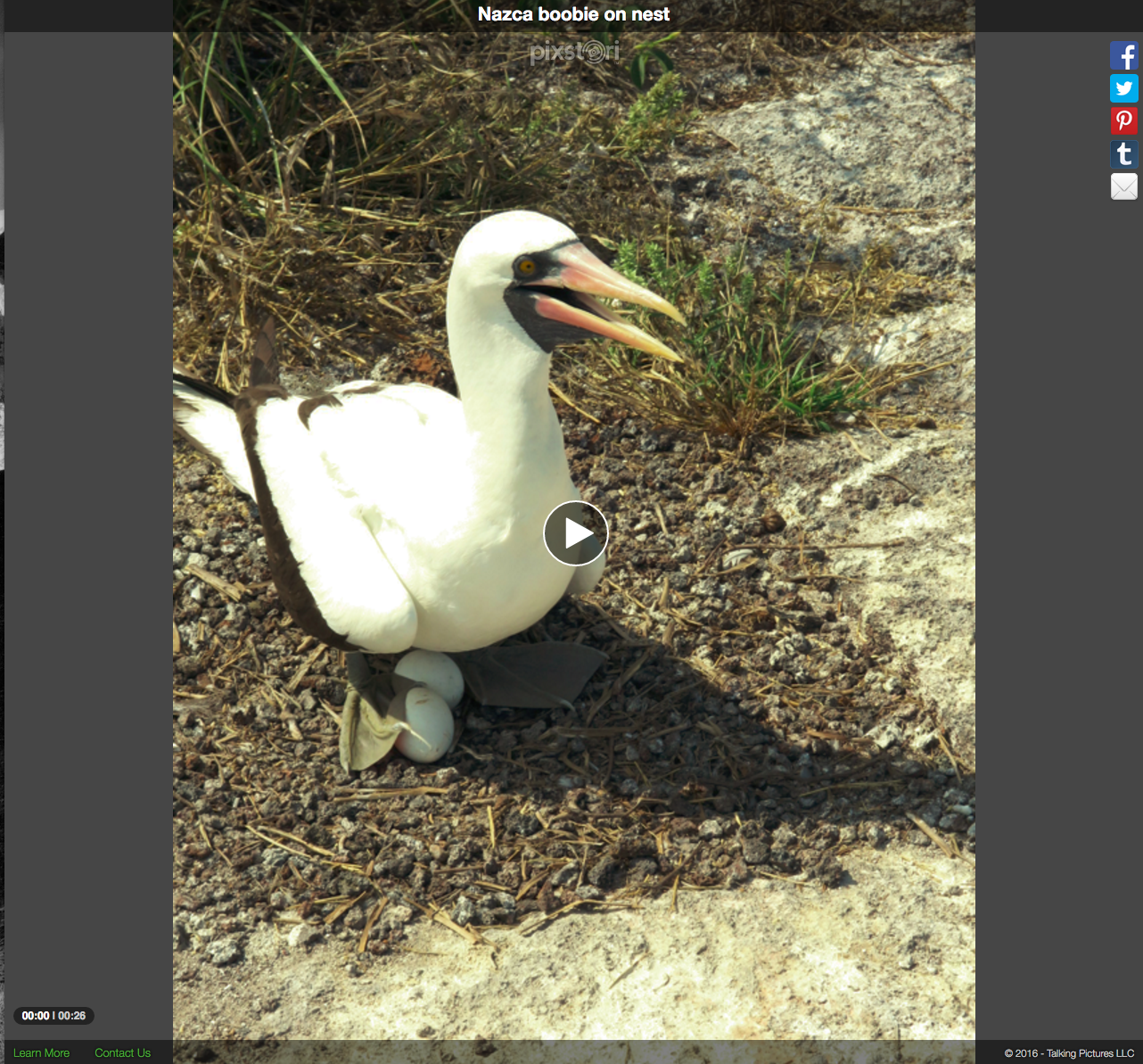
My recording about a bird nest on the Galapagos Islands using PixStori.
At the National Council on Public History conference last week in Baltimore, Michael Frisch of the University of Buffalo introduced PixStori, a iOS app that he helped develop that easily shares photographs with audio recordings. Frisch is a leader among oral history practitioners and he developed the app as a way for people to record short oral histories to accompany photographs.
Users pull up a photo from their iPhone or iPad and then record a short message (up to 20 minutes), which can then be shared via email, Twitter, or Facebook. I experimented with a photo of a bird and it’s remarkably easy to use. It’s definitely fun for sharing photos, but I can easily see museums and archives using it to share historic images or documents with a comment by an historian or help promote an upcoming event. But I can also see how it might be used in-house to record visitor reaction to proposed exhibit or to send a message to your staff about a site emergency. It appears that the recordings are stored at PixStori, so recipients don’t need to have the app installed but do need an internet connection to see and hear the file. The app is available free for iOS devices and an Android version is underway.
Interactive Station Using a Tablet and Stanchion
The equipment for interactive displays is becoming increasingly easier, thanks to powerful computer tablets that can show documents, images, and videos. There’s no need to mount a monitor to the wall with a fat cable snaking to a computer unit tucked into a cabinet. I recently saw a nice example of an interactive tablet system at the George Washington University Museum in Washington, DC. The tablet (such as an Apple iPad or Samsung Galaxy Tab) is mounted on a stanchion with a special head from the Exhibit Stanchions Group. That’s it. None of the tablet’s ports are blocked so it can be charged or updated even when it’s held in place. The tablet is securely fastened and the stanchion is heavy enough to withstand a casual bump, but if you need to remove the stanchion for an event or use it elsewhere, it can be easily picked up (yes, a thief could steal the whole thing but if they’re walking out the door with a stanchion, you’ve got bigger problems).
Should Tour Guides be Tested and Certified?
 At the end of last month, the California Tour Guide Act (AB 836) died in committee in the California State Capitol. If it had passed, it would have established a “tour guide certification program” through the California Travel and Tourism Commission to test and certify persons who “practice tour guiding for compensation” (it would exempt guides who work at museums and amusement parks). The bill’s authors wanted to ensure that tourists “get the most of their visit and return to the Golden State.” It’s also a big business. According to the California Travel Association, the travel industry generated $106.4 billion in revenue from visitors and contributed $6.6 billion in state and local taxes in 2012. In 2013, California hosted nearly 16 million international visitors and is expected to grow at over 5 percent annually through 2016. To support this volume of visitors, nearly one million people work in the travel and tourism industry, including 3,000 tour guides.
We can debate various aspects of the proposed law, such as the $700,000 annual cost to manage the program or the need for a criminal background check, but I was more intrigued by the requirement that tour guides must have completed a “curriculum in California tour guiding and related subjects,” including “tour guide safety and California geography, history, and culture.” How is that defined? How is that evaluated? The proposed law left the standards to Continue reading
Researching the Interpretation of Slavery in Louisiana
 James Madison’s Montpelier is in the midst of expanding its interpretation of slavery thanks to a generous gift from David Rubenstein. To explore potential interpretive techniques and content that could be adopted, we conducted a three-day research trip to visit a wide range of sites in Louisiana. Staff had visited most of the sites in Virginia, and so we sought a location that most of us had not visited but had a large concentration of historic sites that interpreted African American history before emancipation. Because the experience helped us question assumptions, think more deeply about outcomes, and expand our catalog of ideas, I’m sharing our itinerary with you to encourage you to visit. Our research trip started with two days to make a big loop through Baton Rouge and New Iberia to visit several historic sites and finished with a day in New Orleans. In future blog posts, I hope to discuss some of the sites in more detail.
Day 1: Whitney Plantation, Laura Plantation, and Oak Alley. Our initial plans also included Evergreen Plantation but the timing didn’t work out, even though these sites are within ten miles of each other.
Day 2: West Baton Rouge Museum in Port Allen (near Baton Rouge) and Continue reading
Historic House Workshops for the New Year
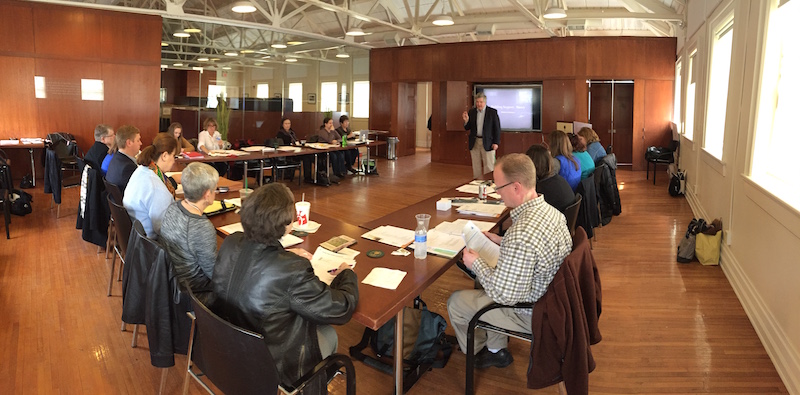
Historic House Museum Workshop, Charleston, South Carolina, 2015
If want some time to plan and evaluate what’s happening at your historic site or house museum, one of the best ways is through a workshop. Of course, a long weekend of reflection in the Rockies or Virgin Islands might be more relaxing, but a workshop with colleagues discussing the potential solutions to the challenges facing historic sites will be more effective.
AASLH is offering two workshops this year just for house museums and historic sites, and I’ll be part of both of them:
April 4: Reinventing the Historic House Museum at the Campbell House in St. Louis, Missouri
This one-day symposium is designed to offer current thinking, practical information, and solutions to the challenges facing historic sites. The historic house museum in America is not dead nor are most of them dying. The field, however, needs to take time to reflect and renew as the world around our historic sites continues to change. The symposium will include presentations, discussion, a boxed lunch, historic site visit, and a brainstorming workshop at the historic house museum to try out the new ideas proposed during the symposium. Workshop led by Ken Turino (Historic New England) and Max van Balgooy (Engaging Places). (There may be a second Reinventing workshop offered this year.)
April 28: Historic House Museum Issues and Operations at Brucemore in Cedar Rapids, Iowa
Why are historic houses necessary to their communities? How are historic house museums unique? This workshop focuses on the special needs, management, and interpretation of historic houses. With a focus on historic house museums, topics covered include collections care, types of research appropriate for historic house museums, exhibition development, interpretive tours, volunteers, and building and landscape maintenance. Workshop led by George McDaniel (Drayton Hall) and Max van Balgooy (Engaging Places).
Can’t attend these workshops but are still looking for a shot in the arm? Join one of the quarterly Historic House Calls. Every call explores a different topic with an expert, and they’ve previously discussed deaccessioning, tours, interpreting race, and environmental sustainability.
AASLH has nearly two dozens way to sharpen your skills with some of your smartest colleagues in the history field and you’ll find a continually updated list on their calendar of events.
Reinventing Historic Houses in National Parks
Earlier this week I led a workshop on reinventing historic house museums at two great National Parks—Marsh-Billings-Rockefeller in Vermont and Saint-Gaudens in New Hampshire—with Ken Turino of Historic New England. The National Park Service and the American Association for State and Local History co-sponsored this workshop to help their staff rethink the tours of the historic houses at these two sites, especially for visitors under 35 years of age. Using such tools as the Five Forces and a Double-Bottom Line Matrix along with a smorgasbord of ideas from other sites, we explored possible processes and projects that could improve and enhance their tours. Our goal wasn’t to provide solutions but to raise many useful questions, including: Continue reading
Creating a 21st Century House Museum in San Francisco
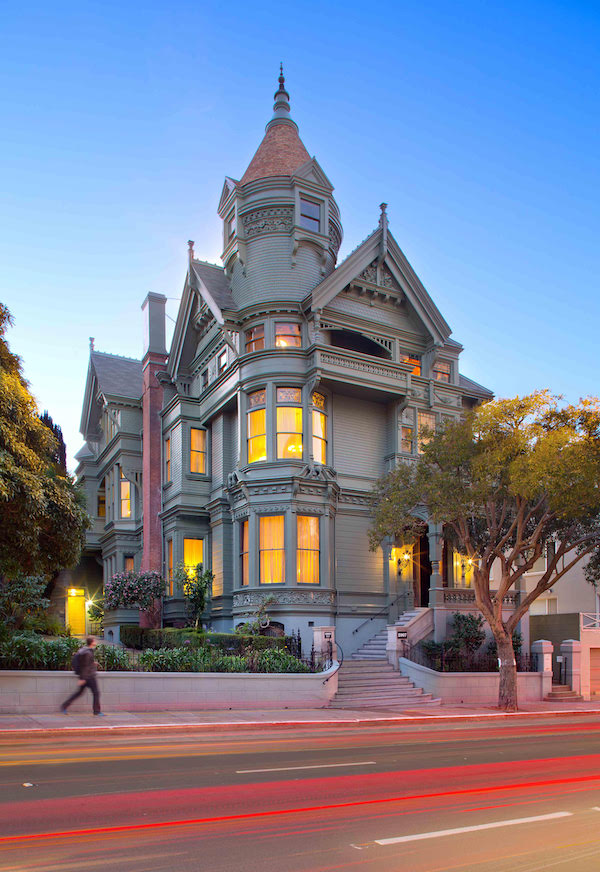
Haas-Lilienthal House, San Francisco. Courtesy of San Francisco Heritage.
Over the past two years, I’ve been working with San Francisco Heritage to explore how the Haas-Lilienthal House, the 1887 Queen Anne house it owns and operates in the Pacific Heights neighborhood, can engage the public and advance its citywide mission in ways that are both environmentally and financially sustainable.
Just as the Haas-Lilienthal House was rocked by a tremendous earthquake in 1906, so are historic sites today, although in a different manner. The economic downturn that began in 2008 threatens many preservation organizations, house museums, and historic sites, even those that have large endowments and attendance. But the change is bigger than the latest economic recession. Surveys over the past thirty years by the National Endowment for the Arts show that visitation rates at historic sites have fallen from 37 percent in 1982 to 25 percent in 2008, and that rate of decline has only accelerated in the last decade. The Haas-Lilienthal House is experiencing a long and steady decline in attendance—it’s fallen by more than 50 percent over the past thirty years. Historic sites not alone, however: concerts, dance performances, craft fairs, and sporting events have all seen similar declines in attendance.
As a result, many historic preservation organizations around the country are questioning the value of owning historic property. Guided tours and public programs do not generate sufficient revenue to properly maintain historic sites, so unloading them seems to be the only solution. But there are also significant disadvantages.
When a preservation organization owns an historic building, it instantly conveys credibility. (Would you trust a surgeon who has never held a scalpel?) Secondly, by owning and caring for an historic property, Continue reading
Unconference in DC Poised to Transform Museums
Openlab is convening an unconference, talks, and a planning workshop in Washington, DC on December 1-2 to “to accelerate the speed and impact of transformational change in the GLAM (gallery, library, archive, and museum) sector” in order to “to increase and disseminate knowledge; to encourage civic dialogue and engagement; and to support individuals in their right to access and participate in culture.” The brain child of Michael Peter Edson of the Smithsonian, much of OpenLab’s work seems to be focused on using digital technologies to solve age-old questions, such as “what needs to change in galleries, libraries, archives, and museums?” and “what is missing in the current funding and support landscape for GLAMs and the humanities?” It’s all a bit nebulous and unclear, but that’s the core nature of an unconference. Nevertheless, it’s one of many concurrent efforts to increase the impact of museums in society (and yes, we’re still in the fragmented stage).
The first day on December 1 (today) is the unconference and a series of Ignite talks from 2-7 pm in Arlington, Virginia that’s free and open to the public. The second day, however, Continue reading

