

This year I’ve been involved in evaluating and designing a new framework for the most valuable membership benefit of the American Association for State and Local History: professional development. Surprised it ranks so high? When you step back and look at what AASLH offers—annual meeting, History News, books, technical leaflets, webinars, workshops, Standards and Excellence Program for History Organizations (StEPs), History Leadership Institute—you realize that they all sharpen the skills and help advance the mission of history organizations. Over the past two years, Conny Graft and I have designed a new framework for creating and aligning these professional development programs, and once it’s been approved and adopted, I’ll share more about this project in a future post.
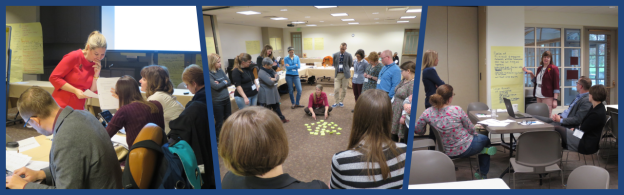
I’ve also been involved in rethinking the History Leadership Institute (HLI) to better meet the needs of today’s mid-career professionals. The content has been continually tweaked, but more visible is the shift from November to June and a hybrid format. HLI now consists of two weeks online and two weeks in residence in Indianapolis, responding to the needs of professionals who want a better work-life balance and the availability of technologies to effectively deliver online learning experiences. What hasn’t changed is that HLI grapples with the tough and critical issues facing the field in a collegial environment. Although the schedule is still under development, you can get a sense of this by some of the facilitators who will be joining us in June 2020:
- Cinnamon Catlin-Legutko, Illinois State Museum
- Anne W. Ackerson, Leading by Design
- Randi Korn and Stephanie Downey, RK&A
- George McDaniel, McDaniel Consulting
- Norman Burns and Richard Cooper, Conner Prairie
- Erin Carlson Mast, President Lincoln’s Cottage
- Trevor Jones, Nebraska Historical Society
- David Young, Delaware Historical Society
- Sarah Pharaon, International Coalition of Sites of Conscience
- Richard M. Josey Jr, Collective Journeys
We’re also including a session by the Frameworks Institute on their research on American’s attitudes towards history, part of the larger “Framing History” project of AASLH. Whether it’s a historical society communicating with new audiences, an academic department talking with potential majors, or a museum making their case to funders or legislators, this project will provide history practitioners with tools to frame their messages as effectively as possible.
If you are interested in participating, please submit an application by December 15. Participation is limited and scholarships are available. For more details, visit HistoryLeadership.org.




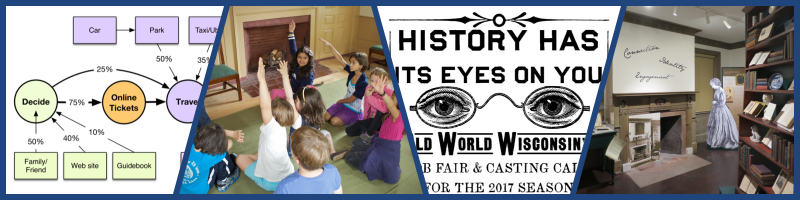 This blog has been fairly sparse this past year because Ken Turino and I were editing and assembling two dozens essays for Reimagining Historic House Museums: New Approaches and Proven Solutions, an anthology to be published by Rowman and Littlefield as part of the AASLH series. I’m delighted to announce that it is now off my desk and in the hands of the publisher; we expect it will be released in fall 2019.

