Category Archives: Social media

WebWise Attracts 400 Museums, Libraries, and Research Orgs

This slideshow requires JavaScript.

This week I was fortunate to spend two days in Baltimore with 400 persons representing museums, libraries, archives, and research organizations from 40 states at WebWise, the annual conference hosted by the Institute of Museum and Library Services.  This is always one of my favorite conferences and despite a rapid sell-out, I was able to snag a seat.

There seems to be a growing number of history museums and historic sites attending WebWise, and perhaps that’s due to increased recognition that digital technologies are no longer a fad but an essential part of a successful organization (indeed, one of the presenters remarked that staff with technology in their titles are rising up to senior levels with more frequency).  Among the history organizations represented this year are the American Continue reading →

HBR: What Virals Ads can Tell Us About Engaging Visitors

Evian's Roller Babies commercial demonstrates what makes an ad go viral.

The March 2012 issue of the Harvard Business Review focuses on U. S. business competitiveness in the world and won’t interest most readers of EngagingPlaces.net, however, there are a few smaller stories scattered around that are relevant.  Thales Texiera’s article on “The New Science of Viral Ads” lays out five techniques that encourage people to watch and share their commercials (in other words, “go viral”) and I’ve modified three of them to address the needs of visitors at historic sites:

  • Play down the logo, play up the brand.  If your logo is too dominant or intrusive, visitors will be turned off by this obvious attempt to manipulate them.  A few places are fine and expected (e.g. letterhead, entrance sign, mugs in the store) but I’ve visited sites where a logo is on every sign, including the one pointing to the bathroom.  It may make your board happy, but it’ll turn off your visitors.  Instead, unobtrusively weave your brand (not logo) throughout the visitor experience.  Texiera uses Coca-Cola’s “Happiness Factory” ad as an example (how was the Coca-Cola logo used?).
  • Create joy and surprise right away.  Visitors stay engaged in large part if they encounter joy or surprise.  So in tours, for example, add an element of joy or surprise into the introduction rather than saving it only for the conclusion.  Each site will need to figure this out for themselves, but it can be a surprising fact or an earnest welcome. Bud Light’s “Swear Jar” ad is an example of delivering humor and surprise to maintain viewers’ interest (and just a warning, this ad may offend some people and because it promotes the drinking of alcohol, you’ll need to register as an adult on YouTube to view it).
  • Build an emotional roller coaster.  Just as in a good novel, the rhythm or flow helps carry the visitor along and keeps them engaged with fresh twists and turns.  Tours too often are presented as just one fact/object/room after another.  Instead of building a tour solely on cognitive elements (e.g. facts, names, and dates), integrate some affective ones (e.g., humor, surprise, suspense, drama, fun)–just make sure it’s appropriate, authentic, and based on fact.  Evian’s “Roller Babies” cuts between scenes for an emotional roller coaster of continual surprises.  With more than 50 million views on YouTube, it’s a major hit.

For more, read Thales Texiera’s article on “The New Science of Viral Ads” online or watch the five-minute interview that accompanies the story.

What the Latest Trends in Mobile Tech Mean for Historic Sites

comScore, Inc., a leader in measuring the digital world, recently released its 2012 Mobile Future in Focus report. This annual report examines the use of mobile devices (e.g., smartphones, tablets) in 2011 in the United States, Canada, and overseas (France, Germany, Italy, Spain, United Kingdom, Japan).  According to Mark Donovan, comScore Senior Vice President of Mobile:

2011 proved to be a groundbreaking year for the mobile industry, with smartphones hitting the mainstream, tablets emerging as a formidable fourth screen, and consumers increasingly integrating mobile behaviors into their lifestyles. As the industry continues to innovate and more consumers look to multiple devices and platforms to consume digital media, we expect the mobile and connected device landscape to be shaken up even further in 2012.  As mobile channels present a more personal, social, and ubiquitous experience to consumers, advertisers and publishers have an opportunity to better engage target audiences, given an understanding of how to connect and leverage the unique characteristics of these emerging platforms.

For history organizations and historic sites, some of the findings you’ll find most applicable are:

  • Smartphones Gain Adoption Among ‘Early Majority’, Driving Mobile Media Consumption.  “Nearly 42 percent of all U.S. mobile subscribers now use smartphones, along with 44.0 percent of mobile users across the EU5 (comprised of France, Germany, Italy, Spain, and the UK). Mobile media use – defined as browsing the mobile web, accessing applications, or downloading content – saw increased growth as a result, surpassing the 50-percent threshold in many markets, supported by the proliferation of high-speed networks and increased public WiFi availability.”  Nearly half of cell phone users have internet access, so ensure your website is maintained and up-to-date because increasing numbers of people will be using the smartphones to make decisions as they travel.  What we don’t know is how popular smartphones are among visitors to historic sites and history museums–that may be something to explore at your site (just ask!).
  • Mobile Retail Information Leads to Emergence of Smartphone Shopping Behaviors.  “More than half of the U.S. smartphone population used their phone to perform retail research while inside a store in 2011, illustrating the emergence of savvy smartphone shoppers who bring online shopping behaviors in-store – a trend seen in other markets as well. At the end of 2011, nearly 1 in 5 smartphone users scanned product barcodes and nearly 1 in 8 compared prices on their phone while in a store.”  You may discover that visitors are looking at their phones when they are in your store.  They could be evaluating your products, comparing prices, or making a purchase (“this is a great book, let me order it on Amazon.com so I don’t have to carry it with me now”).  Your little museum store has just become part of the global marketplace so you’ll need to increasingly think about what’s distinctive, unique, or better than your competitors around the world and may have to change your inventory in response.   And I bet that visitors will be doing the same comparison soon as they choose among the many things to do in your community (“hmm, should we go to an historic site, a winery, or downtown?  Let’s see what Yelp recommends.”).
  • Mobile Devices Fuel Social Networking On-The-Go, Driving Real-Time Online Interaction.  “64.2 million U.S. smartphone users and 48.4 million EU5 smartphone users accessed social networking sites or blogs on their mobile devices at least once in December 2011, with more than half of these mobile social networking users accessing social media almost every day. While mobile social networking users showed the highest propensity to read posts from people they knew personally, more than half of those in the U.S. and nearly half in the EU5 also reported reading posts from brands, organizations, and events.”  With so many people using social media such as Facebook, Google+, Flickr, Yelp, and Foursquare, remind them to share their experiences of your site (at the end of the tour, remind visitors to share their visit on Facebook and Yelp).  You’ll slowly build a reputation.  And if you haven’t already, be sure to create and maintain a page in Facebook, Google+, Flickr, Yelp, or Foursquare.
  • Mobile Connectivity and Connected Devices Encourage Cross-Platform Digital Media Consumption among ‘Digital Omnivores’.  “Tablets quickly rose in popularity in 2011, taking less than two years to account for nearly 40 million tablets in use among U.S. mobile users and outpacing smartphones which took 7 years to reach the same. By the end of 2011, nearly 15 percent of U.S. mobile users also had tablets – a trend seen across other markets as well.”  Tablets are quickly becoming a common technology along with smartphones and laptop computers.  That won’t affect historic sites very much as long as you keep your website and apps up to date (see below), but it may open up a new opportunity for producing unique digital guides or visitor experiences through Kindle or iBooks.  Apps, e-books, or websites designed for tablets may soon replace or supplement portable DVDs, podcasts, and audioguides.

Thinking about developing an app?

  • Smartphone Platform Wars Intensify As Android and Apple Take the Lead in Most Markets.  “The Google Android and Apple iOS smartphone platforms emerged as the leaders of the U.S. smartphone market in 2011, with Android just a few points shy of capturing half of the smartphone market and iOS accounting for nearly 30 percent of the market. In the EU5, Android saw similarly significant gains, unseating market leader Symbian in 3 out of the 5 European markets measured.”  If you are developing an app, sorry, you’ll still need to develop it for both Android and Apple iOS.
  • Surge in Mobile App Usage Shapes a Dual Mobile Browsing Experience, Fueling Category Growth.  “In 2011, both the U.S. and EU5 saw the growth in mobile app use exceed the growth in mobile browser use, leading to both markets seeing the same percentage of their mobile audience use both apps and browsers to access mobile media. Health ranked as the fastest-growing mobile media category in the U.S. in 2011, followed by Retail and other commerce-related categories such as Electronic Payments and Auction Sites.”  The use of apps has grown this past year and it looks like it’s caught up to mobile browser use–smartphone owners are using apps and internet browsers at the same rate  (if these distinctions are confusing, check out the explanation at the New Media Campaigns blog).  And if you aren’t thinking about online sales and payments, start now or risk losing revenue (check out PayPal and Google Checkout and see if they still have special rates for non-profits).

For more details, download a free copy of 2012 Mobile Future in Focus report.

Attending WebWise in Baltimore?

Max van Balgooy

I’ll be attending WebWise in Baltimore next week and posting a series of blogs about the presentations in the weeks to follow.  These sessions are typically packed with ideas and projects, offering cutting-edge approaches and solutions for the work at historic sites and history organizations (and other museums).  If you’re attending, I’d love to meet you and hear about what you’re doing.  Living part of my life in the blogosphere, I have unusual relationships:  people will know me through my blog but I often have no idea who they are, so please introduce yourself and let’s talk during a break (IMLS always keeps the troops at WebWise well stocked with coffee, tea, and snacks!).  In case you don’t know what I look like, I’ve included my picture for identification and I usually sit off to the side so I can get up to take photos of the sessions without disturbing others.

KCET Launches Online Neighborhood Field Guides

The Highland Park Field Guide by KCET.

KCET, a public television station based in Los Angeles, has been working for the last few years on Departures, a project designed to engage “community residents, non-profit organizations, schools and students, in the creation and procurement of relevant and relatable content.”  Included in this work are a series of online interactive field guides to various neighborhoods in their region, and most recently launched is one on the historic community of Highland Park (which features the Lummis House, Heritage Square, and the Southwest Museum).  Given that KCET is one of the major public tv stations in the nation, the field guides are beautifully produced and include lots of video.

According to Kelly Simpson, associate producer of the KCET Departures, “The Highland Park Field Guide was produced in partnership with the Highland Park Heritage Trust and the North Figueroa Association. In six categories (with two more coming soon) we feature fun, informative and adventurous activities for Continue reading →

Free Webinar on the Hispanic Traveler on Feb. 10

If you are trying to reach an Hispanic or Latino audience, Laura Mandala of Mandala Research, LLC is leading a webinar on “Understanding the U. S. Hispanic Traveler” on February 10, 2012 at 2:00 pm Eastern. Produced in conjunction with Longwoods Travel USA, she’ll be providing comprehensive data and analysis on the U.S. Hispanic Traveler, including spending, activities, social media usage, mode of transport, trip purpose, trip planning, booking, destinations for both day and overnight stays, and much more.  Cost is $299 and pre-registration is required.  For more details, visit mandalaresearch.com.

If you’re not familiar with Laura Mandala, she  one of the leading research and analysis firms specializing in leisure travel (that includes those of us who work in museums and historic sites).  I became familiar with her study of heritage and cultural travelers at the National Trust.  Her website offers several free reports including the use of social media by travelers, behaviors of leisure travelers who drive, and culinary cultural travelers (foodies!).  If you’re a member of the American Association of Museums, you can receive the Cultural and Heritage Traveler Study for 50% off.

Responding to Public Complaints on Facebook

According to ComScore’s It’s A Social World report, “social networking sites now reach 82 percent of the world’s online population, representing 1.2 billion users around the world.”  Even if you don’t have a Facebook page or Twitter account, some of those users are talking about your organization and a few might be complaining.  How do you respond? Here are some actual postings taken from Yelp and TripAdvisor:

  • “This beautiful house was recently refurbished,and the amazing details of the woodwork just shine. The tour of the interior is well worth it, despite some rather fussy docents and lots of rules.”
  • “Rude pompous guides take you on way overpriced tour of Continue reading →

2012 WebWise Conference Registration Is Open

Registration is now open for the Institute of Museum and Library Services’ (IMLS) WebWise Conference, which will take place February 29th-March 2nd at the Renaissance Baltimore Harborplace in Baltimore, MD. Today conference organizers announced that actor and literacy champion LeVar Burton has been chosen as one of the keynote speakers. Burton will speak on the morning of March 1.

A signature initiative of IMLS, the WebWise Conference annually brings together representatives of museums, libraries, archives, systems science, education, and other fields to explore the many opportunities made possible by digital technologies. George Mason University’s Roy Rosenzweig Center for History and New Media (CHNM), partnering with the Balboa Park Online Collaborative (BPOC), is helping to organize the conference.  Historic sites and historic house museums are rarely in attendance, but this is a great conference so I’ll share what I’ve learned on this blog. Continue reading →

Latest Trends in Mobile Computing

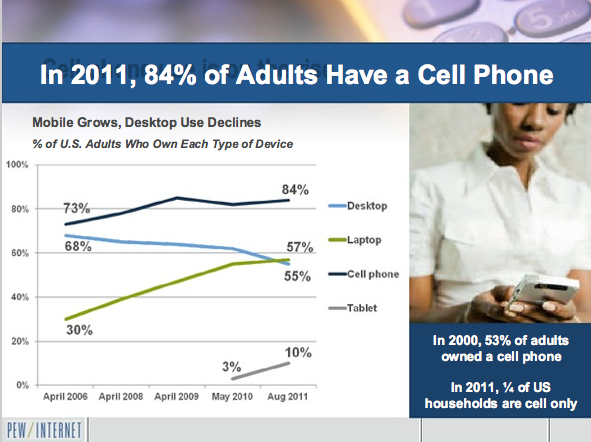
According to a recent survey by the Pew Internet and American Life Project, 84% of American adults have a cell phone and laptop and desktop use are about the same.

Aaron Smith, senior research specialist at the Pew Internet and American Life Project, recently released the key trends on Americans and mobile computing based on a nationwide telephone survey.  You can find the entire presentation online but some highlights for historic sites and historic house museums are:

  1. The use of mobile devices (cell phones, laptop computers, and tablets) is growing and desktop computer use is falling.  About 2/3rds of Americans connect to the internet wirelessly using a laptop or handheld device.  One quarter of US households only use cell phones.  [Soon everyone will be carrying an internet-connected computer with them–what will that mean for your organization?  How will that change your communications strategy, your programs and activities?]
  2. Smartphones (cell phones with internet access) are most popular with people ages 18-29, college graduates, households with an annual income $75,000 or more, and African Americans and Latinos.  [If you are trying to reach one of these audiences, Continue reading →

Flat Stanley Goes Mobile; Will He Visit Your Site?

Flat Stanley with Suzie Boss in India. From Edutopia.org.

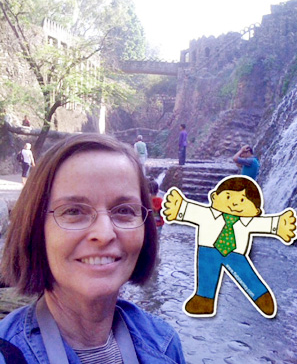
“Flat Stanley,” the elementary school activity that’s designed to get students to explore places around the world, has moved from a paper-cutout to a clever smartphone application.  He can now be integrated into a phone’s camera to be part of photos taken in places visited by children–the result of some clever computer programming and a legal agreement with the estate of the author.  Read more at Suzie Boss’ blog at Edutopia.org.