
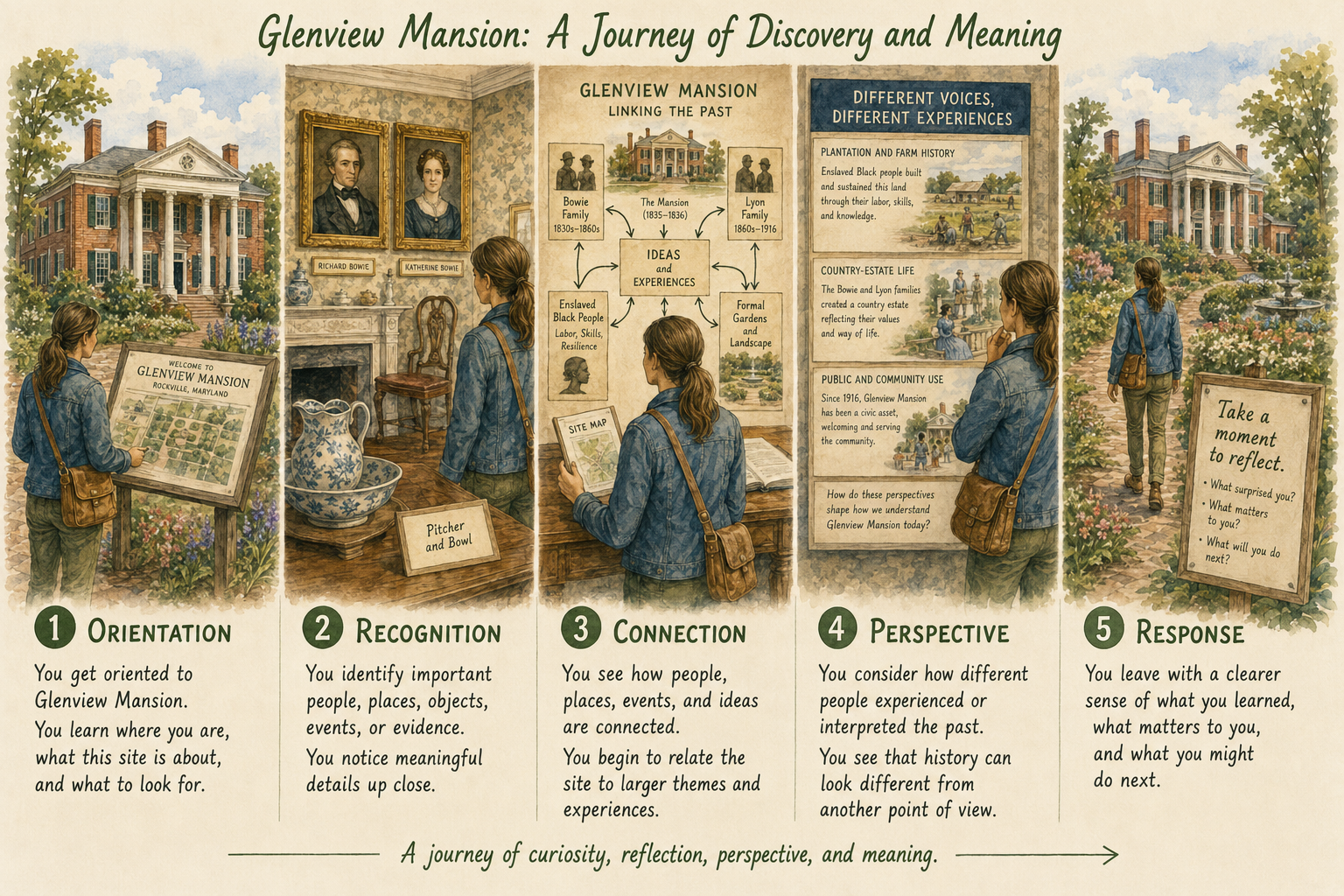
Note: I revised this post on October 2, 2026 to clarify the terminology: Outcome Levels changed to Outcome Types. Outcome Types describe the kind of change an experience is intended to encourage. Ambition Levels describe the degree of change it is reasonable to expect.
A few months ago, I shared a preliminary framework for rethinking learning outcomes at historic sites. I was trying to solve a problem I had encountered repeatedly: educational taxonomies developed for classrooms do not always translate well to historic sites and house museums. Visitors are not students enrolled in a semester-long course. They arrive with different motivations, prior knowledge, amounts of time, and degrees of interest. I proposed a framework organized around two ideas—Outcome Levels and Ambition Levels—that better reflect the visitor journey and the practice of interpreting history.
Since then, I’ve continued testing and refining those ideas. One part of that work has been developing a more practical vocabulary for writing outcomes at each level. The result is a new six-page handout, What You Want Visitors to Know, Feel, or Do: Five Outcome Types for Historic Sites and House Museums, which I’m sharing with this post (and subject to change!). I also realized that using “levels” for both is confusing and that Outcome Levels may suggest that a higher level is better than a lower one, thus I changed to Outcome Types (I’ll restate this again later to reinforce the distinction).
Historic sites and house museums often begin planning interpretation by asking what stories they want to tell, which objects they want to display, or what activities visitors should experience. Those are important questions, but they don’t define success.
A stronger starting point is:
- What do we want visitors to know, feel, or do as a result of this experience?
That shift—from what the museum presents to what happens for the visitor—can make interpretation much more intentional.
Continue reading
